
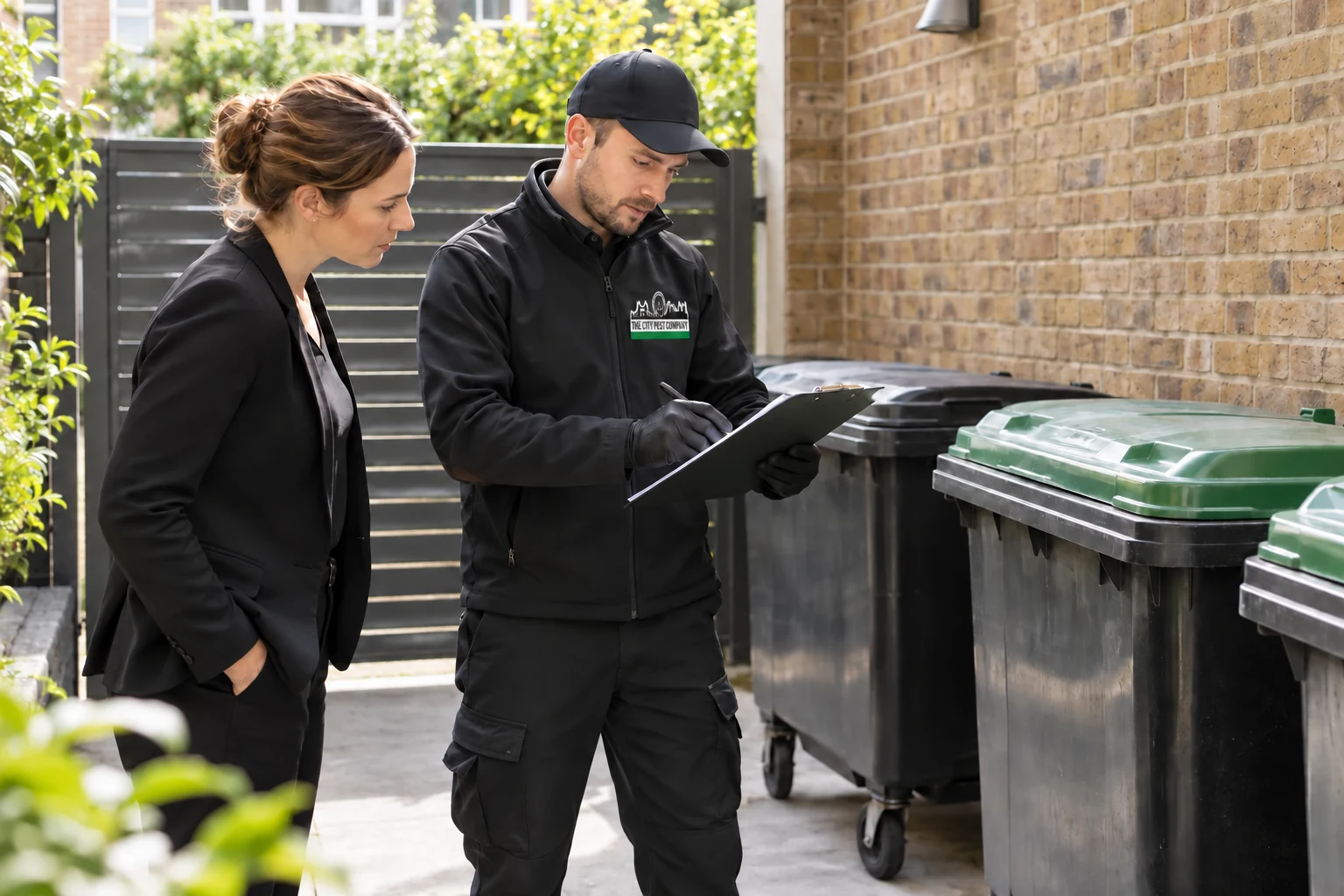
A good waste check follows the whole route: where waste is created, the internal container, the journey outside, the storage area and the collection. Look for loose bags, lids that do not close, leaks, food residue, damaged containers, missed collections and gaps in responsibility. Record pest signs separately and escalate them promptly.
Start with the legal basics
GOV.UK says business waste must be stored safely and securely. Suitable containers should prevent waste escaping, covers should stop material blowing away, and different waste types should be separated where required. Businesses also have duties around transfer notes and registered carriers.
This checklist supports pest prevention; it does not replace the waste rules for your sector, premises or local authority.
Walk the route during a normal shift
Observe what actually happens when the business is busy. Are internal bins close enough to be used? Are they emptied before overflowing? Do staff prop open an external door while carrying waste? Does the route cross food, stock or customer areas? Is waste left temporarily because the outside bin is locked or full?
Ask staff rather than relying only on a quiet inspection. A routine that works on paper may fail during closing time, deliveries or weekend trading.
Check every container
Containers should be appropriate, sound and cleanable. Lids need to close without bags or cardboard holding them open. Do not leave loose waste beside a bin simply because collection is due soon. Check wheels, drain plugs, cracks and residues around the base.
For food businesses, Food Standards Agency guidance stresses close-fitting lids, cleanable bins, frequent removal of food waste and regular checks for pest signs. Food-sector requirements are specific, so use the current guidance relevant to the operation.
Inspect the storage area
Check lighting, drainage, cleanable surfaces, security and access for staff and the collector. Keep the area free of leaked material and unnecessary stored items. Record holes, damaged doors or service gaps for repair.
The Health and Safety Executive also highlights the serious risk of people entering large commercial bins. Site controls should address foreseeable unauthorised access as well as pests. Do not create a security hazard while improving collection access.
Match capacity to the calendar
Compare container capacity and collection frequency with actual peaks: weekends, events, holidays, seasonal trade and missed rounds. Photographing an overflowing bin solves nothing unless someone can change capacity, collection or working practice.
Record who contacts the waste contractor, who has authority to arrange an additional collection and what staff do if a bin cannot be used. Keep carrier and transfer documentation where the responsible person can find it.
Make pest reporting specific
Staff should record the date, exact location and type of sign—sighting, gnawing, droppings, spill or damaged container—without touching suspected material. A report should reach a named manager during the same shift where possible. Clean-up, contaminated stock and food-safety decisions may require separate authorised action.
Do not place pesticides in a commercial waste area without an appropriate plan. The site, non-target access, public safety and approved product use all matter.
Turn the check into actions
Use four columns: finding, immediate control, permanent action, owner/date. “Bin area dirty” becomes a defined cleaning task; “lid broken” becomes a repair or replacement; “bags beside bin” triggers capacity and routine review; “gap behind store” becomes an inspection item.
For a site-wide conversation, call 0203 393 2338 or see commercial pest control. Ask for any attendance times, reporting duties or compliance support required by your operation to be confirmed in writing.
Recheck after the change
An action is only useful if the new routine works during real trading. Revisit the area after the replacement bin, revised collection or cleaning change has been in place. Check the busiest shift as well as a quiet one, and ask the people who move the waste whether lids, locks and access are practical.
Record whether the original issue has stopped, improved or moved elsewhere. If loose bags return, investigate capacity and workflow before repeating the same reminder. Where pest signs continue despite a controlled waste area, arrange an appropriate building and pest inspection rather than assuming the waste routine is the only cause.
Common questions
How often should a waste area be checked?
Set a frequency that reflects the waste type, volume, operating hours and risk, with additional checks after peak periods or missed collections. Do not invent a universal interval.
Is cleaning enough to prevent pests?
It is one part of prevention. Container condition, collection capacity, building gaps and timely investigation also matter.
Can waste be stored loose until collection day?
GOV.UK requires safe, secure storage in suitable containers. Check the specific arrangements and local requirements for the business.
Sources and further reading
External references may contain pest or skin photographs.