
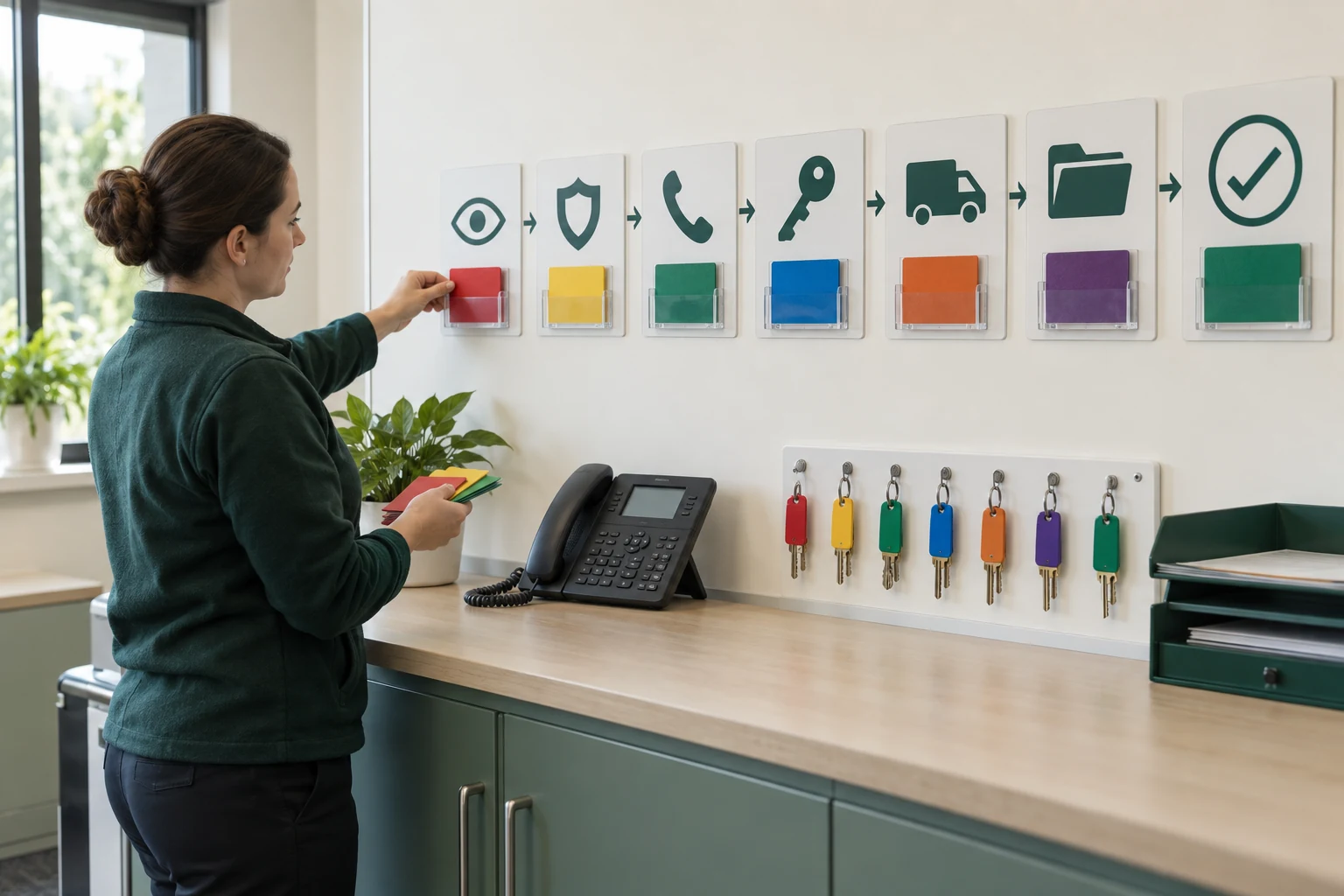
An escalation plan should turn a report into a controlled sequence: trigger, immediate protective action, contact, authority, contracted response, record and closure. The plan must use the actual service levels rather than invented “emergency” attendance promises.
Define triggers by consequence
Separate an isolated sighting in a low-risk area, repeated evidence, food or stock exposure, a public-area concern, inaccessible critical space, wildlife issue and immediate safety hazard. Staff should report observable facts; they should not have to identify the species before escalating.
For each trigger, state what the reporter can do safely. This may include protecting stock, closing access to a local area, preserving a specimen or contacting a manager. Do not instruct staff to apply products, move devices or handle wildlife.
Food premises need alignment with their food-safety system. Current FSA guidance tells businesses to check regularly for pests, keep contractor contact and visit records, record action points and prevent pest-control bait or chemicals contacting food, packaging, equipment or surfaces.
Name people and authority
List the primary and backup contact, out-of-hours route, person who grants access and person who authorises additional cost or work. Include keys, escorts, shutdown authority and the external contacts needed for building repairs, cleaning or waste.
An isolated fly in reception and rodent evidence in a food store should not enter the same response lane. The plan distinguishes impact and immediate controls without requiring either reporter to diagnose the underlying issue.
Define the handback. The contractor report should state accessible areas, findings, action, restrictions and next review. Repairs need owners and verification. A case closes only against the stated trigger and scope, not because a ticket automatically aged out.
Call The City Pest Company on 0203 393 2338 to discuss a contract and escalation structure. See the maintenance contracts page for context; final service levels belong in the signed terms.
FAQs
What counts as urgent?
Define it from the premises, affected area and operational consequence, then connect it to the actual contract.
Should staff photograph every sighting?
Only where safe and useful. Location and time may be sufficient for immediate escalation.
Can the plan decide regulatory breach?
No. It coordinates response; regulatory and legal determinations use the appropriate process.
Sources and further reading
External references may contain pest or skin photographs.