
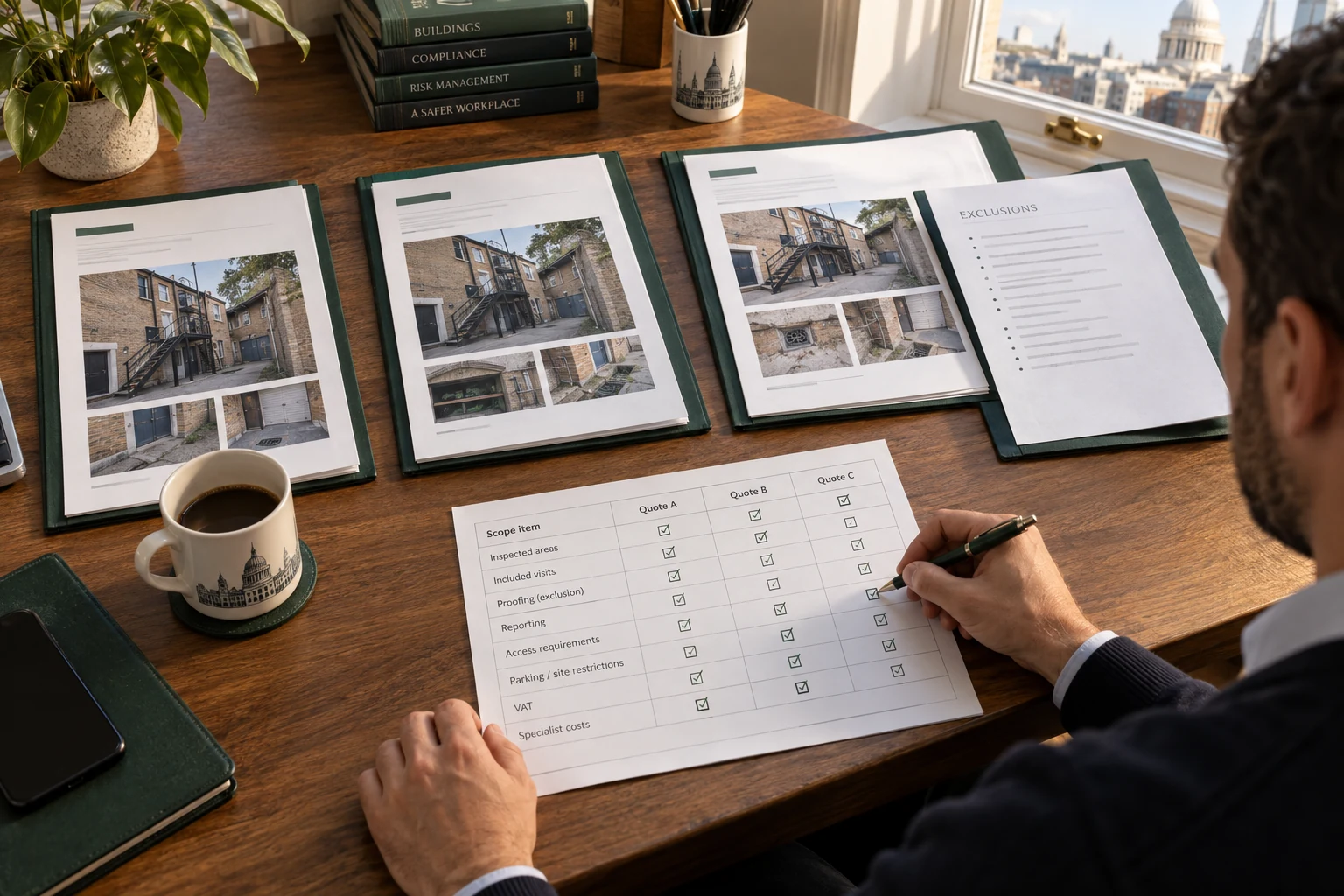
Compare pest-control quotes by scope before price. Check what is inspected, how many visits are included, what each visit does, whether proofing and reporting are included, and which access, parking, VAT or specialist costs remain assumptions.
Put every quote on the same grid
Start with identification and premises. Does the quote assume a confirmed pest, or include an inspection? Which rooms, communal areas, outside zones or neighbouring units are covered? A low figure for one room is not equivalent to a proposal covering a shared riser and follow-up.
List each visit and purpose: survey, treatment stage, device service, review or proofing check. “Three visits” says less than “inspection plus two defined reviews”. Ask what evidence changes the number or sequence.
Preparation and access belong in the comparison. Note who moves stock or furniture, provides keys, escorts the technician, supplies height access and manages residents. If these tasks are excluded, price their operational effect rather than overlooking them.
Expose extras before approval
Ask whether the figure includes parking, congestion or access charges, VAT, waste removal, replacement devices, proofing materials, reporting, out-of-hours work and revisits after failed access. Confirm the current terms with the provider rather than assuming any of those items is included or charged.
Proofing should be itemised by location and responsibility. “Seal gaps” is not a defined extra. A quote should distinguish work the pest provider performs from repairs referred to a builder, roofer, drainage contractor or fire-stopping specialist.
Read guarantee language with its conditions, covered pest, preparation duties and exclusions. Do not infer a guarantee from the number of visits or a phrase such as “complete treatment”.
Work through one realistic comparison
Quote A might include an inspection, treatment in two named rooms and one follow-up, with parking added at cost. Quote B might show a lower total but assume identification is confirmed, exclude the adjoining room and charge every return separately. Without those assumptions beside the totals, the figures are not comparable.
For a managed block, add resident notices, communal access and repair coordination to the grid. A proposal can be technically suitable yet operationally incomplete if nobody has priced or owned those tasks. Ask the bidder to revise the scope rather than relying on verbal assurances that “it will be sorted on the day”.
Compare the report you receive
For managed property, specify visit reports, photographs, device maps, action owners and escalation. A cheaper attendance that produces no traceable record may create more management work than a higher quote with usable deliverables.
Call The City Pest Company on 0203 393 2338 for a current scoped quote. See the prices page for current published context; confirm VAT, parking and extras directly.
FAQs
Is more visits always better?
No. Ask what each visit is intended to decide or complete.
Should proofing be included?
Only when locations, materials or performance, responsibility and verification are clear.
Can quotes be compared from the total alone?
No. Identification, areas, access, reports, exclusions and terms may differ materially.