
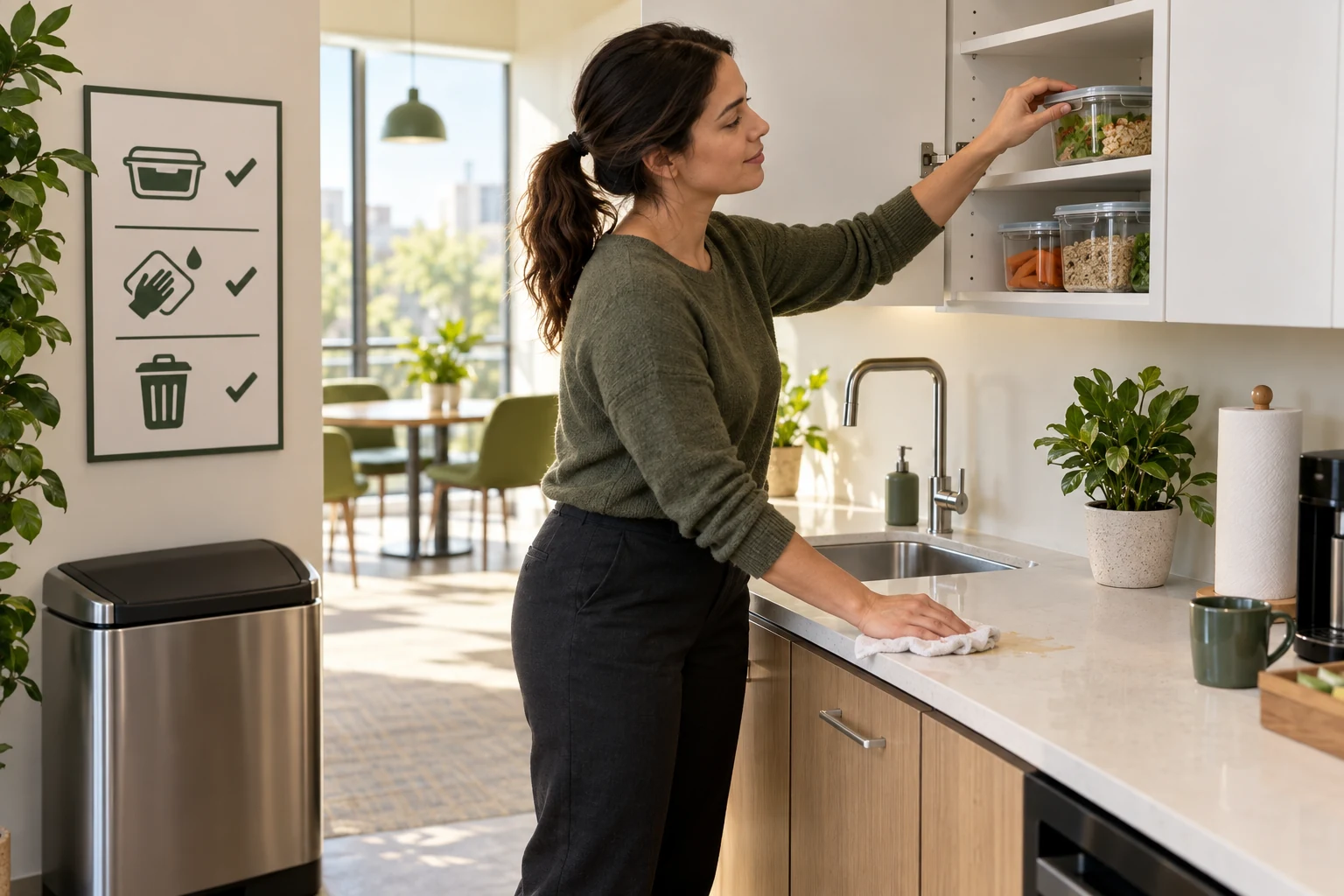
Office-kitchen prevention works when everyday tasks have owners: staff store food and report spills, cleaners follow a clear schedule, facilities repair leaks and gaps, waste collections match use, and pest observations reach one responsible contact. A poster alone will not manage a full bin or leaking sink.
Follow a working day through the room
Check what arrives in the morning, where lunches and snacks are stored, when surfaces are cleaned and what remains after the final break. Include cupboards, vending machines, appliance edges, sink units and waste containers. Note food debris and pest evidence separately so cleaning is not mistaken for identification.
Create simple triggers. A spill is cleaned promptly; a leaking pipe goes to facilities; a damaged container goes to waste management; an insect or gnawing sign is photographed safely and reported with location and date. Staff should not move contractor devices or apply products from home.
Capacity matters. If Friday’s food-waste bin is full before a Monday collection, repeated reminders to wipe the counter will not solve the storage interval. Review container size, collection timing and weekend access. If several tenants share the room, document who owns each part of that chain.
Keep pest control within the food-safety system
The current FSA safe method tells food businesses to check for pests regularly, keep contractor contact and visit records, record actions, and prevent bait or chemicals contacting food, packaging, equipment or surfaces. An office that handles or serves food should apply the requirements relevant to its own food-safety system.
Map monitoring and treatment points so cleaners know what must not be disturbed. Give them specific instructions rather than “do not clean the kitchen”. Food-contact cleaning and a protected monitoring point can often continue side by side when responsibilities are clear.
At each review, close repair and contractor actions with evidence. A sealed food box does not compensate for an open pipe route; a repaired door does not replace waste cleaning. Keep the controls linked but distinct.
Call The City Pest Company on 0203 393 2338 if evidence repeats, appears near food storage or suggests a route beyond the room. See commercial pest control for service context.
FAQs
Who should perform daily checks?
Name the role that is present and able to act, then give facilities or management a clear escalation route.
Can cleaners move pest devices?
Not unless the pest plan authorises it. Report obstruction or damage to the responsible contact.
Is food in desk drawers part of the plan?
Yes. Staff storage outside the kitchen can create a second waste and spill pattern that the office policy should address.
Sources and further reading
External references may contain pest or skin photographs.