
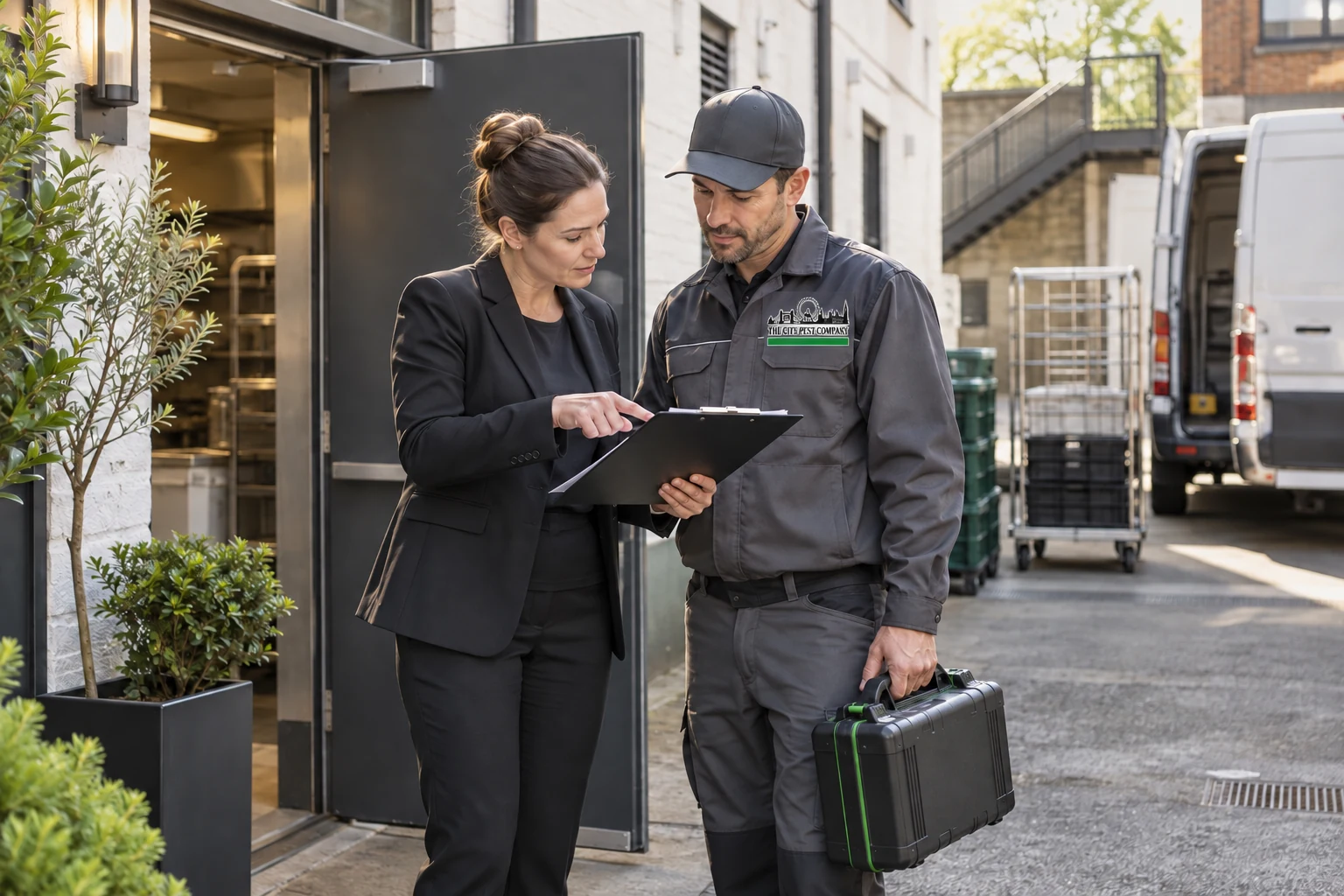
Plan the visit around the work that must happen, not simply whether the front door is open. Identify areas to inspect, people and food present, deliveries, cleaning, alarms, keys and restrictions. Nominate an authorised contact for arrival and departure, then record any area that could not be accessed.
Define the visit before choosing a time
An initial survey, routine contract inspection, treatment and follow-up have different access needs. Ask the provider which rooms, voids, stock areas, waste stores or external points are in scope and how long they expect to need.
If the purpose is unclear, an “out-of-hours appointment” can still fail because a plant room is locked or the person attending cannot authorise work.
Map the operating day
List customer hours, staff shifts, deliveries, food preparation, cleaning, security patrols, waste collection and contractor windows. Note noisy or sensitive work, temperature-controlled rooms, cash handling and public events.
Find a period that gives meaningful access without creating another risk. For example, a closed kitchen may be easier to inspect, but only if the authorised key holder and food-safety contact are present. A waste store may be unavailable during collection. A hotel or care setting may never be fully empty, so zones and communication matter more than closure.
Name the people involved
Choose a site contact who can escort the technician, open controlled areas, explain recent signs and approve the agreed scope. Provide a backup contact. Tell reception or security who is expected without broadcasting a pest concern to customers or unrelated staff.
The technician also needs to know who manages fire alarms, isolation permits, roof access, confined areas or specialist plant. Pest-control attendance does not override site safety systems or another contractor’s competence.
Coordinate cleaning and food safety
Cleaning before inspection may remove evidence; cleaning too soon after an approved treatment may conflict with instructions. Agree what routine hygiene continues, what should remain undisturbed and when normal cleaning resumes.
Food businesses should follow their applicable food-safety procedures. Food Standards Agency guidance emphasises regular pest checks, good repair and delivery, waste and contractor controls. The business operator remains responsible for food decisions; do not treat a pest visit as automatic permission to reopen a contaminated area.
Plan product restrictions precisely
If a biocide is part of the agreed service, the Health and Safety Executive requires its approved label instructions to be followed. Ask about people and animals, food-contact surfaces, access exclusion, ventilation, re-entry and cleaning for the actual product and location.
Do not invent a standard overnight window. Some work may not need product use; other work may require restrictions that extend into the next shift. Put the real instruction into the handover and prevent early access.
Record access failures
At departure, list areas inspected, actions completed, equipment left, restrictions and locked or inaccessible spaces. If the contractor could not reach a service riser or stockroom, assign the access action and revisit date rather than marking the whole visit complete.
For discreet planning, agree how reports, invoices and arrival notifications are labelled and who receives them. If vehicle or arrival arrangements matter, ask what can be provided and record the answer in the access plan.
Build a repeatable access note
For recurring visits, keep a controlled note with arrival point, authorised contacts, parking/loading, alarm process, required induction, key rooms and reporting recipient. Review it when staff or opening patterns change. Do not include alarm codes or unnecessary sensitive data in a general contractor brief.
Call 0203 393 2338 to discuss the premises or see commercial pest control. Confirm appointment availability and any contract response times directly for the site.
Test the handover before the visit
Send the agreed access note to the named site contact and ask them to confirm the parts that affect arrival, escort and restricted rooms. The test is simple: could the technician reach the correct entrance and the intended areas if the usual manager were delayed? Correct unclear instructions before the appointment rather than during it.
Keep sensitive credentials in the site’s approved secure process. The contractor brief can name the person who controls an alarm or key without containing the code itself. After the visit, compare the planned scope with the actual access record and update the note while the details are fresh.
Common questions
Must pest control happen when the business is closed?
No universal rule applies. Inspection scope, people present, food safety, method and site controls determine a workable time.
Can cleaners attend immediately afterwards?
Only according to the actual aftercare instructions. Agree surfaces and timings before either contractor attends.
What if one room is locked?
Record it as inaccessible, decide whether it affects the visit conclusion and arrange authorised access. Do not report it as inspected.
Sources and further reading
External references may contain pest or skin photographs.