
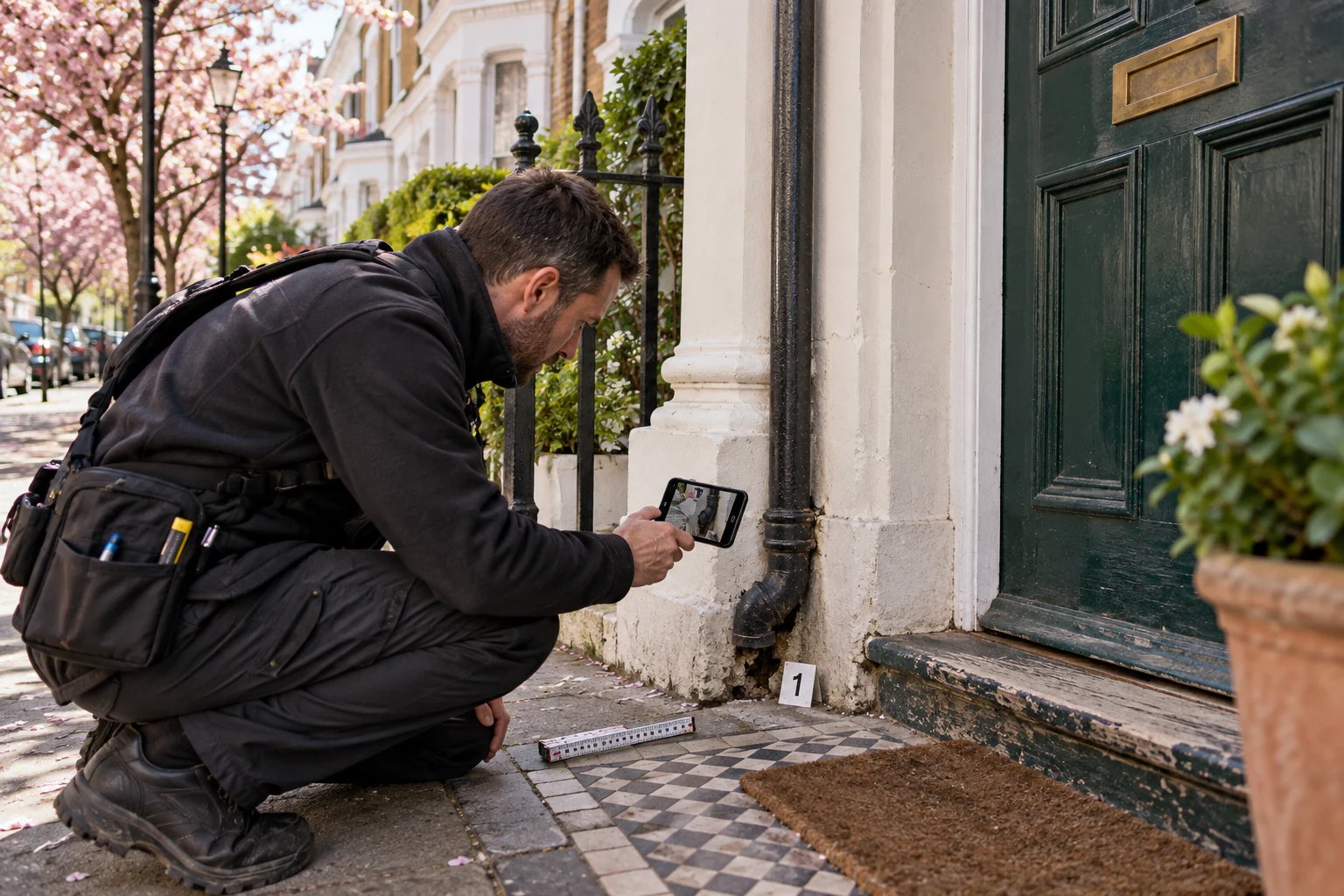
A spring entry-point check should document visible ground-level gaps and maintenance defects without sealing an active route blindly. Walk the outside and shared internal areas in a fixed order, photograph each location and assign the repair to the right trade.
Start with doors, services and waste areas
Check daylight beneath external doors, damaged brush strips, gaps around pipework, loose vent covers and openings where cables enter. At bin stores, look for lids, drainage, damaged walls and the route back to the building. From ground level, note broken grilles or eaves defects for a suitably equipped contractor; do not climb for a closer view.
Inside, trace the same service lines through kitchens, utility cupboards and common risers where access is permitted. A gap is a credible route only when its size, position and connected space make sense for the concern. Photographs should include a room or elevation reference, not just an anonymous hole.
Check for current use before repair
Fresh marks, repeated sightings or nesting activity near an opening change the sequence. Ask whether the active issue must be addressed before proofing. Wild-bird nests are protected while in use or being built, so roof and vent work also needs a bird check where relevant.
Treat ventilation openings, drainage paths and fire-safety features as constraints, not ordinary gaps to fill. Ask the relevant competent trade how the feature must continue to function. Record the proposed material and owner of the repair so it can be checked later.
Turn the walk-round into actions
For each item, record priority, temporary control if any, responsible person and completion evidence. Revisit the same angle after work. A seasonal list is useful only when it closes the repair loop; repeating “monitor” beside the same damaged door each month achieves little.
Keep pest work distinct from building maintenance. The pest inspection can explain why a gap is relevant and whether activity changes the repair sequence. A joiner, roofer, drainage contractor or ventilation specialist may need to choose and install the permanent repair. Where properties share a wall or service riser, record who controls each side before booking work; otherwise a repair in one unit may leave the connected route unchanged.
Recheck completed work from the same safe viewpoint and attach the dated image to the original action. This makes a later defect easy to distinguish from a repair that was never completed.
Call 0203 393 2338 to discuss what a pest inspection can cover, or read the maintenance contract page.
Frequently asked questions
Should every small gap be sealed?
No. Confirm its building purpose, whether it is a credible route and whether anything is using it before repair.
Can residents do the roof check?
Keep observations at ground level. Roof access and repairs need suitable equipment, permission and competence.
Is spring the only useful time?
No. Spring is a convenient maintenance prompt; inspect after building work, repeated activity or visible damage as well.
Sources and further reading
External references may contain pest or skin photographs.