
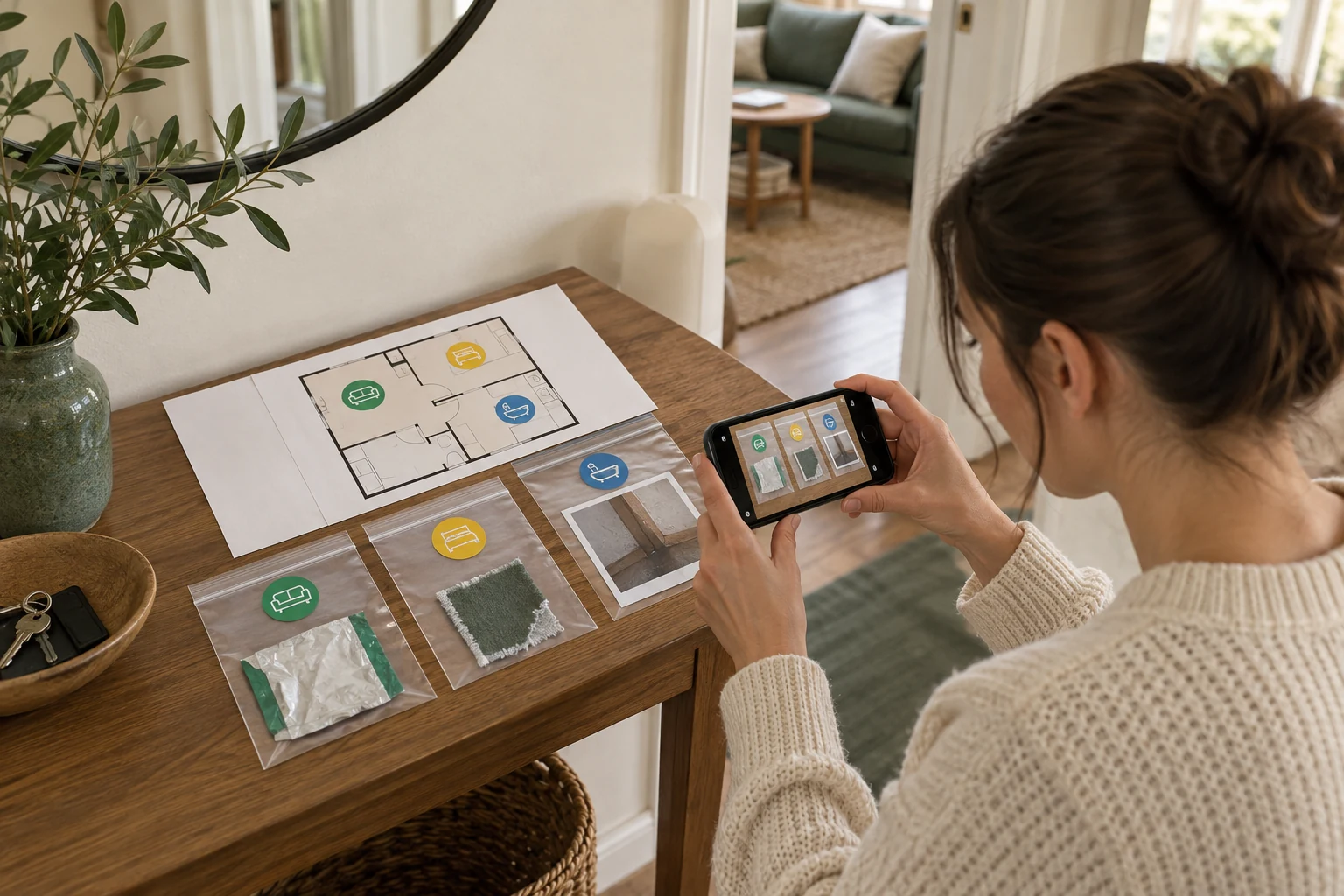
Choose an inspection when clues are mixed, repeated, hidden or important enough that a wrong guess would lead to treatment, disposal or building work. You do not need to identify the pest first; a precise account of what you observed is enough to start.
Signs that a photo answer is not enough
A single sharp photograph of an intact insect may support identification. Inspection becomes more useful when the image is blurred or damaged, signs appear in several rooms, noise comes from a concealed void, property damage has no specimen, or earlier products changed the evidence.
Consequence matters too. Before discarding furniture, opening a wall, sealing a roof gap or treating a food area, stronger evidence is worth obtaining. The same applies when children, pets, vulnerable occupants, wildlife or shared properties affect the plan.
Mixed clues should remain mixed. A small insect on a window, holes in a stored blanket and night noise in a wall could be three unrelated matters. Forcing them into one diagnosis makes the inspection less useful.
Prepare the question, not the answer
For each sign, record room, exact surface, date, frequency and what changed beforehand. Keep specimens labelled to their location and take an overview before a close-up. List previous products, cleaning, repairs and items moved between rooms.
Ask what the inspection will cover, which areas need access and how inaccessible spaces are recorded. Clarify whether the outcome is identification, a monitoring plan, a treatment proposal, a repair referral or a finding that no pest action is supported.
An inspection still has limits. It cannot see every concealed void, and no finding in an accessible room is not a certificate for the whole building. The report should state the method, areas seen and unresolved questions.
Call The City Pest Company on 0203 393 2338 when uncertainty is blocking a practical decision. See the identify a pest page for service context.
FAQs
Do I need a specimen?
It can help, but location records, photographs and access may still justify inspection without one.
Should I treat while waiting?
Avoid unplanned product use. It can alter evidence and add method restrictions.
Can one visit identify everything?
Not always. Concealed areas or limited evidence may require monitoring or a specialist referral.