
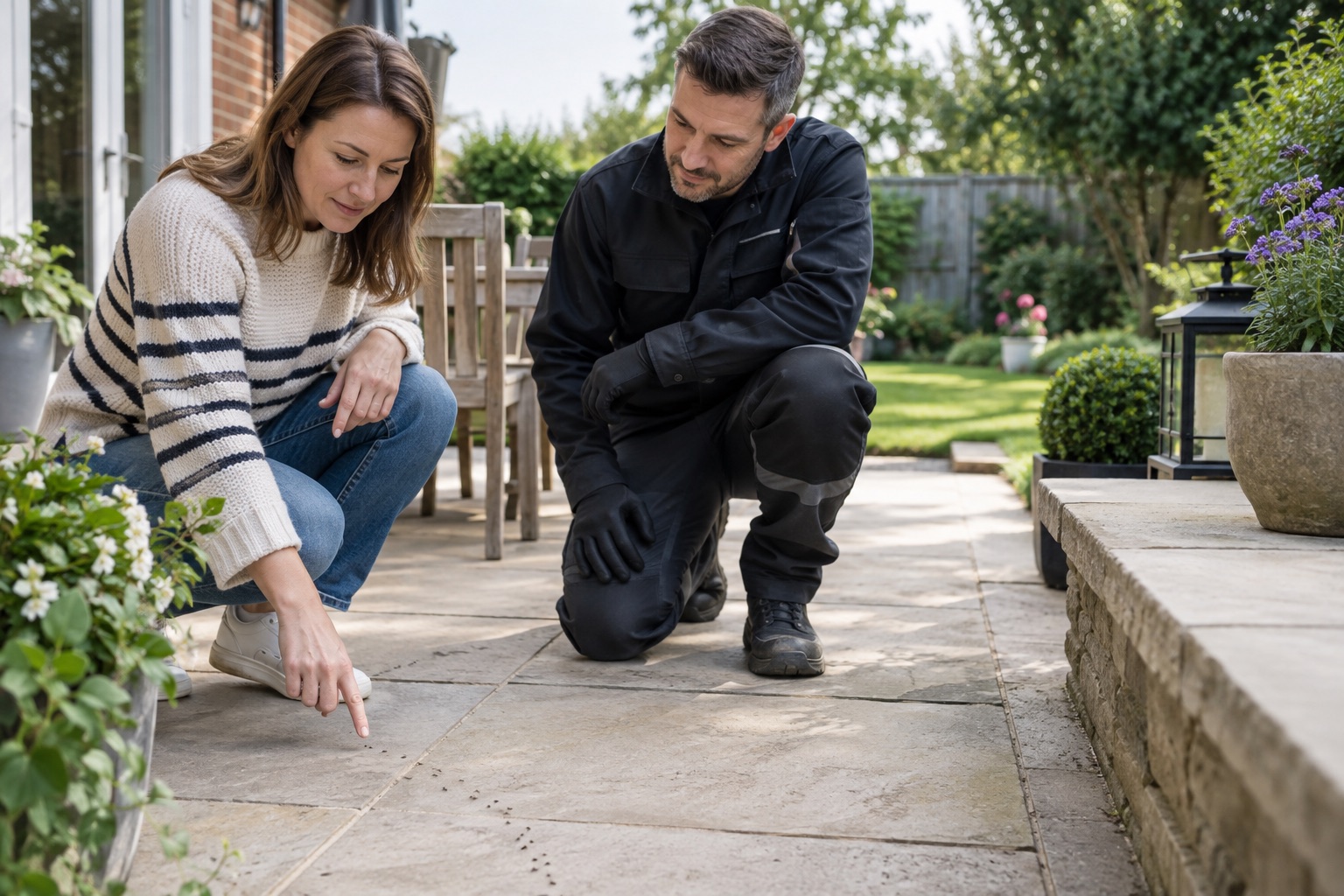
Ants using the edge of a patio may be a seasonal nuisance without entering the house. Before deciding on treatment, work out whether the concern is an outdoor nest, an indoor trail or a specific access point.
What evidence helps?
Record where the ants emerge and travel, whether food is attracting them, and if the same route leads indoors. Avoid assuming that visible surface activity reveals the full nest location.
What can you do now?
Clear spills and accessible food sources, and inspect gaps that can be repaired without harming ventilation or building fabric. Avoid pouring unlabelled mixtures into paving or drains.
Details worth including in your enquiry
- The patio edge and direction of ant travel
- Whether the route reaches an indoor room
- Planting, pets or children near a proposed work area
Describe observations in your own words and tell us about any treatment already used. Photos can be useful, but there is no need to take a risky close-up, handle droppings or disturb a nest. If a landlord, tenant or manager needs to provide access, say who can coordinate that before a visit is discussed.
Agreeing a useful next step
If intervention is needed, ask which species is involved, what area will be treated and how the method affects children, pets and planting. The quote should make the scope clear.
Before agreeing work, ask for the proposed area and method, any preparation or temporary exclusion, the number of visits, the full price and what would lead to a follow-up. Product-specific written instructions take priority over a general article. Sending an enquiry or naming a preferred day does not make a booking.
A common question
Should every patio ant nest be removed?
No. The appropriate response depends on the nuisance and actual route into the property.