
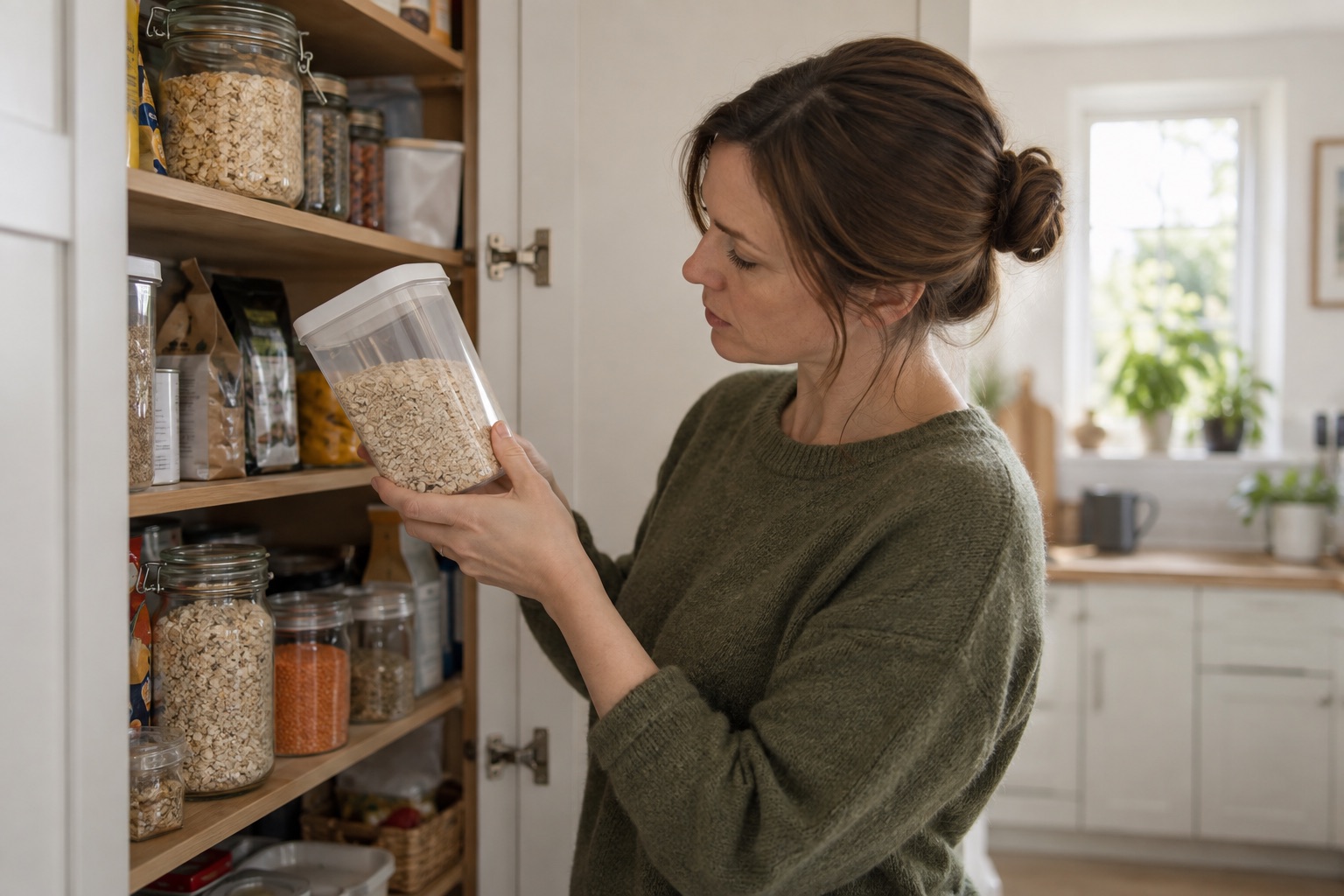
A moth in a kitchen does not automatically mean every cupboard item is affected. Pantry moths need to be distinguished from clothes moths and other small flying insects, then traced to a food source.
What evidence helps?
Look for insects or webbing in accessible dry goods and note which cupboard or packet is involved. Photograph the insect and affected packaging before disposal if doing so is safe.
What can you do now?
Separate clearly affected food, clean the relevant shelf and store replacement items in suitable sealed containers. Avoid applying insecticide to food or food-contact surfaces.
Details worth including in your enquiry
- The particular packet or shelf showing activity
- Whether the insect is a pantry or clothes moth
- Which foods have been isolated or discarded
Describe observations in your own words and tell us about any treatment already used. Photos can be useful, but there is no need to take a risky close-up, handle droppings or disturb a nest. If a landlord, tenant or manager needs to provide access, say who can coordinate that before a visit is discussed.
Agreeing a useful next step
Ask how the pest will be identified, which storage areas to inspect and whether monitoring is needed. A follow-up should check whether the source has been removed.
Before agreeing work, ask for the proposed area and method, any preparation or temporary exclusion, the number of visits, the full price and what would lead to a follow-up. Product-specific written instructions take priority over a general article. Sending an enquiry or naming a preferred day does not make a booking.
A common question
Must every unopened packet be thrown away?
No blanket disposal rule is appropriate; inspect the relevant products and follow specific advice.