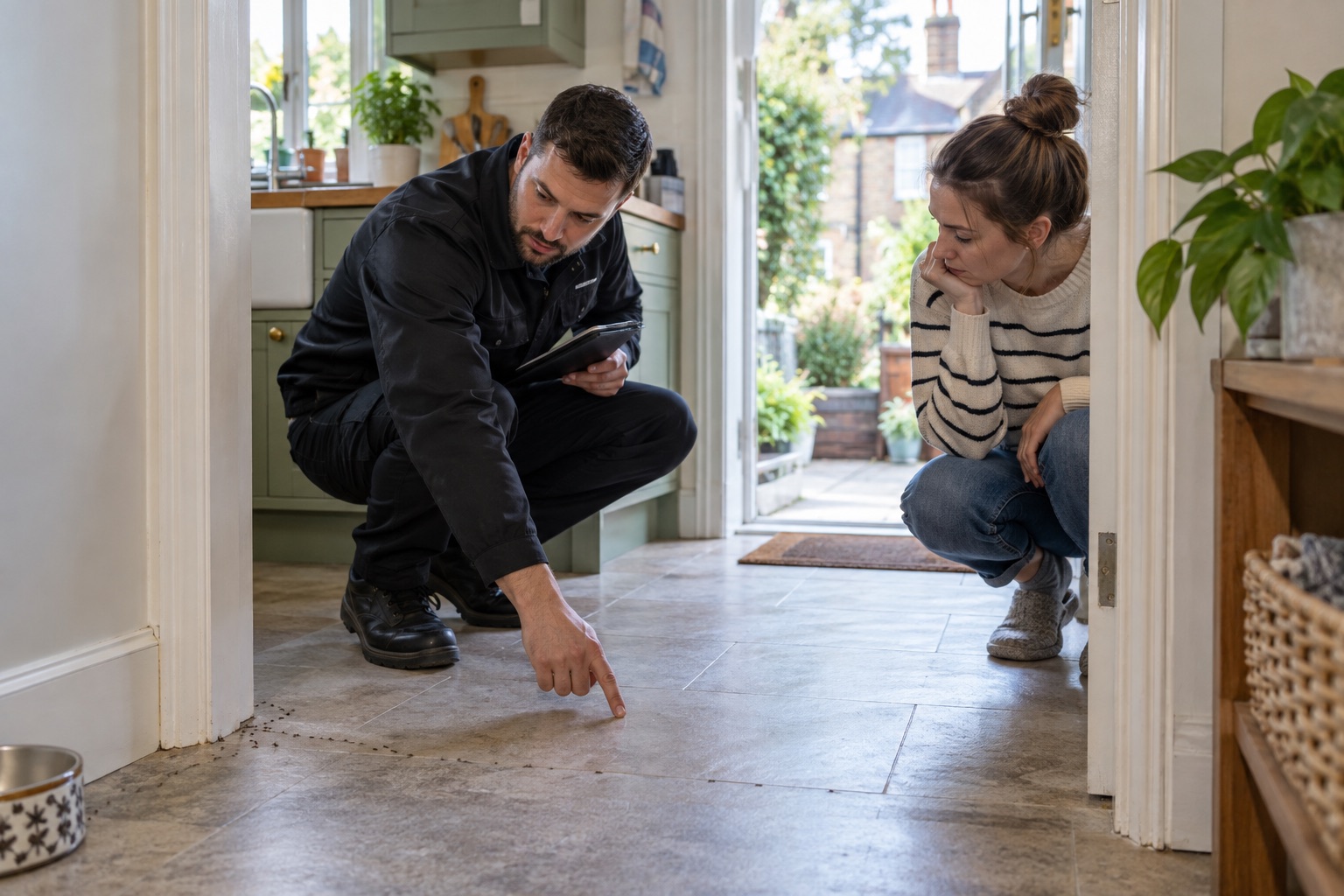
An ant trail tells you where insects are travelling, not necessarily where they are nesting. One doorway, food cupboard or window may be the useful starting point for an assessment.
What evidence helps?
Record the route, time of day and nearby food or moisture. A photo of the insects and an accessible entry point can help identify the species and separate indoor activity from a garden nuisance.
What can you do now?
Clean spills, close food containers and make a note of a repeat route. Avoid spraying a trail and assuming the source has gone; inappropriate treatment can make later identification harder.
Details worth including in your enquiry
- The route between food and an opening
- How often activity returns
- Any spray, bait or cleaning already attempted
Describe observations in your own words and tell us about any treatment already used. Photos can be useful, but there is no need to take a risky close-up, handle droppings or disturb a nest. If a landlord, tenant or manager needs to provide access, say who can coordinate that before a visit is discussed.
Agreeing a useful next step
Ask what has been identified, which area will be treated and what monitoring or proofing is proposed. A good plan addresses the cause as well as visible ants.
Before agreeing work, ask for the proposed area and method, any preparation or temporary exclusion, the number of visits, the full price and what would lead to a follow-up. Product-specific written instructions take priority over a general article. Sending an enquiry or naming a preferred day does not make a booking.
A common question
Why did ants return after cleaning?
The route or source may remain; cleaning is useful but not always the whole solution.