
 Identify what Roaches you have
Once you identify them from the images, don’t waste time, call us now.
If you are still not sure what is going on just call us to arrange a free inspection.
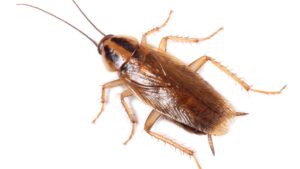 The German Cockroach
These roaches prefer to live and breed indoors and most often found around your kitchen or scurrying around your bathroom.
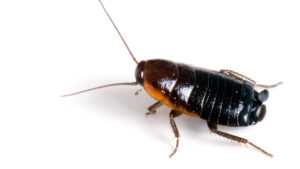 The Oriential Cockroach
Dark black or brown in colour they love cool, damp areas. These are a health concern because they love to feed on garbage and decaying things.
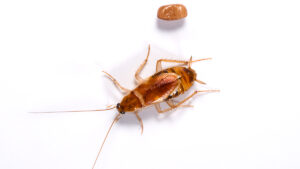 This is a Brown Banded Cockroach
One of the smallest species on 10-15mm length. Usually stay on the ground however have the ability to fly in warmer climates.
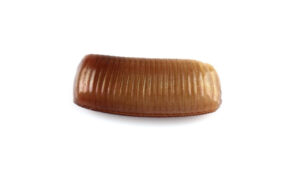 Egg Sack or Ootheca
The female cockroach carries the ootheca until the eggs inside it are ready to hatch. It’s dark brown in colour and averages 8 mm in length. One female may create six to 90 oothecae in her lifetime. The female deposits the egg case in a favourable environment after it is produced (German Cockroaches hold onto it until they’re ready to hatch)
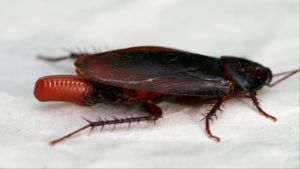 Cockroach Ejecting their Oothecae
Either as their normal process or in life threatening emergencies, cockroaches can eject their Ootheca as shown in this picture
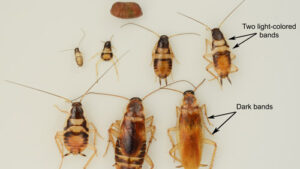 Brown Banded Life Cycle
The is a great visual example of cockroaches at their different stages
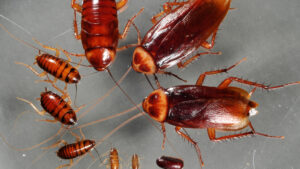 German Cockroach Life Cycle
The is a great visual example of cockroaches at their different stages.
Identify what Roaches you have
Once you identify them from the images, don’t waste time, call us now.
If you are still not sure what is going on just call us to arrange a free inspection.
The German Cockroach
These roaches prefer to live and breed indoors and most often found around your kitchen or scurrying around your bathroom.
The Oriential Cockroach
Dark black or brown in colour they love cool, damp areas. These are a health concern because they love to feed on garbage and decaying things.
This is a Brown Banded Cockroach
One of the smallest species on 10-15mm length. Usually stay on the ground however have the ability to fly in warmer climates.
Egg Sack or Ootheca
The female cockroach carries the ootheca until the eggs inside it are ready to hatch. It’s dark brown in colour and averages 8 mm in length. One female may create six to 90 oothecae in her lifetime. The female deposits the egg case in a favourable environment after it is produced (German Cockroaches hold onto it until they’re ready to hatch)
Cockroach Ejecting their Oothecae
Either as their normal process or in life threatening emergencies, cockroaches can eject their Ootheca as shown in this picture
Brown Banded Life Cycle
The is a great visual example of cockroaches at their different stages
German Cockroach Life Cycle
The is a great visual example of cockroaches at their different stages.
 Where could they be hiding?
The section of photos should help give you an idea of the places to be looking for them.
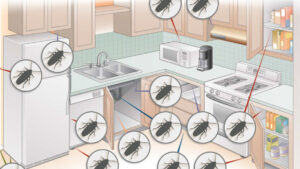 Kitchens
There are a variety of places in the kitchen to look: cupboards, around sink pipes, behind plinth boards, drains, backs of fridges and their motors especially, warm appliances and warm pipework. Anywhere where there is food residue, bins, cracks and crevices.
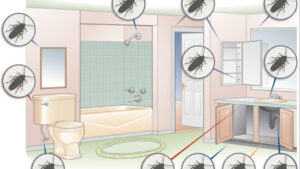 Bathrooms
They can come out of gaps around pipework, drains, under cupboards basins are in/on, anywhere there are gaps and holes.
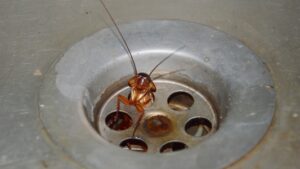 Drains
Cockroaches can either come from or escape down drains
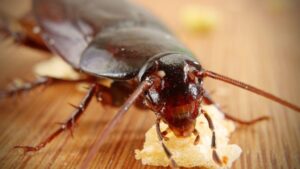 Food residue
Doing a deep clean is essential, any food residue which might not be apparent easily (ie under cookers, under appliance, against kickboards or worktops is easy food to attract them. A deep clean throughout will remove any food for them, this also helps us as they will go for our cockroach killing gel rather than other food options.
 Neighbours or food shops
Cockroaches is a pest which very commonly spreads through connected buildings, so if a neighbour has the issue it could have come from them. Speaking to any neighbours surrounding you is important to get an extent on how wide spread the issue is. Also if there is a food establishment below you or near it may be coming from there.
Where could they be hiding?
The section of photos should help give you an idea of the places to be looking for them.
Kitchens
There are a variety of places in the kitchen to look: cupboards, around sink pipes, behind plinth boards, drains, backs of fridges and their motors especially, warm appliances and warm pipework. Anywhere where there is food residue, bins, cracks and crevices.
Bathrooms
They can come out of gaps around pipework, drains, under cupboards basins are in/on, anywhere there are gaps and holes.
Drains
Cockroaches can either come from or escape down drains
Food residue
Doing a deep clean is essential, any food residue which might not be apparent easily (ie under cookers, under appliance, against kickboards or worktops is easy food to attract them. A deep clean throughout will remove any food for them, this also helps us as they will go for our cockroach killing gel rather than other food options.
Neighbours or food shops
Cockroaches is a pest which very commonly spreads through connected buildings, so if a neighbour has the issue it could have come from them. Speaking to any neighbours surrounding you is important to get an extent on how wide spread the issue is. Also if there is a food establishment below you or near it may be coming from there.

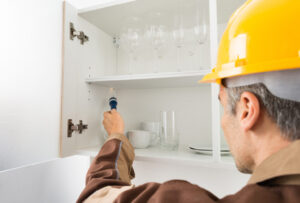

|
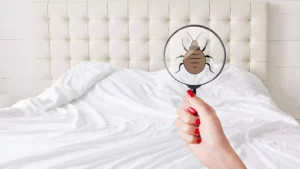
First step is lookingWe are one of the few companies to actually take the time to search all of the relevant places to find nesting sites and destroy them first. |
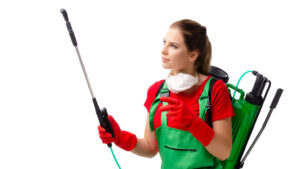 | We use the best Long Life Insecticide insecticide for Cockroaches on the marketWe are one of the few companies to actually take the time to search all of the relevant places to find nesting sites and destroy them first. |
|
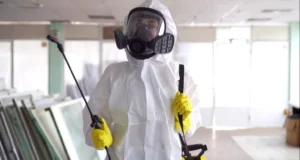
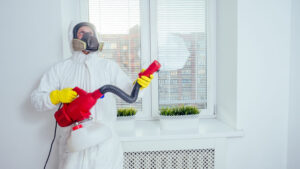
ULV Cold Fogging (Fumigation)There are 2 types of fumigation, smoke generated (can leave long lasting smell & discolouration to paint) & cold fogging (water based insecticide fired into tiny particles to float around to settle on walls, ceiling, cracks and crevices with no risk). We use the water based insecticide treatment. Ours lasts for 2 months with maxium effort for around 2 weeks. We would expect a refresh after 2 weeks. |

|
We use insect growth regulators or (IGR’s)We are big on using science and technology as anything clever to help our customers get rid of pests quicker and keep them gone has to be a good thing. IGR’s remove the ability for them to grow and mature normally and stop their ability to breed or some eggs not even able to hatch. Our product lasts for up to 5 months to help keep it gone afterward! |
|
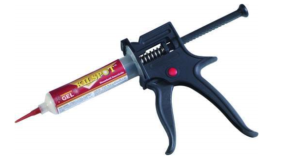
Cockroach GelGel which is a food with an insecticide within so it kills the Cockroaches and they take it back to the nesting areas to kill the young. |
|
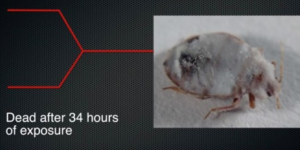
Gel which removes the waxy coating and causes rapid dehydration & deathWe use a special advanced non-toxic safe gel/powder which removes the waxy protective coating on the outside of the roach to cause rapid dehyration and death. The amazing two things about this product are that they are safe/chemical free and lasts when undisturbed for 10 years! |
First step is looking
We are one of the few companies to actually take the time to search all of the relevant places to find nesting sites and destroy them first.
We use the best Long Life Insecticide insecticide for Cockroaches on the market
The difference between shop bought products and professional products is mostly the residual effect (long life).
Ours lasts for 2 months with maxium effort for around 2 weeks. We would expect a refresh after 2 weeks.
The ability for Cockroaches to develop a resistance is the lowest with our product and the most effective at killing them.
ULV Cold Fogging (Fumigation)
There are 2 types of fumigation, smoke generated (can leave long lasting smell & discolouration to paint) & cold fogging (water based insecticide fired into tiny particles to float around to settle on walls, ceiling, cracks and crevices with no risk).
We use the water based insecticide treatment.
Ours lasts for 2 months with maxium effort for around 2 weeks. We would expect a refresh after 2 weeks.
We use insect growth regulators or (IGR’s)
We are big on using science and technology as anything clever to help our customers get rid of pests quicker and keep them gone has to be a good thing.
IGR’s remove the ability for them to grow and mature normally and stop their ability to breed or some eggs not even able to hatch.
Our product lasts for up to 5 months to help keep it gone afterward!
Cockroach Gel
Gel which is a food with an insecticide within so it kills the Cockroaches and they take it back to the nesting areas to kill the young.
Gel which removes the waxy coating and causes rapid dehydration & death
We use a special advanced non-toxic safe gel/powder which removes the waxy protective coating on the outside of the roach to cause rapid dehyration and death.
The amazing two things about this product are that they are safe/chemical free and lasts when undisturbed for 10 years!

Airing-Do
Open windows & doors if you feel it is needed.

Washing-Do
Wash clothing and sheets once a week at 60 degrees.

Food away
Keep food in storage boxes so they can get to it

Sleep in Bed
Sleeping in the beds after is essential, bugs will not go if not

Don't enter
As insecticides need to settle do not enter until 1 hour after treatment.
Don't clean
Apart from food prep surfaces cleaning wipes away insecticide.
Leave monitors
It is important that the insect monitors we put down don't move.
Don't ignore
Our instructions & advice must be followed or it won't go.