|
Which type of squirrel do you haveThe grey squirrel or the less common red squirrel |
|
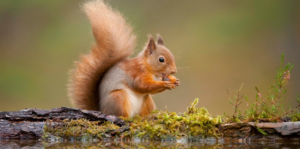
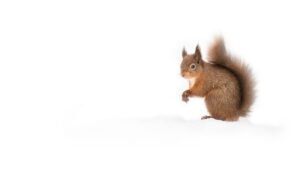
The English Red SquirrelThere are two species of squirrel in the UK; red squirrels and grey squirrels. Populations are currently estimated at approximately 140,000 red squirrels. Red squirrels are our native species and have lived in the UK for around 10,000 years. Unfortunately, without conservation management, red squirrels could become extinct in England in approximately 10 years. Length 21cm, weighing in at 300g |
|
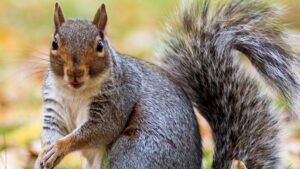
The American Grey SquirrelPopulations are currently estimated at approximately 2.5 million grey squirrels. Grey squirrels were introduced to the UK from North America by the Victorians in the 1800s, the first record of them escaping and establishing a wild population is 1876. Length 23-30cm and weighing in at 400-600g. |
Which type of squirrel do you have
The grey squirrel or the less common red squirrel
The English Red Squirrel
There are two species of squirrel in the UK; red squirrels and grey squirrels. Populations are currently estimated at approximately 140,000 red squirrels. Red squirrels are our native species and have lived in the UK for around 10,000 years. Unfortunately, without conservation management, red squirrels could become extinct in England in approximately 10 years. Length 21cm, weighing in at 300g
The American Grey Squirrel
Populations are currently estimated at approximately 2.5 million grey squirrels. Grey squirrels were introduced to the UK from North America by the Victorians in the 1800s, the first record of them escaping and establishing a wild population is 1876. Length 23-30cm and weighing in at 400-600g.


Areas to be looking
Squirrels will usually jump from trees or climb up drain pipes to get onto a wall or roof. Once there they are looking for holes or small holes to gnaw wood and make them larger to get in. This will give you an idea of some places to look.
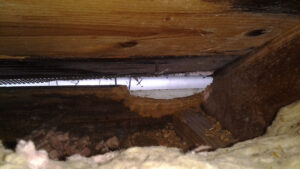 Beams, joists and soffits
Look for areas where they have gnawed wood
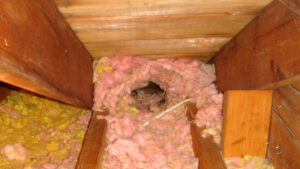 Tunneling into insulation
Squirrels will tunnel through or into insulation as it is soft and warm to use as nesting areas
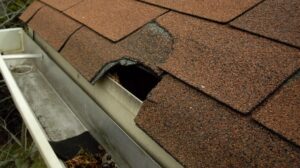 Missing tiles
Squirrels will either capitalise on a missing tile, pull it off to get in or if there is a broken piece they might still be able to get through the hole
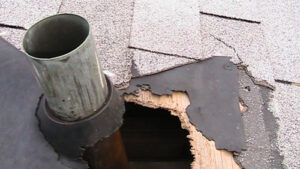 Around Pipes
Either extractor venting pipes, guttering, condensate, there might be small holes they can exploit to gain entry.
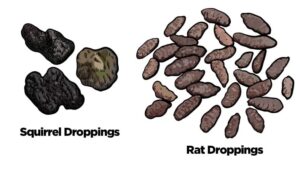 Squirrel droppings compared to Rat
Both squirrel, and rat feces are dark brown or black. However, there is a slight difference between the feces of the two pests in shape. Rat droppings are spindle-shaped. Squirrel feces may also be spindle-shaped or they may appear clumped, depending primarily on the moisture content of their food source.
Areas to be looking
Squirrels will usually jump from trees or climb up drain pipes to get onto a wall or roof. Once there they are looking for holes or small holes to gnaw wood and make them larger to get in. This will give you an idea of some places to look.
Beams, joists and soffits
Look for areas where they have gnawed wood
Tunneling into insulation
Squirrels will tunnel through or into insulation as it is soft and warm to use as nesting areas
Missing tiles
Squirrels will either capitalise on a missing tile, pull it off to get in or if there is a broken piece they might still be able to get through the hole
Around Pipes
Either extractor venting pipes, guttering, condensate, there might be small holes they can exploit to gain entry.
Squirrel droppings compared to Rat
Both squirrel, and rat feces are dark brown or black. However, there is a slight difference between the feces of the two pests in shape. Rat droppings are spindle-shaped. Squirrel feces may also be spindle-shaped or they may appear clumped, depending primarily on the moisture content of their food source.