
Get rid of wasps
Wasps can be a real danger if you don’t know what you’re doing and get attacked. Anaphylaxis and death are real posibilities. Nearly 100 people die every year from wasp stings. Scroll down for more information about wasps or call us now. 1 year guarantee included with our service.
Contact us to talk further
We offer a professional inspection of your premises. Please call us now on
0203 393 2338
Get rid of wasps
Wasps can be a real danger if you don’t know what you’re doing and get attacked. Anaphylaxis and death are real posibilities. Nearly 100 people die every year from wasp stings. Scroll down for more information about wasps or call us now. 1 year guarantee included with our service.
Contact us to talk further
Identify
The aim of this section is to help you to identify what you have to make sure that it is actually wasps not bees. Click below to jump to a section.
Is it wasps or bees
Select the headings below, then click below to see pictures and find out more
|
Make sure it’s not honey beesIt is important to work out which do you have, bees or wasps as honey bees are protected and you need the British Bee Keepers Association to help as it is illegal for pest control to deal with honey bees. |
|
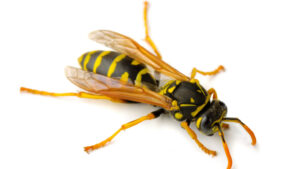
The Common Wasp & the German WaspThe main two species of wasp in the UK are the Vespula Vulgaris and Vespula germanica, or the Common and German wasp. They have a yellow and black body and they vary in size from 12 to 17mm. Their lifecycle is different to bees, in that the males and workers (sterile females) die in the winter, leaving only a young Queen who’ll lay eggs over spring. Workers emerge over the summer and take over nest building duty. There are over 9,000 species of wasp in the UK. They are useful as they feed on a wide range of invertebrates including spiders, ants, green flies and midges. As a result they keep the population of these right down. |
|
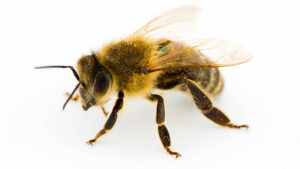
The Honey BeeTwo of the best ways to tell if it is a bee is that it is furry and they swarm. They also have pollen sacks on their knees. There are over 250 types of bees in the UK but only one honey bee. These are protected and so you will need to contact the british bee keepers association at https://www.bbka.org.uk/ |
Make sure it’s not honey bees
It is important to work out which do you have, bees or wasps as honey bees are protected and you need the British Bee Keepers Association to help as it is illegal for pest control to deal with honey bees.
The Common Wasp & the German Wasp
The main two species of wasp in the UK are the Vespula Vulgaris and Vespula germanica, or the Common and German wasp. They have a yellow and black body and they vary in size from 12 to 17mm. Their lifecycle is different to bees, in that the males and workers (sterile females) die in the winter, leaving only a young Queen who’ll lay eggs over spring. Workers emerge over the summer and take over nest building duty. There are over 9,000 species of wasp in the UK. They are useful as they feed on a wide range of invertebrates including spiders, ants, green flies and midges. As a result they keep the population of these right down.
The Honey Bee
Two of the best ways to tell if it is a bee is that it is furry and they swarm. They also have pollen sacks on their knees. There are over 250 types of bees in the UK but only one honey bee. These are protected and so you will need to contact the british bee keepers association at https://www.bbka.org.uk/
Dealing with a wasp nest
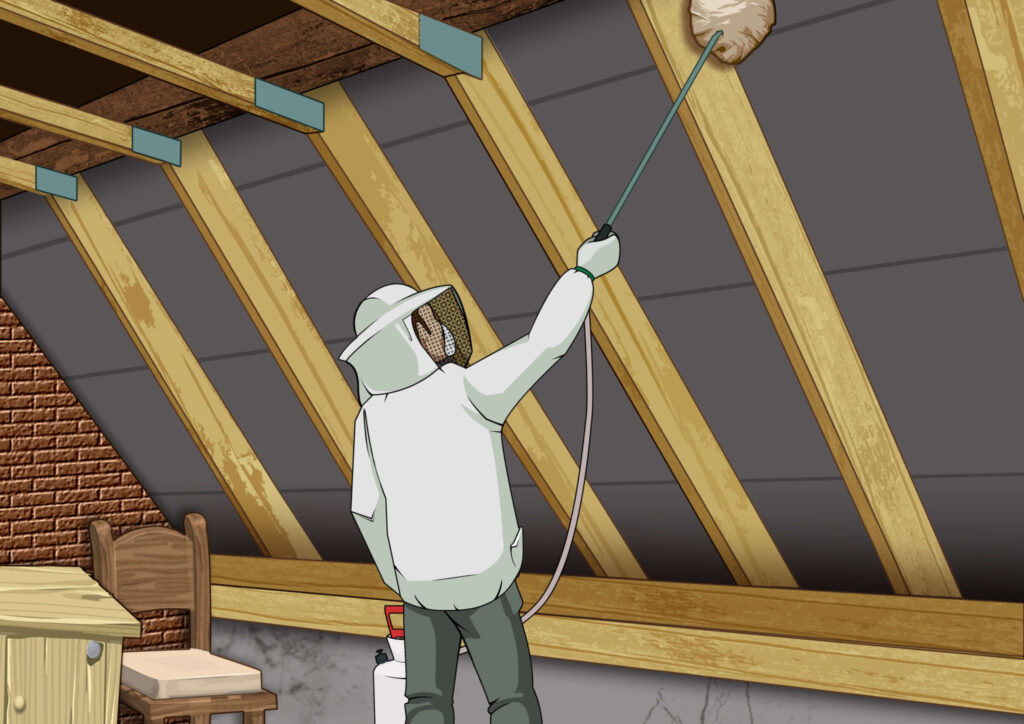
The way to deal with a wasps nest is to apply a special powdered insecticide or (dust) directly into the heart of the nest.
The process
Identify where the wasps are coming from outside
Firstly it is always best to dust a nest from the outside rather than inside. If you can have a look around the property to find where you can see them coming in and out constantly it will help us to know where we need to get to and is there ladder access from the outside and things like height etc.
If no access do it inside
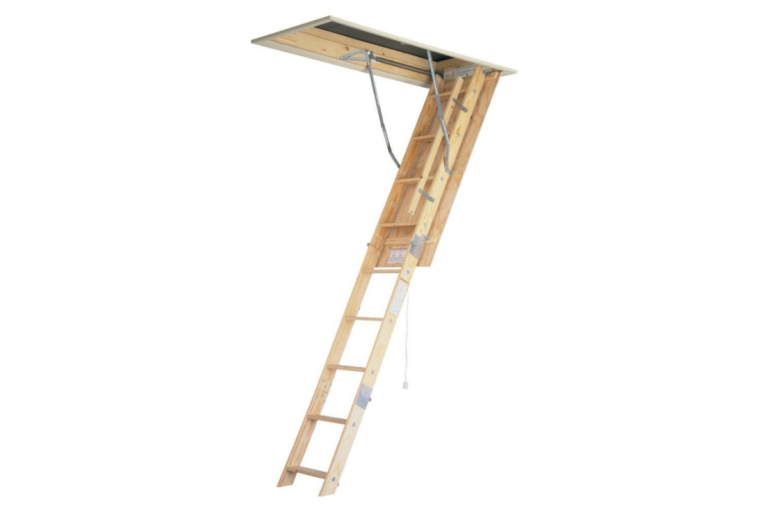
If there is no access or it is restricted on the outside we may have to deal with it on the inside which usually means getting loft access. If you have a ladder and lighting it would be helpful.
Destroying the nest
Once we have established access inside or outside we can them proceed with destroying the nest which is by the insecticide dust pumped directly into the heart of the nest.
Where can they be
This section is designed to show some examples of places wasps make their nests. Click the titles to change the picture
Areas they can choose
Wasps can pick a variety of different areas to setup camp, here are some examples

Areas to be looking
It is important to work out which do you have, bees or wasps as honey bees are protected and you need the British Bee Keepers Association to help as it is illegal for pest control to deal with honey bees.
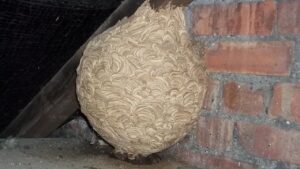
Inside lofts on the ground, rafters or in the roof
These are the most common areas to find wasp nests
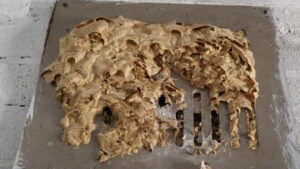
Vents and airbricks
Two of the best ways to tell if it is a bee is that it is furry and they swarm. They also have pollen sacks on their knees. There are over 250 types of bees in the UK but only one honey bee. These are protected and so you will need to contact the british bee keepers association at www.bbka.org.uk/
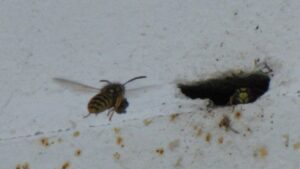
Holes in brick
If wasps get into holes in the brick they can get into the cavities and build sizable nests. As they are buzzing around inside the walls they can find a way into the living areas.
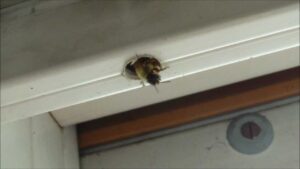
Window Frames
This is relatively common for wasps to nest like this. Once inside the cavity in the wall they can make it through into living areas.
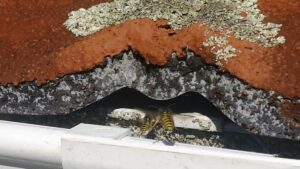
Under roof tiles
Under roof tiles can be a very common place which wasps go to. On the inside of the loft you will usually find the nest visible and the constant flow of wasps in and out on the outside.
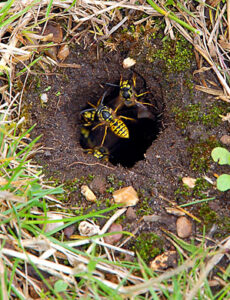
Holes in the ground
Quite commonly wasps can make holes in the ground (usually with some folliage surrounding them) and nest
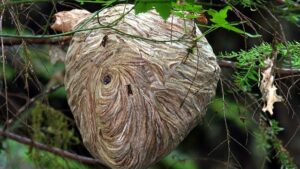
Nests in bushes or trees
This is relatively common for wasps to nest like this, after all it is their natural place to be. Just with the advent of houses we have provided them with a much better and safer place to exist than trees so our houses and roofs get plagued.
Areas to be looking
It is important to work out which do you have, bees or wasps as honey bees are protected and you need the British Bee Keepers Association to help as it is illegal for pest control to deal with honey bees.
Inside lofts on the ground, rafters or in the roof
These are the most common areas to find wasp nests
Vents and airbricks
Two of the best ways to tell if it is a bee is that it is furry and they swarm. They also have pollen sacks on their knees. There are over 250 types of bees in the UK but only one honey bee. These are protected and so you will need to contact the british bee keepers association at www.bbka.org.uk/
Holes in brick
If wasps get into holes in the brick they can get into the cavities and build sizable nests. As they are buzzing around inside the walls they can find a way into the living areas.
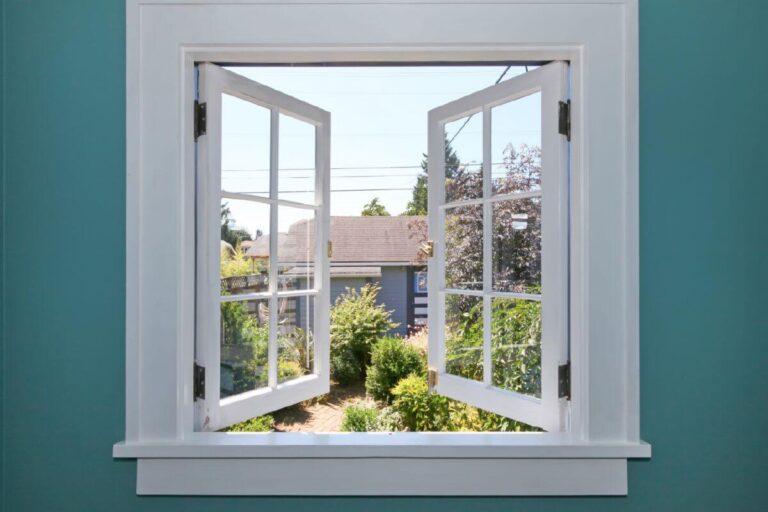
Window Frames
This is relatively common for wasps to nest like this. Once inside the cavity in the wall they can make it through into living areas.
Under roof tiles
Under roof tiles can be a very common place which wasps go to. On the inside of the loft you will usually find the nest visible and the constant flow of wasps in and out on the outside.
Holes in the ground
Quite commonly wasps can make holes in the ground (usually with some folliage surrounding them) and nest
Nests in bushes or trees
This is relatively common for wasps to nest like this, after all it is their natural place to be. Just with the advent of houses we have provided them with a much better and safer place to exist than trees so our houses and roofs get plagued.
Prepare for an appointment
Ok so you have booked an appointment, what do you need to do to prepare for you and to help us?
Close all windows and doors
As wasps will get angry and fighty and want to sting anyone who is nearby all windows and doors must be left closed until the next morning.
Clear areas for access
Clearing the way for us to get to the part of the outside of the house or area for loft access is necessary. If there is ladder access and lighting that will be very helpful.
Avoid the area until next day
Dazed and confused but in defensive mode wasps will want to attack anyone and everyone so staying well away from the area until the next day is necessary.
Nest Removal
This covers removal of a wasps nest if it is a good idea or not
Do I need to get rid of the nest
Old nests act as a deterrent
If a wasp next season is looking for somewhere to live and they come across an old wasp nest they take it as another wasp’s territory and move on, so it can act as a natural deterrent.
Is it dangerous to remove the nest
Very much yes, ideally you leave an old nest as a deterrant but either way avoid it for a couple of weeks at least to ensure there is completely no activity left. Next year if you wanted to remove it we can assist for a smaller fee. Sometimes they are found in wall cavities which means that they are inaccessible.
Will wasps take it over in the future
No, this is a genetic survival trait that wasps will not inhabit an old nest due to risk of suffering from a poorer built nest, they will always build their own. So an old nest will not get taken over, just act as a deterrant.
Frequently Asked Questions
Below are some frequently asked questions with answers to hopefully answer most of the things you want to know.
Our guarantee covers you for 12 months to make sure the nest is completely dead. If there are signs after our treatment just give us a call and we will come back and retreat that nest free of charge
No but as the wasps will be dangerous staying inside with the windows closed and doors closed is advised. You can if you prefer leave as we leave for a few hours.
This is true to an extent, wasps can detect the chemicals we release from our skin. When we have a panic response they can detect the chemical changes and will head for us sometimes. If you act calmly and don’t panic then there isn’t anything to cause the wasp to want to sting us so it will, most of the time, just move on. However this may not be everytime so it is best to avoid them and to let the professionals deal with them
Wasps are territorial and will usually not build their nest near another wasp nest. If the artificial wasp nest is hung early in the season before nest building starts it may convince the wasp to build somewhere else. However, insect exterminators have reported having several live nests in close proximity of one another. Not all wasps build their nest in isolation. So they do work, it isn’t a guarantee and we recommend more than one fake nest to do the job.
Normally wasps use a nest for one year. At the end of the year, all except the queen die. In spring the queen starts a new nest and rarely uses the old one. In some cases the wasps will either reuse an old nest or build a new nest right on top of the old one. They will not however use another colonies nest. So once the wasps have been killed off no other wasps will use the nest again.
No nests shouldn’t as it needs time to ensure that all wasps have been killed off so that it’s safe. Also as it acts as a deterrant it is quite useful for the dead nest to remain to ward off others.
Sometimes this is possible yes, call us to find out what the earliest available appointment is.
We use unmarked vehicles thereby not highlighting the reason for our visit. If anyone asks us we can say we are doing a little building work and not disclose anything.
Yes our service is insured for up to £10 Million of cover.
Yes we are RSPH Level 2 certified which is the highest level in pest management so you know you are in good hands.
We offer a professional inspection of your premises. Please call us now on
0203 393 2338