
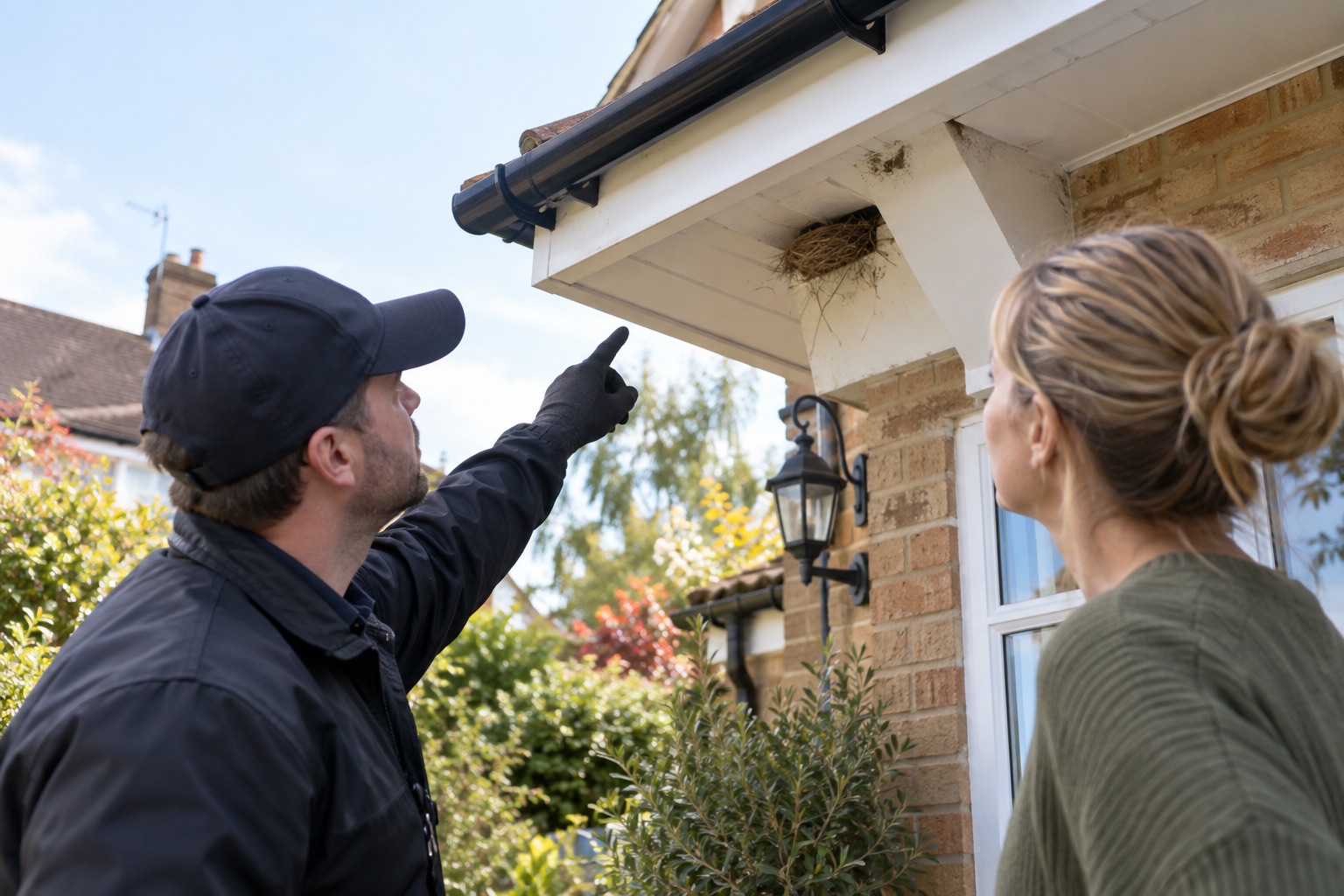
Tiny moving specks near a window or roof space are not automatically bird mites. Identification matters, especially when people are experiencing irritation that can have many causes.
What evidence helps?
Record the location, timing and whether birds or nesting material are present nearby. A clear close-up photo or safely collected specimen may help; avoid disturbing an active nest.
What can you do now?
Do not apply pesticides to skin, bedding or a bird nest. Keep the affected area undisturbed where practical and seek medical advice for symptoms rather than asking a pest website to diagnose them.
Details worth including in your enquiry
- The precise location of a suspected specimen
- Whether birds or a nest are nearby
- Any symptoms to discuss with a health professional
Describe observations in your own words and tell us about any treatment already used. Photos can be useful, but there is no need to take a risky close-up, handle droppings or disturb a nest. If a landlord, tenant or manager needs to provide access, say who can coordinate that before a visit is discussed.
Agreeing a useful next step
Ask for an inspection that considers the insect and possible source. Any bird-related work must account for active nests and lawful access before a treatment is proposed.
Before agreeing work, ask for the proposed area and method, any preparation or temporary exclusion, the number of visits, the full price and what would lead to a follow-up. Product-specific written instructions take priority over a general article. Sending an enquiry or naming a preferred day does not make a booking.
A common question
Can skin irritation confirm bird mites?
No. A person’s symptoms alone cannot identify a pest.