
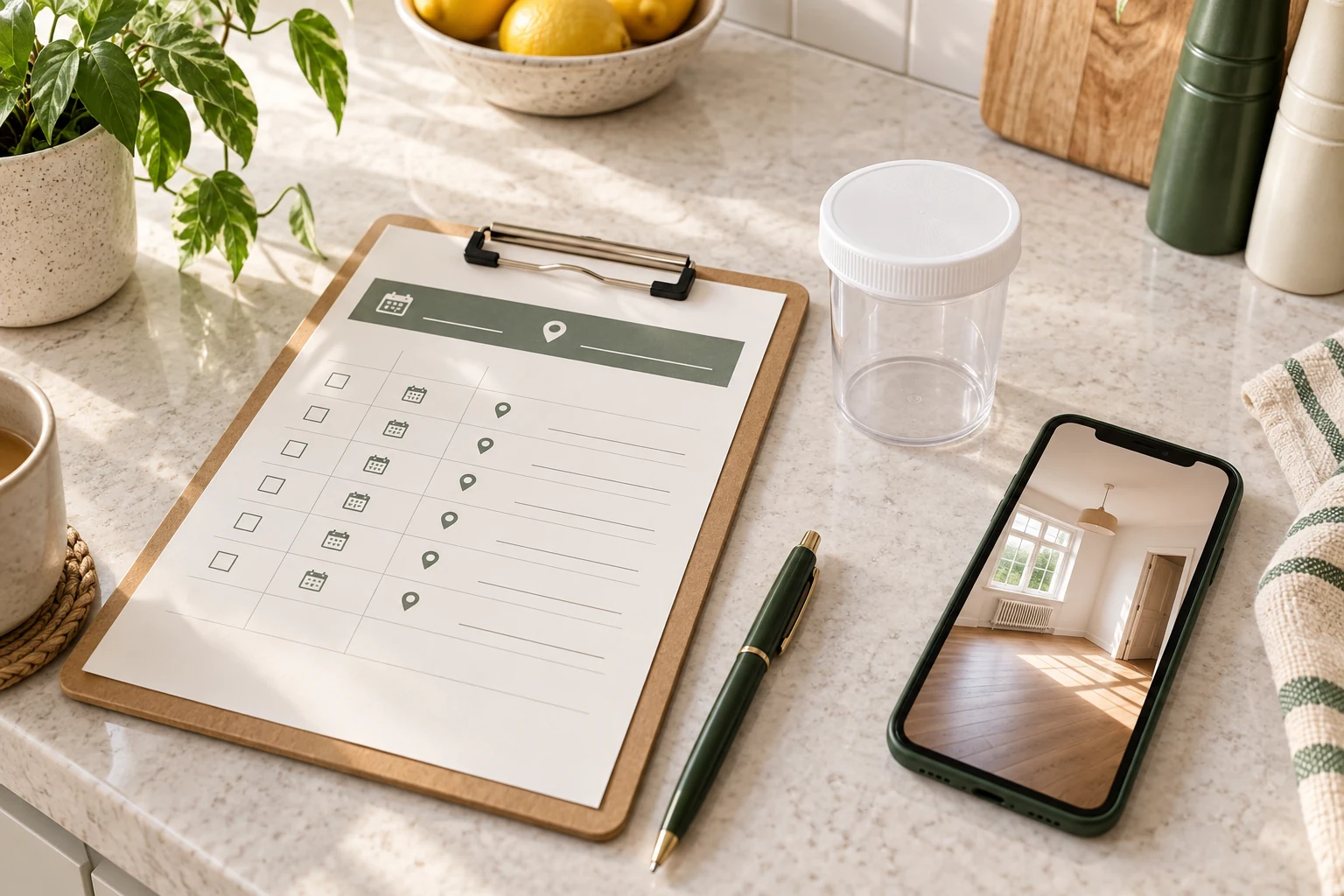
A useful pest record can fit on one page. Note the date, exact place, what you directly observed and any safe photograph or specimen reference. Add relevant changes such as a delivery, leak, building work or moved furniture without declaring that they caused the problem. Then stop. The record is meant to guide an inspection, not turn your home or workplace into a continuous search.
Record observations rather than conclusions
Write “three small marks on the shelf beneath the sink” instead of “mouse droppings”. Write “repeated entry and exit at the left roof eave between 2pm and 3pm” instead of “active wasp nest”. The second form in each example may eventually be correct, but the first preserves what you actually know.
Include an approximate size using an ordinary comparison when it can be done without touching the material. Note whether something crawled, flew or jumped, and the direction it moved. For sounds, record the room, wall or ceiling, time and duration. These details help distinguish patterns without requiring you to identify a species.
Use one line per event
A simple note might contain five fields: date and time; room or feature; observation; photograph or specimen reference; and action taken. If nothing new happens, do not create an entry just to show that you checked. A short sequence of specific observations is easier to assess than dozens of repeated messages.
In a shared property or business, nominate one person to hold the record. Others can send that person their observations. This avoids conflicting versions and keeps personal information away from large group chats.
Photographs are optional
A wide photograph can show location and scale. A close image may help if it can be taken without climbing, dismantling furniture, reaching into a gap or approaching activity. Remove house numbers, faces, customer details and private paperwork from the frame where practical.
You remain in control of whether to take, send or view an image. If photographs cause distress or cannot be taken safely, a precise written description is still useful. Ask how a file will be shared before sending sensitive material.
If an insect is already safely contained, keep the container closed and ask whether it is useful. Do not chase, touch or capture something that would expose you to a sting, contamination, height or machinery.
Keep health observations separate
Skin marks alone do not identify a pest. The NHS lists physical bed-bug signs around bedding and furniture as well as possible bite reactions, and it directs people with medical concerns to healthcare advice. In your property note, record the non-medical evidence and avoid asking a pest technician to diagnose a rash.
If someone has a health concern, use the appropriate NHS route. You can tell the pest company about relevant sensitivities or access needs without sending close-up skin photographs or a detailed medical history.
Know when the note is complete
Stop when you have enough information to locate the concern and explain its timing. Do not pull out heavy appliances, lift flooring, open electrical equipment or enter a loft or roof space merely to improve the record. Mark an area as inaccessible and let the inspector plan around it.
Keep ordinary hygiene going unless you have been told that a particular sign should remain undisturbed. If you must remove damaged food or clean a working surface, take a safe photograph first if appropriate and record what you did.
Call 0203 393 2338 with the postcode and your short note. The team can tell you which detail matters next and whether an inspection is appropriate.
Common questions
How many days should I record signs?
There is no universal period. Call when the concern warrants help; do not delay an enquiry simply to create a longer log.
Must I provide a pest photograph?
No. Location, timing, movement and physical signs can start the conversation. Images are optional.
Should I move an item to photograph underneath it?
Only if it is light, safe and does not risk spreading material. Otherwise describe the inaccessible area.
What if several people report different things?
Keep each observation separate with its own date and location. Do not force them into one explanation before inspection.
Sources and further reading
External references may contain pest or skin photographs.