
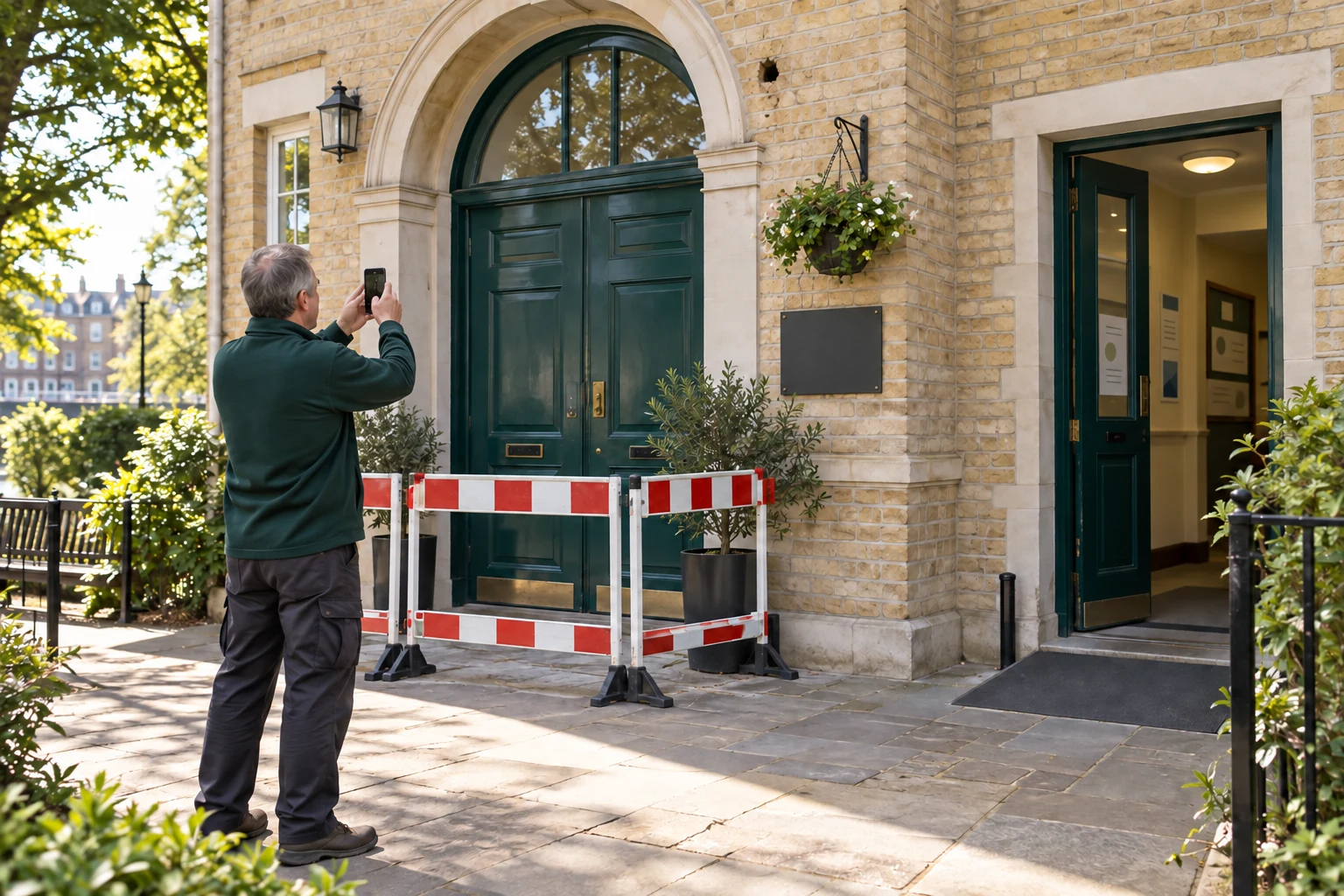
Keep people away from the flight path, use another entrance if one is available and report the exact opening from a safe distance. Do not block the hole, strike the nest or climb for a photograph. The first conversation needs location and access information; it does not require you to decide whether the insects are wasps, bees or another lookalike.
Make the doorway usable without approaching the nest
If the door is not essential, close it from inside and put a clear temporary notice at the alternative route. Tell residents, staff, delivery drivers or contractors which entrance to use. Keep pets and children away from the area. Do not stand outside to direct people beside the flight line.
If it is the only practical entrance, explain that immediately when calling. Give the busiest times, who relies on the door and whether an accessible alternative exists through another part of the building. A business may need to manage a customer route; a block may need resident communication and emergency-access advice.
Describe activity without disturbing it
From indoors or another secure position, record the side of the doorway, approximate height, fixed opening and direction of travel. Note whether many insects repeatedly use one point or only individual insects visit flowers, bins or food nearby. A repeated route into a cavity supports a nest enquiry; it does not establish species from a distance.
Avoid zooming from a ladder, leaning from a window or spraying or blocking the entrance. Disturbing a wasp nest can provoke defensive activity, and covering the opening also removes the feature the professional needs to assess. BPCA says not every wasp nest needs treatment; location and the risk to people are part of the decision.
Give the caller the details that change access
State whether the opening is above the door, inside a porch, behind cladding or in the ground beside the threshold. Mention known sting allergies as an access-planning fact without adding medical history to the pest record. Confirm gates, keys, parking and whether a landlord or manager must authorise work.
Ask what the visit includes if the insects prove to be bees, the nest cannot be reached or specialist height access is needed. Exact method, price and return arrangements should be agreed for the location.
If anyone has difficulty breathing, throat or mouth swelling, collapses or shows another severe reaction after a sting, follow current NHS emergency advice and call 999. The pest-control phone line is not an emergency medical service.
Call The City Pest Company on 0203 393 2338, or read the wasp service page.
Frequently asked questions
Should the entrance hole be sealed at night?
No. Do not approach or block it before identification and a control plan; disturbing a nest can provoke defensive activity.
Does one wasp beside a door mean there is a nest?
No. Record whether insects repeatedly travel through one fixed opening.
Should every nest be treated?
No. BPCA advises a risk-based decision. Location, species and the exposure of people matter.
What if the doorway cannot be avoided?
Keep your distance, reduce use as far as practical and explain the access constraint when calling so the next step can be planned.
Sources and further reading
External references may contain pest or skin photographs.