
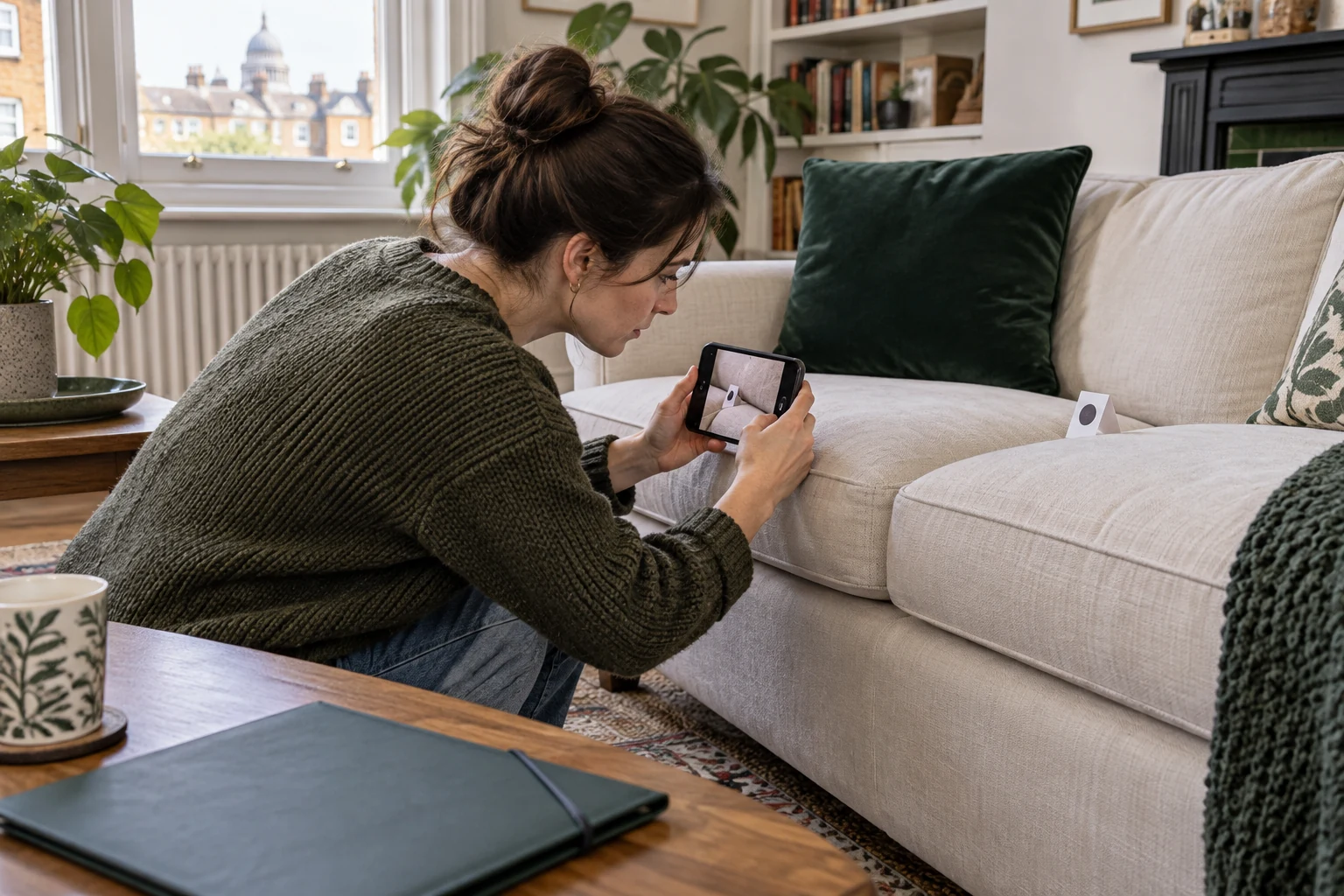
If a possible bed bug or related sign appears on a sofa or chair, keep the furniture in place and record the precise seat, seam or surface involved. Upholstered seating can be relevant because people rest there, but neither the fabric nor the room alone confirms bed bugs. Identification and an inspection plan should come before disposal or treatment.
Describe how the seat is actually used
“In the lounge” is less useful than “beneath the removable cushion on the end seat where someone naps most evenings”. Note who uses the furniture, whether anyone sleeps there, when the sign was found and whether bags, bedding or second-hand items were recently placed on it. These details help an inspector decide where close examination matters; they do not prove the source.
Record the construction as well. Loose cushions, piping, zips, folds, a dust cover, a reclining mechanism and a frame fixed against the wall create different access. Photograph the whole piece, then the exact location of the sign. If an insect is already safely captured, label its container with the seat and date.
The NHS says bed bugs can hide in furniture as well as bedding, and lists insects, blood spots and small brown spots among possible signs. Those clues are useful together, but a stain or skin mark by itself is not a reliable identification. Medical concerns about a skin reaction belong with NHS 111 or another healthcare route.
Avoid losing the location trail
Do not carry cushions to another bedroom, drag the sofa through the building or place it in a communal hallway. Movement can separate evidence from its original location and complicate inspection. If the piece must move for an urgent reason, ask how to contain and label its parts first.
Disposal is not an automatic next step. A sofa placed outside can create a handling problem without answering whether nearby skirting, another chair or a sleeping area also needs inspection. Ask whether the item is inspectable, whether access beneath it can be made safe and which decisions can wait until identification is stronger.
A realistic example is a guest-room armchair where one small insect is found after a suitcase rested on the cushion. Useful notes would cover the specimen, suitcase dates, chair use and nearby bed. They would not justify declaring the suitcase the source or every upholstered item affected.
Questions that shape an inspection
Tell the company about heavy or modular furniture, fixed recliners, fragile upholstery, pets, children and anyone who cannot help move the item. Ask which surfaces need access, who should move heavy sections and whether drawers or dust covers should remain intact. Safe access may require another person or a different appointment plan.
List every product already used and the exact surfaces treated. HSE guidance says a biocidal product must be suitable for its authorised purpose and used according to its label; members of the public must not use professional-only products. Do not add spray, powder or steam while awaiting advice, and never combine products.
The professional may recommend identification, inspection of associated resting places, monitoring or a treatment proposal. The scope depends on the evidence and accessible construction. A surface view cannot clear the inaccessible interior of a chair, while inaccessible upholstery does not by itself prove activity.
When to call
Call if you have a specimen, repeat signs around a regularly used seat, evidence near more than one resting place or furniture that cannot be inspected safely. Phone The City Pest Company on 0203 393 2338 and start with the exact seat and evidence. See the London bed-bug treatment page for service context.
FAQs
Should I remove the sofa from the home?
Not before getting advice. Moving or discarding it can lose evidence and creates an avoidable handling route through shared areas.
Do marks on one person prove the chair has bed bugs?
No. Skin reactions vary and need medical assessment where concerning; property evidence is needed for pest identification.
Should I unzip every cushion?
Only if advised and safe for the furniture. Photograph the construction and explain what is fixed, delicate or difficult to access.
Can the whole treatment be planned from a photo?
A clear image may help identification, but it cannot show hidden areas or determine the full scope.
Sources and further reading
External references may contain pest or skin photographs.