
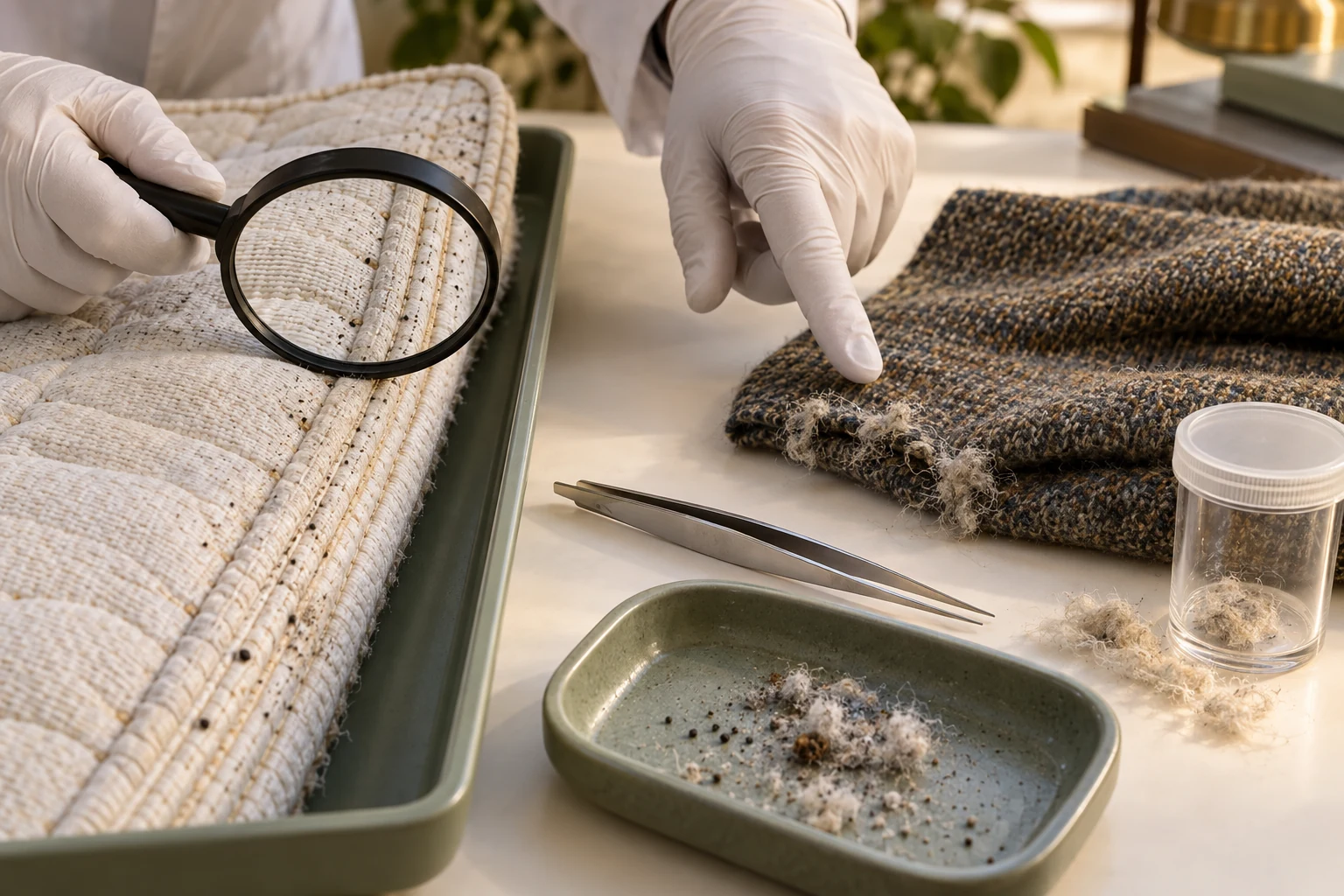
The place, body shape and associated material are more useful than “small brown bug”. Bed bugs are usually investigated around sleeping or resting places; carpet-beetle larvae and their cast skins are more closely linked with wool, hair, feathers, accumulated fluff and textile damage.
Describe the specimen before naming it
Record approximate length with a ruler, whether the body is flat or rounded, whether it is hairy, and whether it crawled, flew or was simply a cast skin. Photograph the top and side if possible. A sealed clear container preserves far more detail than a crushed specimen on adhesive tape.
BPCA describes adult bed bugs as flattened, oval, brownish-red insects and lists dark spotting, blood smears, eggs and moulted skins around sleeping areas. Carpet-beetle larvae are small, brown and hairy; cast larval skins may be the first sign, while adults look more like small mottled beetles.
Let the location test the description
An insect at a mattress seam with nearby spotting deserves a bed-bug assessment. A hairy larva beneath a wool rug, beside damaged fabric or in fluff around an airing cupboard points towards a textile-pest investigation. An adult beetle on a sunny windowsill can have emerged from material elsewhere, so the window is not automatically the source.
Do not use a skin mark to choose between them. Skin symptoms do not identify either pest, and a pest controller cannot diagnose them. Seek health advice for symptoms and keep the property enquiry focused on the specimen and room evidence.
Avoid spreading or destroying the pattern
Keep the specimen labelled with room and date. Do not move the bed into another room or distribute rugs and stored fabrics through the home. Before washing a valuable textile, follow its care label and photograph damage, seams and the place it was stored.
Where several specimens are present, keep examples from different locations in separately labelled containers. Do not combine one found at a window with another taken from a bed frame; they may not be the same insect. For damaged fabric, record fibre content and whether the damage follows a seam, carpet edge or undisturbed fold. These details help decide whether the inspection should follow sleeping areas, textile storage or both.
Call 0203 393 2338, or read the bed-bug service page.
Frequently asked questions
Is a beetle near a bed likely to be a bed bug?
The room name is not enough. Body form and associated signs distinguish the enquiries.
Do round holes prove carpet beetles?
No. BPCA describes defined holes along fabric seams as a clue, but moths, wear and snagging remain possible.
Can a photograph identify the insect?
A sharp, scaled image may help, but a contained specimen and surrounding evidence are stronger.
Sources and further reading
External references may contain pest or skin photographs.