
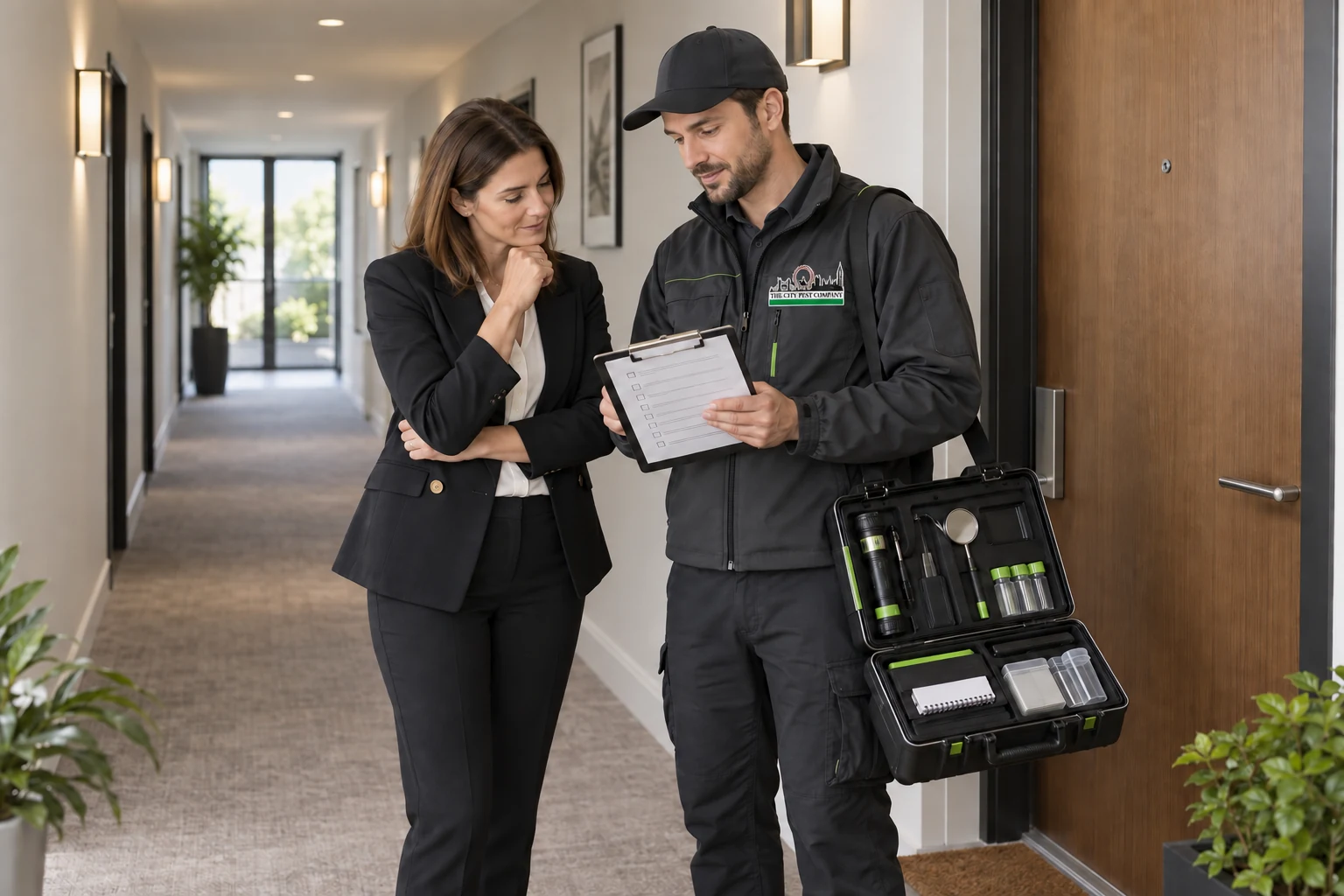
A building manager’s job is to turn separate reports into one controlled process. Record the evidence without blame, appoint a lead contact, identify who controls each area, arrange lawful access, and give residents one consistent set of instructions. The investigation should widen only where evidence and professional judgement support it.
This is operational guidance for English properties, not a ruling on tenancy liability or legal responsibility.
Open one case record
Start a dated record as soon as the concern is reported. Include the flat and rooms involved, a neutral description of signs, when they were noticed, any recent treatment, and the reporter’s contact preference. Avoid recording assumptions about the cause or occupant.
Give the case an internal reference and name one coordinator. That person should manage contractor instructions, permissions, visit results and the next review. This prevents residents receiving different preparation lists from the owner, agent and contractor.
Access to the record should be limited to people who need it. A pest report rarely requires detailed medical information. If a resident describes a health concern, direct them to an appropriate health professional rather than trying to diagnose it in the property file.
Map the property and decision-makers
Before booking, establish whether the building is a single ownership, mixed tenure, housing association, HMO or leasehold block. Identify who controls:
- the reported flat and its furniture;
- neighbouring flats that might later need assessment;
- corridors, service routes and other common areas;
- maintenance access, keys and contractor sign-in;
- approval of expenditure and receipt of reports.
GOV.UK guidance describes general landlord responsibilities for structure, exterior and common areas, but the correct route can depend on ownership and agreements. If responsibility is unclear, obtain property or legal advice. Do not ask a pest technician to interpret leases or settle a charge dispute.
Triage the report without diagnosing remotely
Ask what was found and where, whether an insect was seen, and whether there are physical signs around sleeping or resting areas. Skin marks alone do not confirm bed bugs. Do not circulate close-up pest or skin images around the management team unnecessarily; a secure evidence route and concise description are usually a better first step.
Check whether there are other recent reports that may be relevant. A nearby report is information, not proof that one flat caused another. Look for shared dates, furniture movement, staff access or building routes only as lines of enquiry.
Plan access in stages
Arrange the first assessment with a clear scope. The occupant should know who is attending, why, which areas need to be seen and how long the appointment is expected to take. GOV.UK says private landlords generally give at least 24 hours’ notice for inspection or repairs and visit at a reasonable time, subject to the tenancy and genuine emergencies. Obtain the appropriate consent and notices for each home.
If the professional recommends assessment of another flat or common area, record the reason and arrange that access separately. Do not use a concern in one home as blanket permission to enter another.
Consider residents who need translation, mobility assistance, support with preparation or an advocate present. A theoretically available appointment is not useful if the required rooms cannot be accessed.
Keep instructions controlled
Ask the appointed company to issue one preparation document for the agreed method. Date it and record who received it. Highlight actions affecting shared laundry rooms, waste routes or common areas, but avoid telling residents to move possibly affected items through the building.
Where a biocidal product is used, the Health and Safety Executive requires the approved label instructions to be followed. Product-specific restrictions, precautions and re-entry instructions cannot be replaced by a generic building policy. The manager should understand those restrictions well enough to coordinate access, cleaners and contractors.
Separate treatment from building work
An investigation may identify maintenance issues, but treatment and repair are different scopes. Record gaps, damaged finishes or access problems as recommendations, allocate each to the right contractor, and note whether work must wait until a particular treatment stage. Do not seal a route or dispose of furniture merely to show that action has been taken.
For each action, log the owner, due date, completion evidence and any access dependency. This makes the next professional review more useful.
Close each visit with a written next step
The visit record should identify areas accessed, observations, work performed, restrictions, incomplete areas and the next review. It should distinguish “no evidence seen” from “area inaccessible” and avoid promising eradication by a date.
Tell the affected resident whom to contact and what to report. Agree how urgent concerns outside ordinary management hours will be handled without inventing a response time the service cannot meet.
For property coordination, see pest control for landlords and agents or call 0203 393 2338. For an ongoing programme, compare the proposed maintenance contract structure.
Common questions
Must every neighbouring flat be treated?
No blanket treatment rule is given here. A professional may recommend targeted assessment based on evidence, layout and access. Each additional visit still needs a clear purpose and proper access.
Who should receive the contractor’s report?
Agree this before the visit. Share the operational findings with the authorised people who need them, while limiting personal information about residents.
Can the building manager give one universal re-entry time?
No. Re-entry and cleaning instructions depend on the actual method and approved product label. Communicate the appointed professional’s current instructions.
Sources and further reading
External references may contain pest or skin photographs.