
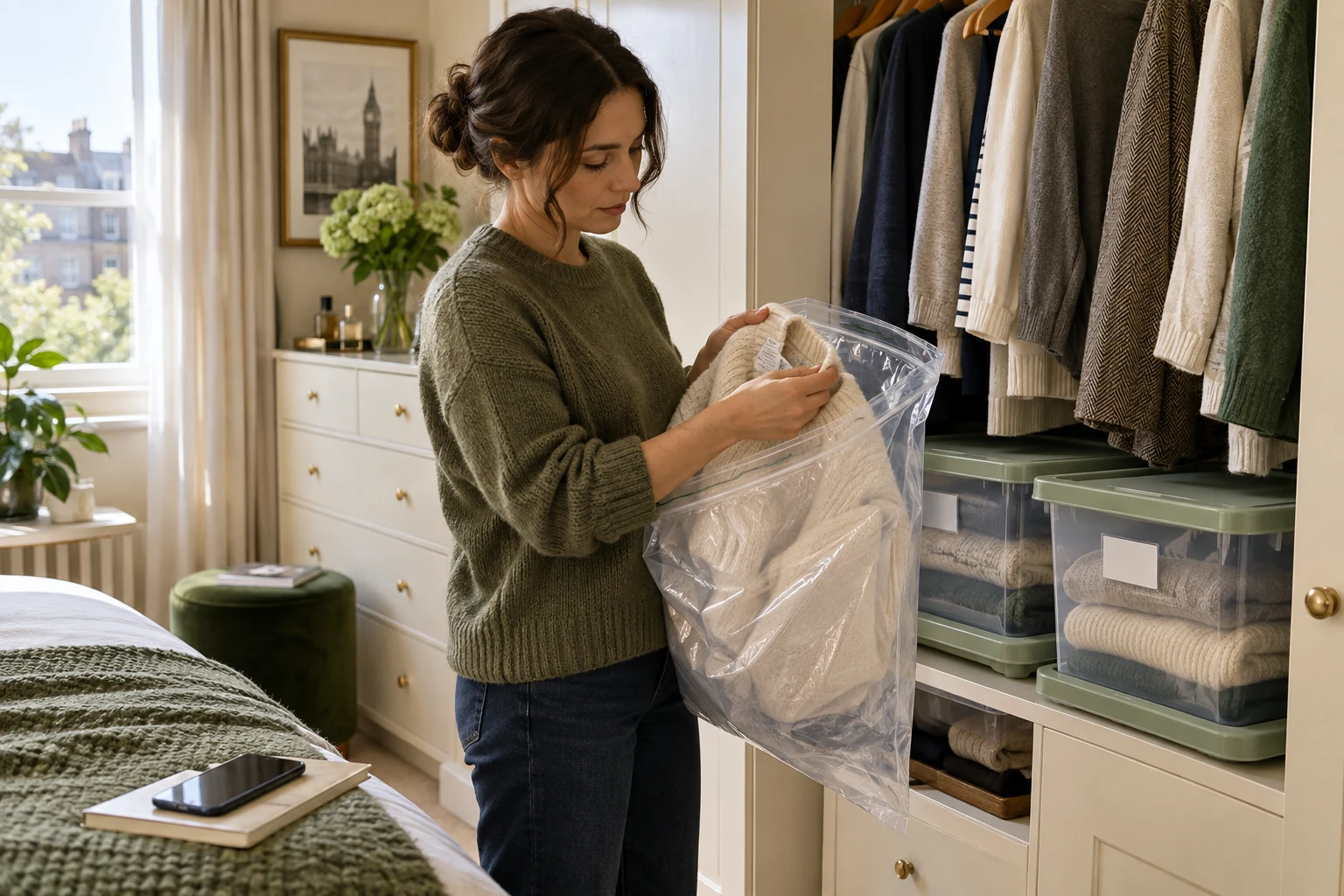
Pause before washing, heating, freezing, spraying or discarding an entire wardrobe. Keep suspect items contained where they were found, photograph any damage or material on the fabric, read each care label and ask for advice based on the likely pest and proposed treatment. This protects delicate clothing and preserves evidence needed for identification.
Separate the item from the diagnosis
Holes in a wool jumper, material on a shelf or a small insect near clothing can justify investigation, but none should be translated automatically into a treatment plan. Damage may be old, and insects found in a wardrobe are not necessarily the cause. The useful starting point is a small, accurate inventory: which items are affected, their fibre and construction, where they were stored, and whether fresh signs are appearing.
Keep natural-fibre garments, mixed fabrics, upholstered items and washable everyday clothes distinct in your notes. A tailored coat with structured interlining cannot be treated as though it were a plain cotton T-shirt. Care labels, trims, dyes, adhesives and sentimental value all influence what a textile can tolerate. A pest technician can advise on the pest-control purpose; a dry cleaner, conservator or manufacturer may need to advise on the fabric.
Do not carry open piles through the property. If an item must be moved, contain it first and label the bag or box with the original room and storage location. Containment is for controlled handling, not proof that every contained item is infested. Avoid overfilling bags or sealing damp textiles, which can create a separate material-care problem.
Build a useful clothing record
Start with the storage furniture. Note whether signs appear in one drawer, along a wardrobe floor, on a particular shelf or across several rooms. Photograph the affected garment against a plain background, then take a closer image of the damage with a size reference. Record whether loose fibres, cases or webbing are attached or merely lying nearby. Do not handle unknown material more than necessary.
Add recent movement: seasonal clothes brought from storage, donated items, a house move, luggage or a newly acquired rug. These facts can shape an inspection, but they do not prove origin. Also record any cleaning, laundering or product use already attempted. Retain packaging and receipts for specialist textile work where useful.
If you find an insect or case, safely contain it rather than sticking it directly to valuable fabric. Label the container with the date and exact location. A good specimen can prevent a large amount of unnecessary treatment.
Ask before choosing a method
The right questions are practical. Which pest is suspected and how confident is that identification? Which items need inspection? Is the proposed action for the clothing, the storage furniture, the surrounding room or a combination? What needs to be bagged, and when can it be unpacked? Who should advise on antiques, uniforms, leather, fur, embroidery or other specialist materials?
There is no safe universal temperature or duration rule for every garment and every pest. Care instructions and the treatment method both matter. If a biocidal product is proposed, HSE guidance says it must be suitable for the intended use and used exactly as its label directs. The label may restrict areas, items, users, access, storage and disposal. Never apply a product to clothing unless that use is expressly permitted, and do not use professional-only products yourself.
An example shows why sequence matters. Suppose fresh damage is found on two jumpers in one drawer, while adjacent synthetic sportswear appears unaffected. Emptying every wardrobe into the sitting room would destroy the location map. Photographing the drawer, containing the two items separately and arranging identification preserves a much clearer trail.
When to call
Call if you are seeing new damage, repeated insects or material across more than one storage area, or if valuable or delicate items are involved. Tell the adviser what the garments are made from and what has already been done. For clothes-moth service questions, call 0203 393 2338 or review the clothes-moth service page.
FAQs
Should I wash every item immediately?
Not before you know what problem you are addressing and what each item can tolerate. Preserve the storage-location evidence and follow garment-specific and method-specific advice.
Can I spray inside the wardrobe?
Only use a product for a purpose and surface allowed by its label. Unplanned spraying can complicate inspection and risk unsuitable contact with clothing.
Do holes prove clothes moths?
No. Damage is a clue that needs context and, where possible, identification of associated insects or material.
What should I do with delicate or valuable textiles?
Keep them contained, avoid experimental treatment and ask whether a textile specialist should advise alongside the pest professional.
Sources and further reading
External references may contain pest or skin photographs.