
 |
Identify the moths you haveThis section allows you to see a number of pictures to determine what moths you have and to see examples of moth damage so you know what you have. |
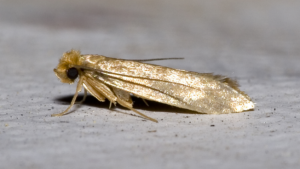 |
Tineola bisselliellaWebbing clothes moth, or simply clothing moth, is a species of fungus moth which feeds on the Keratin, the key structural material making up hair, nails, feathers, horns, claws, hooves, calluses, and the outer layer of skin among vertebrates. The (larve) caterpiller does the eating and damage to the natural fibres in clothing and carpet. |
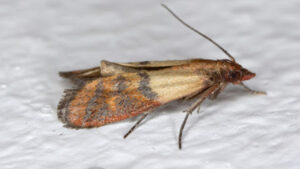 |
Plodia interpunctellaIs a pyraloid moth of the family Pyralidae, alternative common names are weevil moth, pantry moth, flour moth or grain moth. This moth species can be found infesting possibly the widest range of food products of any moth, from nuts to grain products (cereals) to fresh or dried fruit. |
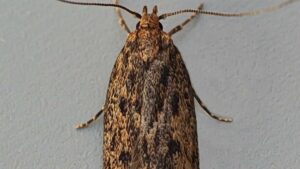 |
Hofmannophila pseudospretellaThe brown house moth, is a species of the concealer moth family, with characteristic golden-bronze wings, flecked with black, folded flat along its back. The adult is about 8mm long and prefers to run rather than fly. Feeding on wool, hair, fur, feathers, cork or debris from food such as dried fruit or cereals. |
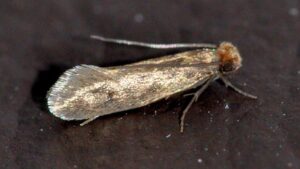 |
Tinea pellionellaThe adult moth is a pale silvery grey-brown with dark spots, and approximately 7mm long. The larva makes a portable case for itself out of wool, fur, feathers and hair. They live indoors and in outbuildings, or outdoors where they sometimes live in birds’ nests. |
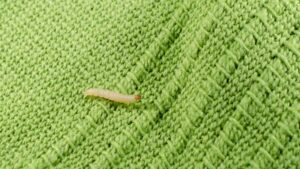 |
Moth Larvae or caterpillar stageThe larval stage of clothes moths are creamy-white caterpillars up to 1/2-inch long. Development time before transforming into a moth varies greatly (from one month to as much as two years), depending on temperature, food availability, and other factors. It is the larvae which does the eating of the fibres not the moth, the moth’s job is to find natural fibres to lay its eggs on and the cycle continues. |
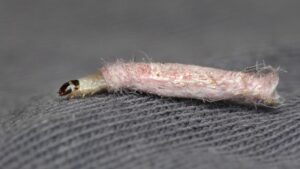 |
Moth molt or casingDevelopment time before transforming into a moth varies greatly (from one month to as much as two years), depending on temperature, food availability, and other factors. Webbing clothes moth larvae spin silken tubes or patches of webbing as they move about on the surface of infested materials. They often feed within folds of fabric and other concealed areas. As larvae graze along the surface, threadbare spots occur where fibers are removed at the base. |
Identify the moths you have
This section allows you to see a number of pictures to determine what moths you have and to see examples of moth damage so you know what you have.
Tineola bisselliella
Webbing clothes moth, or simply clothing moth, is a species of fungus moth which feeds on the Keratin, the key structural material making up hair, nails, feathers, horns, claws, hooves, calluses, and the outer layer of skin among vertebrates. The (larve) caterpiller does the eating and damage to the natural fibres in clothing and carpet.
Plodia interpunctella
Is a pyraloid moth of the family Pyralidae, alternative common names are weevil moth, pantry moth, flour moth or grain moth. This moth species can be found infesting possibly the widest range of food products of any moth, from nuts to grain products (cereals) to fresh or dried fruit.
Hofmannophila pseudospretella
The brown house moth, is a species of the concealer moth family, with characteristic golden-bronze wings, flecked with black, folded flat along its back. The adult is about 8mm long and prefers to run rather than fly. Feeding on wool, hair, fur, feathers, cork or debris from food such as dried fruit or cereals.
Tinea pellionella
The adult moth is a pale silvery grey-brown with dark spots, and approximately 7mm long. The larva makes a portable case for itself out of wool, fur, feathers and hair. They live indoors and in outbuildings, or outdoors where they sometimes live in birds’ nests.
Moth Larvae or caterpillar stage
The larval stage of clothes moths are creamy-white caterpillars up to 1/2-inch long. Development time before transforming into a moth varies greatly (from one month to as much as two years), depending on temperature, food availability, and other factors. It is the larvae which does the eating of the fibres not the moth, the moth’s job is to find natural fibres to lay its eggs on and the cycle continues.
Moth molt or casing
Development time before transforming into a moth varies greatly (from one month to as much as two years), depending on temperature, food availability, and other factors. Webbing clothes moth larvae spin silken tubes or patches of webbing as they move about on the surface of infested materials. They often feed within folds of fabric and other concealed areas. As larvae graze along the surface, threadbare spots occur where fibers are removed at the base.
 Where could they be hiding?
The section of photos should help give you an idea of the places to be looking for them.
 Food or food residue in the kitchen
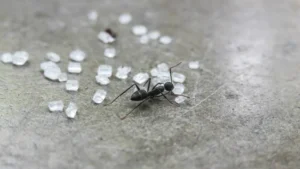
Anything food related, especially with higher sugar content ie drinks, sweets, sticky liquids, fruits etc, are prime target for ants. Have a look for where they are congregating to see what needs cleaning. Also to keep things like that sealed to not attract them.
 Skirting Boards & Cracks
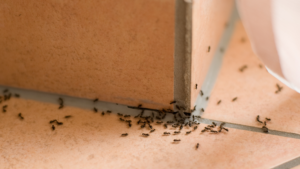
They can get in through cracks anywhere but against skirting boards is very common. Usually the other side of the wall leads to the outside where there might be a nest either under a patio or under the foundations of the building.
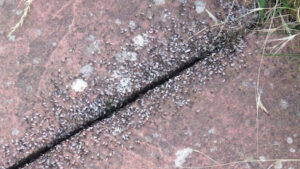 Under Paving Slabs
Ants can tend to live under paving slabs in the garden. Sometimes they will stray toward the house and find a way to tunnel in and pop up in your kitchen etc. It is important if we can to destroy the nest so that they aren’t able to return.
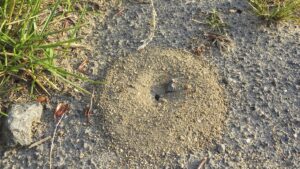 Ants in the soil in the ground
Sometimes (but less likely as it is not as safe) ants will just make a nest in the ground. Again the excavated soil is the sign that ants are living underneath.
Where could they be hiding?
The section of photos should help give you an idea of the places to be looking for them.
Food or food residue in the kitchen
Anything food related, especially with higher sugar content ie drinks, sweets, sticky liquids, fruits etc, are prime target for ants. Have a look for where they are congregating to see what needs cleaning. Also to keep things like that sealed to not attract them.
Skirting Boards & Cracks
They can get in through cracks anywhere but against skirting boards is very common. Usually the other side of the wall leads to the outside where there might be a nest either under a patio or under the foundations of the building.
Under Paving Slabs
Ants can tend to live under paving slabs in the garden. Sometimes they will stray toward the house and find a way to tunnel in and pop up in your kitchen etc. It is important if we can to destroy the nest so that they aren’t able to return.
Ants in the soil in the ground
Sometimes (but less likely as it is not as safe) ants will just make a nest in the ground. Again the excavated soil is the sign that ants are living underneath.



|
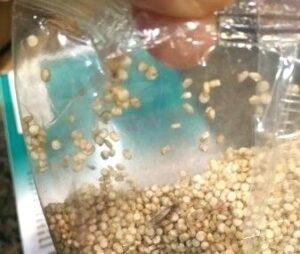
First step is lookingWe are one of the few companies to actually take the time to search all of the relevant places to find nesting sites and destroy them first. |
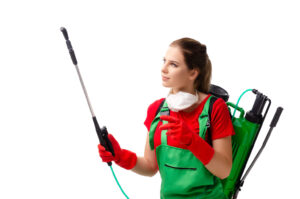 |
We use the best Long Life Insecticide insecticide for Moths on the marketThe difference between shop bought products and professional products is mostly the residual effect (long life). Ours has a life of over nearly 3 months. |

|
We use insect growth regulators or (IGR’s)We are big on using science and technology as anything clever to help our customers get rid of pests quicker and keep them gone has to be a good thing. IGR’s remove the ability for them to grow and mature normally and stop their ability to breed or some eggs not even able to hatch. Our product lasts for up to 5 months to help keep it gone afterward! |

|
ULV Cold Fogging (Fumigation)There are 2 types of fumigation, smoke generated (can leave long lasting smell & discolouration to paint) & cold fogging (water based insecticide fired into tiny particles to float around to settle on walls, ceiling, cracks and crevices with no risk). We use the water based insecticide treatment. Ours lasts for 2 months with maximum effort for around 2 weeks. We would expect a refresh after 2 weeks. |
|
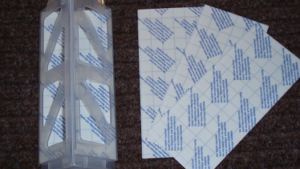
Synthetic Pheromone Moth TrapsWe use a synthetic pheromone to attract the male moths so that when they land they stick to the glue and cannot get off. This aids with capturing some so males and females can’t come in contact but importantly it identifies which rooms and areas have moths. |
First step is looking
We are one of the few companies to actually take the time to search all of the relevant places to find nesting sites and destroy them first.
We use the best Long Life Insecticide insecticide for Moths on the market
The difference between shop bought products and professional products is mostly the residual effect (long life). Ours has a life of over nearly 3 months.
We use insect growth regulators or (IGR’s)
We are big on using science and technology as anything clever to help our customers get rid of pests quicker and keep them gone has to be a good thing.
IGR’s remove the ability for them to grow and mature normally and stop their ability to breed or some eggs not even able to hatch.
Our product lasts for up to 5 months to help keep it gone afterward!
ULV Cold Fogging (Fumigation)
There are 2 types of fumigation, smoke generated (can leave long lasting smell & discolouration to paint) & cold fogging (water based insecticide fired into tiny particles to float around to settle on walls, ceiling, cracks and crevices with no risk).
We use the water based insecticide treatment. Ours lasts for 2 months with maximum effort for around 2 weeks. We would expect a refresh after 2 weeks.
Synthetic Pheromone Moth Traps
We use a synthetic pheromone to attract the male moths so that when they land they stick to the glue and cannot get off. This aids with capturing some so males and females can’t come in contact but importantly it identifies which rooms and areas have moths.