
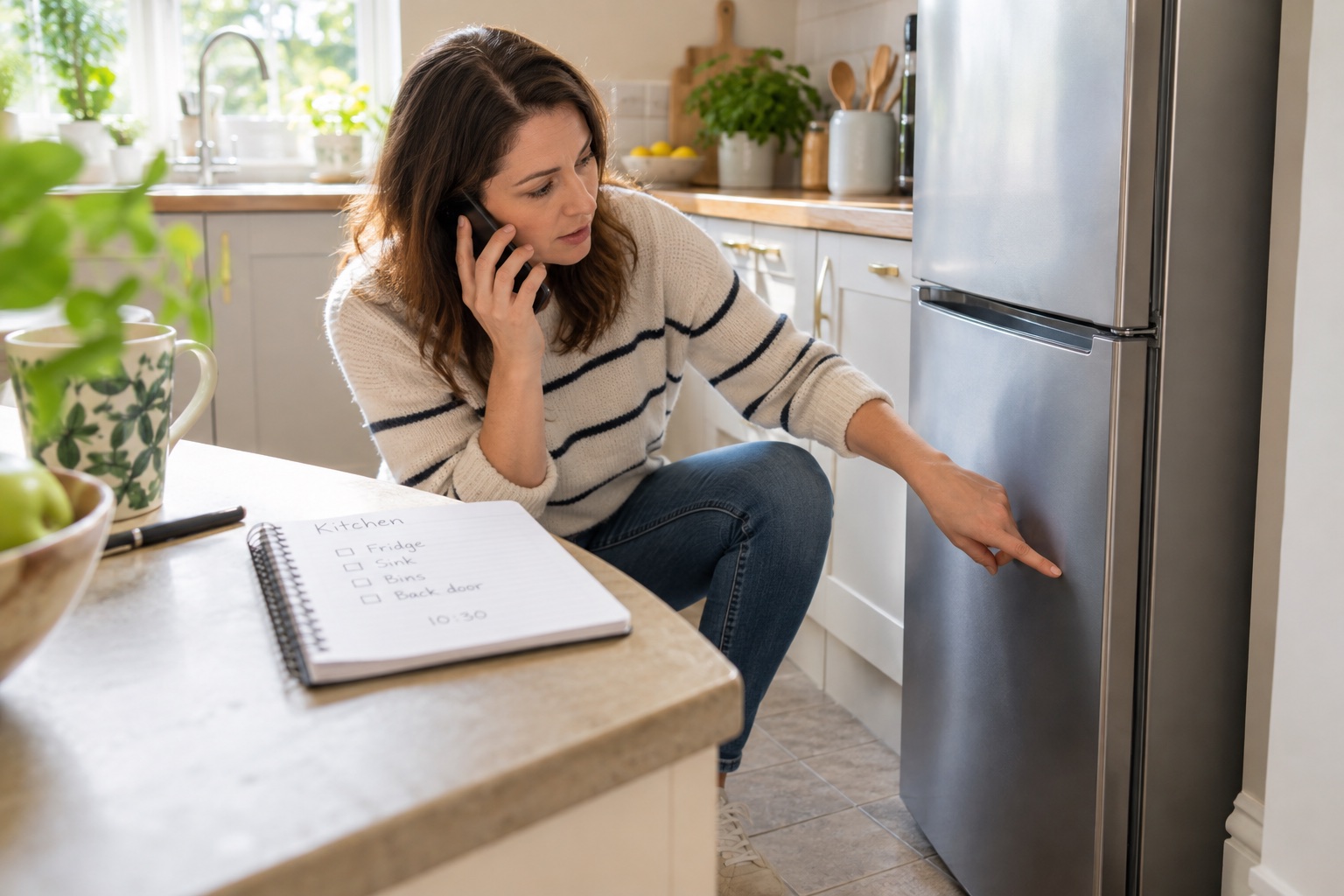
The most useful details are where and when you saw activity, how the insect moved, whether more than one was present, and whether there are marks, cast material or an unusual odour around warm, dark service areas. A clear description can guide the next step, but remote identification is not guaranteed.
Start with the exact place
Name the room and feature: beneath a sink, beside a fridge, near a boiler cupboard, behind a bin, inside a food cupboard or around a shared service route. Say whether the insect appeared when a light was switched on and where it moved.
Do not pull out a heavy appliance, remove an electrical panel or put a hand into an inaccessible gap. Mark the location from a safe position and tell the technician what cannot be reached.
Describe the pattern
Record the date, time, approximate size, colour and movement in ordinary words. Was it one sighting or repeated activity? Was it crawling or flying? Were smaller and larger insects seen in the same area? A safely captured specimen or clear image may help, but you do not need to keep searching.
Other household insects can be mistaken for cockroaches. A professional may need to inspect the physical signs and building context before confirming the cause.
Check accessible nearby conditions
Note leaks, condensation, damaged food packaging, grease build-up, gaps around pipework and overflowing waste. These observations help explain available water, food and routes; they are not a judgement on the household. In flats, activity may involve shared services or another connected space even when the first sighting is in one kitchen.
Keep ordinary food sealed, remove exposed contaminated food from use and clean routine spills. Food Standards Agency guidance for businesses emphasises regular pest checks, good repair, delivery checks and clean bins with close-fitting lids. A home does not need to be a food business to benefit from orderly storage and reporting.
Say what has already been used
List sprays, gels, powders, traps or professional treatments with dates and locations if known. Do not combine more products while waiting for advice. The Health and Safety Executive requires biocides to be suitable for their approved use and their labels followed. Professional-only products must not be used by the public.
A visible insect after a product was used does not by itself prove resistance or treatment failure. Method, placement, access, species and extent all need assessment.
Mention the people and animals using the room
Tell the company about children, pets, pregnancy or relevant sensitivities without sending unnecessary medical details. Include fish, birds and small mammals. Product-specific preparation, access restrictions and re-entry instructions must be agreed for the actual method; there is no blanket “safe for pets” statement.
Prepare the first call
Have your postcode, property type, rooms, timeline, previous treatment and access limitations ready. In a rented or shared building, identify the landlord or manager if common routes may need assessment. You can call before you know the species.
Read the cockroach service guide or call 0203 393 2338. You can describe the sign without sending an image; if an image could help, you decide whether to share it.
Keep a calm observation note
A short note prevents worry from turning into repeated searching. Use one line per event: date and time, exact place, what was seen, how long it was visible and any safe photograph or specimen reference. Add relevant changes such as a leak, delivery, appliance repair or neighbouring works without claiming they caused the activity.
Stop the check if it requires dismantling, reaching into a gap or staying in a room that feels unsafe. The record is there to support an inspection, not to make you prove an infestation yourself. If several people share the property, nominate one contact so the company receives a clear timeline instead of conflicting versions.
Common questions
Does one insect prove a cockroach infestation?
No. One sighting deserves a clear record and may justify assessment, but it does not establish species or extent remotely.
Should I move the fridge before the visit?
Only if requested and it can be done safely. Describe the inaccessible area rather than risking injury or damage.
Can I spray the insect and still have it identified?
Products and damage can make assessment harder. If safe, contain the specimen or take a clear image and ask for the preferred evidence route.
Sources and further reading
External references may contain pest or skin photographs.