
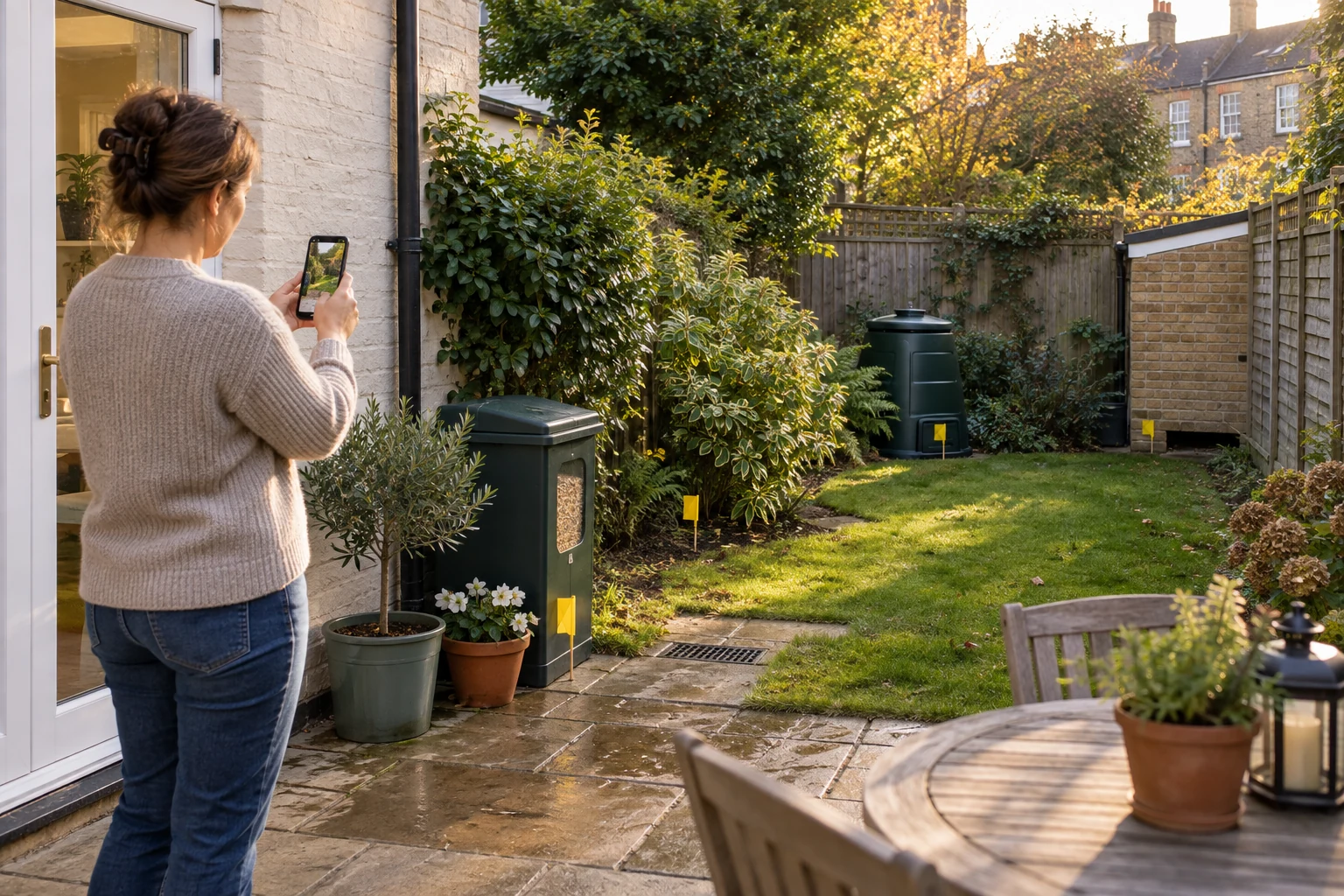
A rat sighting in a garden justifies a focused outdoor check, but it does not prove rats are inside the building or show which property is the source. Record the route and repeat pattern, then inspect food, shelter, burrows, waste, drains and possible building access without assigning blame.
Record the sighting route
Note the date, time, entry and exit direction, repeat frequency and whether more than one animal was seen. Photograph the whole area after the animal has gone rather than approaching it. Mark fences, sheds, banks, vegetation, bins and drain covers on a simple plan.
BPCA says rats can burrow in grassy banks or beneath sheds, and that professionals use monitoring to confirm entry points and track activity. Look for holes, fresh soil, runs, gnawing or droppings from a safe distance, but keep identification open where evidence is unclear.
Check the building separately: damaged doors, service penetrations, basement openings and accessible external fabric. Outdoor activity and indoor entry are different findings. A rat crossing a boundary also does not establish which neighbour is responsible.
Remove conditions through the right owner
Close waste containers, clear ordinary spillages and review animal feed, bird feeding, compost and fallen produce. Coordinate vegetation and stored materials without disturbing possible nests or handling droppings. Building and drain defects need the appropriate contractor.
Do not open manholes, enter confined spaces or put poison into a burrow. If drainage is suspected, arrange a competent survey. Keep children and pets away from holes and any professional devices.
For a repeated path beneath a shed toward a damaged bin, record all three elements. The bin can be fixed promptly while inspection determines whether the hole is active and whether the building is involved.
Call The City Pest Company on 0203 393 2338 when sightings repeat, burrows appear, indoor signs emerge or safe assessment is difficult. See the rat service page for context.
FAQs
Does one daytime sighting prove an infestation?
No. Record the observation and look for a repeat pattern and supporting evidence.
Should a burrow be filled immediately?
Do not disturb it without assessment; activity, method and non-target risks need consideration.
Does a garden sighting prove rats are indoors?
No. Inspect building evidence and possible routes separately.
Sources and further reading
External references may contain pest or skin photographs.