
THE CITY PEST JOURNAL

Wool rugs and carpet damage: moths, beetles or wear?

Practical guidance for your property. You can speak to the team at any point.

Call to book an appointment0203 393 2338

Tell us the full property address so we can check coverage and access.

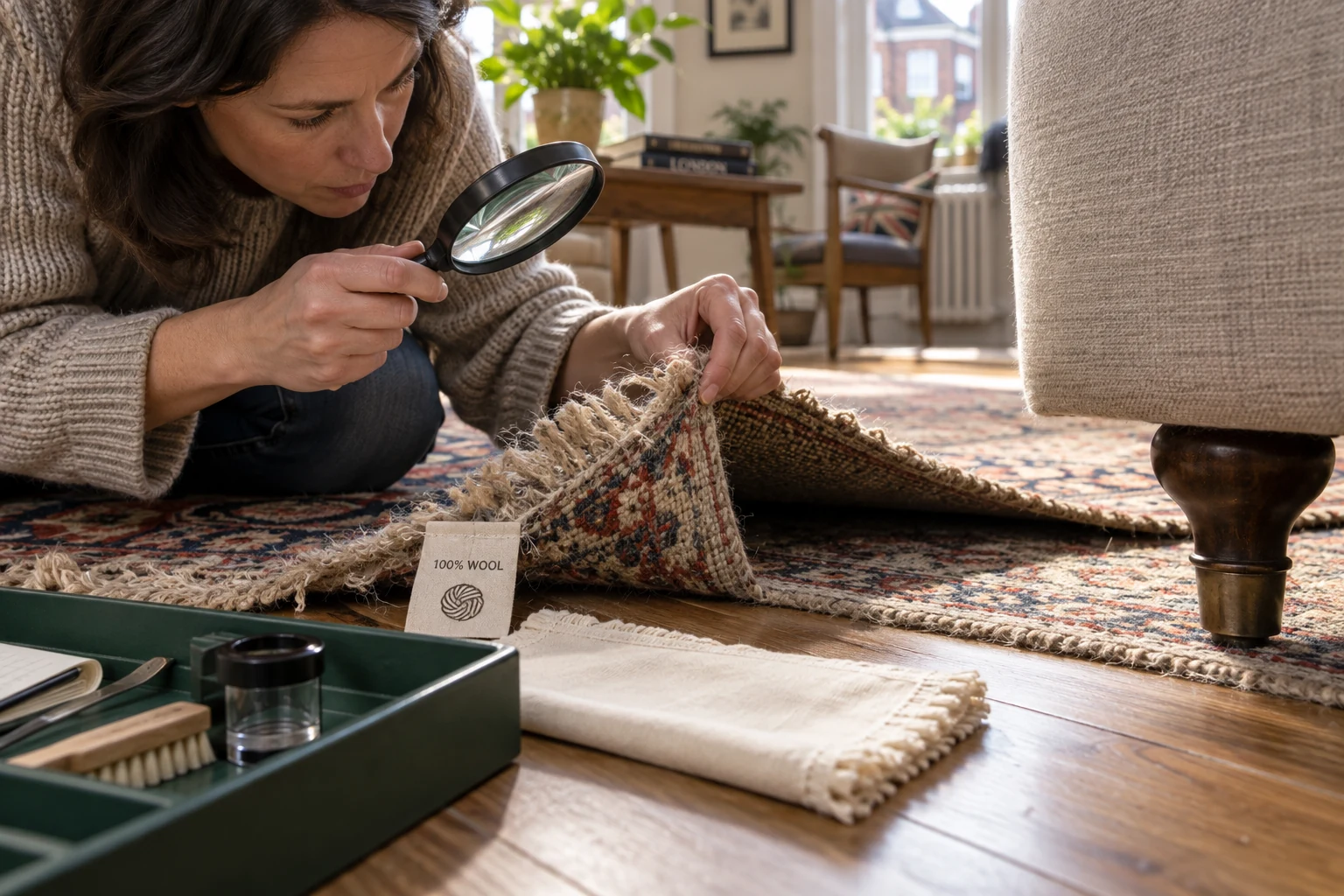
Resident compares a frayed wool-rug traffic edge with a protected seam under furniture

Holes or thinning in wool do not identify the cause. Look at the damage edge, seam and location, then check for loose webbing or silk cases associated with clothes moths, or hairy larvae and cast skins associated with carpet beetles. Ordinary wear remains a credible alternative in traffic areas.

Start with material and use

Confirm the fibre label if available and record whether the rug is wool, a blend or synthetic. Photograph the whole item, the damaged patch and its underside. Damage beneath furniture or at a quiet carpet edge has different context from uniform thinning along a doorway.

BPCA describes clothes-moth larvae feeding on wool and producing irregular holes, loose webbing or fibre-covered cases. Its carpet-beetle guidance describes hairy larvae, cast skins and more defined holes along fabric seams. These are comparison clues, not a diagnosis from one photograph.

Preserve the source pattern

Check nearby wool clothing, felt pads, upholstered seams and accumulated fluff without spreading items to other rooms. Label specimens by exact location. An adult beetle on a window may have moved from a source elsewhere; a flying moth alone does not prove the rug is affected.

For a valuable rug, follow the maker's care label and consult an appropriate textile specialist before washing, heating or freezing. Pest treatment suitability and conservation are separate decisions.

Ask the inspection to compare alternatives

Request identification evidence, included textiles and concealed edges, and how follow-up distinguishes old damage from new. Date existing holes before treatment or cleaning so later comparison is possible.

Call 0203 393 2338, or read the clothes-moth service page.

Frequently asked questions

Do moths eat the wool as adults?

BPCA identifies the larvae as the damaging stage.

Are hairy skins a moth sign?

They point more towards carpet-beetle larvae, but keep a specimen for confirmation.

Should a valuable rug be removed immediately?

Ask how to contain and inspect it before moving it through the property.

Sources and further reading

External references may contain pest or skin photographs.

Related reading

Household pests

Clothes moths or pantry moths: start with the location

Use the affected material and room to separate clothes-moth and pantry-moth clues. For help, call 0203 393 2338.

Read guide
Household pests

Signs of textile pests in stored bedding

Keep damage, fibres and insects with their storage context so textile-pest clues are not confused with bed bugs. Call 0203 393 2338.

Read guide

FROM THE BLOG

A useful guide for your next step.

Read a practical guide, then talk to us about your own property if you need advice.

Explore all guides →
Calm resident speaking by a hallway note and house keys.FEATURED GUIDEWhat to expect when you first call City PestKnow which details help on a first pest-control call, what can be decided remotely and what may need an inspection. Call 0203 393 2338.Read the guide

A CLEAR NEXT STEP

Talk to us about your property.

Call now, or leave your details and we will discuss a no-obligation quotation.

Call for a no-obligation quote0203 393 2338
Call now to book0203 393 2338

PREFER US TO CALL YOU?

Let’s talk.

Speak now: 0203 393 2338

Checking whether online enquiries are available. You can also call 0203 393 2338.

Click here to leave more information or choose a preferred appointment day

Children or pets at home? Tell us when we speak so we can explain the right precautions.

Preferences are requests, not live availability. No appointment or payment is confirmed.

Read our privacy notice. We confirm receipt after your enquiry has been accepted.

Before you see the image

BROWSE IN COMFORT

How would you like to see the site?

This guide includes real photographs of pests and signs of activity. Choose whether those references appear automatically, or use gentle storybook characters and picture-free explanations. Skin-mark, bite and other sensitive close-ups always keep their own warning.

Your choice applies across the site for this browsing session. Change it any time using “Images” in the menu. All written guidance remains available.

Prefer to talk? Call 0203 393 2338

This does not change your image preference for the rest of the site.

AI GUIDE

Ask City Pest

Ask about pests, preparation or next steps. Our team confirms prices and appointments.

AI answers are general guidance. Do not enter payment, medical or other sensitive details. Your question is sent to our AI provider. Privacy information.