 |
There are two types of mice you might find in the homeThe grey House Mouse (most common) – Mus Musculus and the light brown with white underbelly Field Mouse Apodemus sylvaticus |
 |
Its coat is uniformly grey-brown7-9.5cm, they weigh about 19g, live for about 5 months, have a pointed snout, large rounded ears, and a long and hairy tail. Noctournal so active at night and asleep in the day. Eat between 15-20 times a day and produce between 40-100 droppings per day. Mice can actually carry as many as 200 human pathogens! Can jump half a metre and squeeze through holes 17.5mm wide. They can have up to 12 babies every 6 weeks. This means she could have as many as 150 offspring in a single year! |
 |
Beige, or Red Brown or Light Brown With White UnderbellyThey weigh about 23g, up to 10.5cm length & live for about 5 months, its eyes and ears are smaller the the house mouse & it’s tail is 6-9cm. Noctournal so active at night and asleep in the day. Eat between 15-20 times a day and produce between 40-100 droppings per day. Mice can actually carry as many as 200 human pathogens! Can jump half a metre and squeeze through holes 17.5mm wide. 2 to 4 litters per year, with 4 to 6 babies each time. |
There are two types of mice you might find in the home
The grey House Mouse (most common) – Mus Musculus and the light brown with white underbelly Field Mouse Apodemus sylvaticus
Its coat is uniformly grey-brown
7-9.5cm, they weigh about 19g, live for about 5 months, have a pointed snout, large rounded ears, and a long and hairy tail. Noctournal so active at night and asleep in the day. Eat between 15-20 times a day and produce between 40-100 droppings per day. Mice can actually carry as many as 200 human pathogens! Can jump half a metre and squeeze through holes 17.5mm wide. They can have up to 12 babies every 6 weeks. This means she could have as many as 150 offspring in a single year!
Beige, or Red Brown or Light Brown With White Underbelly
They weigh about 23g, up to 10.5cm length & live for about 5 months, its eyes and ears are smaller the the house mouse & it’s tail is 6-9cm. Noctournal so active at night and asleep in the day. Eat between 15-20 times a day and produce between 40-100 droppings per day. Mice can actually carry as many as 200 human pathogens! Can jump half a metre and squeeze through holes 17.5mm wide. 2 to 4 litters per year, with 4 to 6 babies each time.

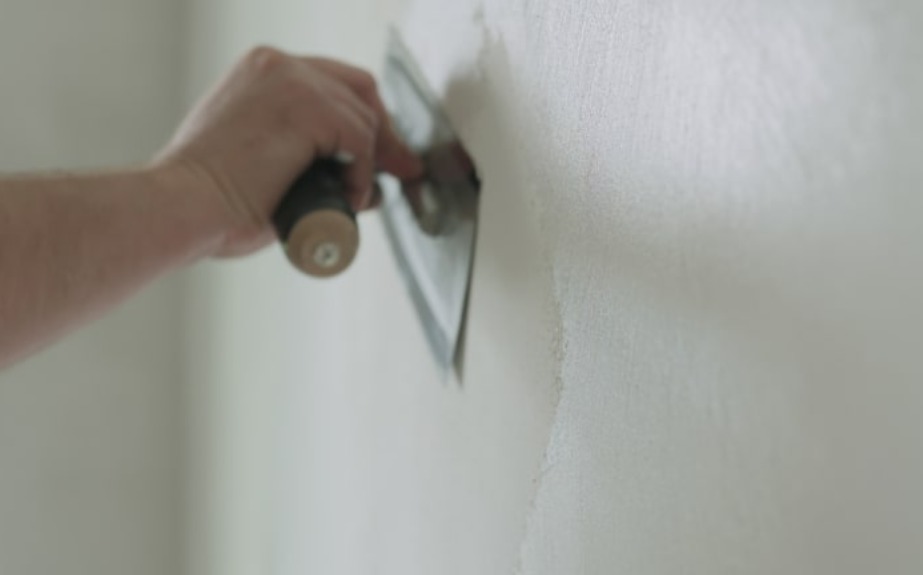
 Areas to be looking
90% of the time they are coming into the kitchen, with the plinth boards down and the units out (washing machine, dishwasher etc) it gives you access to the areas where pipes come through walls and floor. These are usually the areas they use especially as warm pipes provide warmth for them.
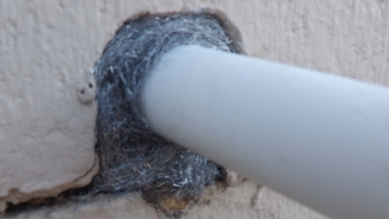
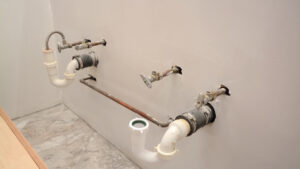 Mice use the holes around pipes
Washing machine, dishwasher, boilers, sink taps and drains. There are countless pipes in a kitchen let alone a house which provide easy ways in for mice. in our experience we have found that less than 1% of houses when you check these areas do not have holes around the pipes behind the scenes.
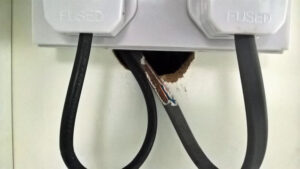 Entry where wires come through walls and flooring
Rodent either get in where wires come through or if there is not quite enough of a way through but they can see a little light they gnaw around to make the hole larger so they can get through. They tend to spend time with the softer material, this tends to be plastic on electrical wiring, leading to blowing circuits.
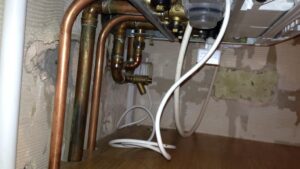 Holes Around Pipework
On the face of it you might not see anything wrong with this picture, but if you look where the pipes go through the wooden floor can you see the gap between pipe and wall for each pipe? Rats gnaw openings to make them large enough to get through.
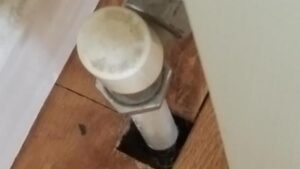 Around Radiator Pipes
A very common area as pipes are warm leading to radiators is for them to use the gaps commonly around them to gain entry. Again they just need a hole not big enough to gnaw and make it big enough.
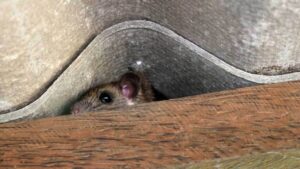 Gaps Between Walls & Floors
It is very common behind kitchen units for builders to not bother making sure flooring meets the wall exposing ways in from under the floor. Also sometimes floors sink and expose these gaps under skirting boards.
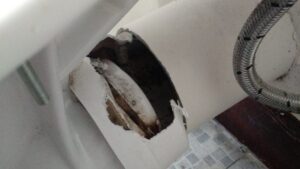 Gnawing through pipes
Rats will tend to originate at the sewer and so they can come in through soil pipes and gnaw their way out.
 Inaccessible Areas
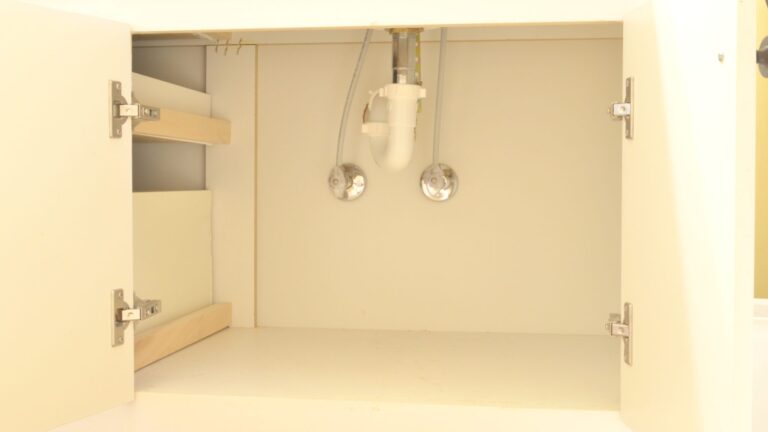
It does sometimes happen that the area they are using to get in are not easily accessible. In this case there are still options, we can cut little holes in the back of cupboards where you will not notice them so we can get access to areas behind where careless builders have not sealed around pipes.
Areas to be looking
90% of the time they are coming into the kitchen, with the plinth boards down and the units out (washing machine, dishwasher etc) it gives you access to the areas where pipes come through walls and floor. These are usually the areas they use especially as warm pipes provide warmth for them.
Mice use the holes around pipes
Washing machine, dishwasher, boilers, sink taps and drains. There are countless pipes in a kitchen let alone a house which provide easy ways in for mice. in our experience we have found that less than 1% of houses when you check these areas do not have holes around the pipes behind the scenes.
Entry where wires come through walls and flooring
Rodent either get in where wires come through or if there is not quite enough of a way through but they can see a little light they gnaw around to make the hole larger so they can get through. They tend to spend time with the softer material, this tends to be plastic on electrical wiring, leading to blowing circuits.
Holes Around Pipework
On the face of it you might not see anything wrong with this picture, but if you look where the pipes go through the wooden floor can you see the gap between pipe and wall for each pipe? Rats gnaw openings to make them large enough to get through.
Around Radiator Pipes
A very common area as pipes are warm leading to radiators is for them to use the gaps commonly around them to gain entry. Again they just need a hole not big enough to gnaw and make it big enough.
Gaps Between Walls & Floors
It is very common behind kitchen units for builders to not bother making sure flooring meets the wall exposing ways in from under the floor. Also sometimes floors sink and expose these gaps under skirting boards.
Gnawing through pipes
Rats will tend to originate at the sewer and so they can come in through soil pipes and gnaw their way out.
Inaccessible Areas
It does sometimes happen that the area they are using to get in are not easily accessible. In this case there are still options, we can cut little holes in the back of cupboards where you will not notice them so we can get access to areas behind where careless builders have not sealed around pipes.