
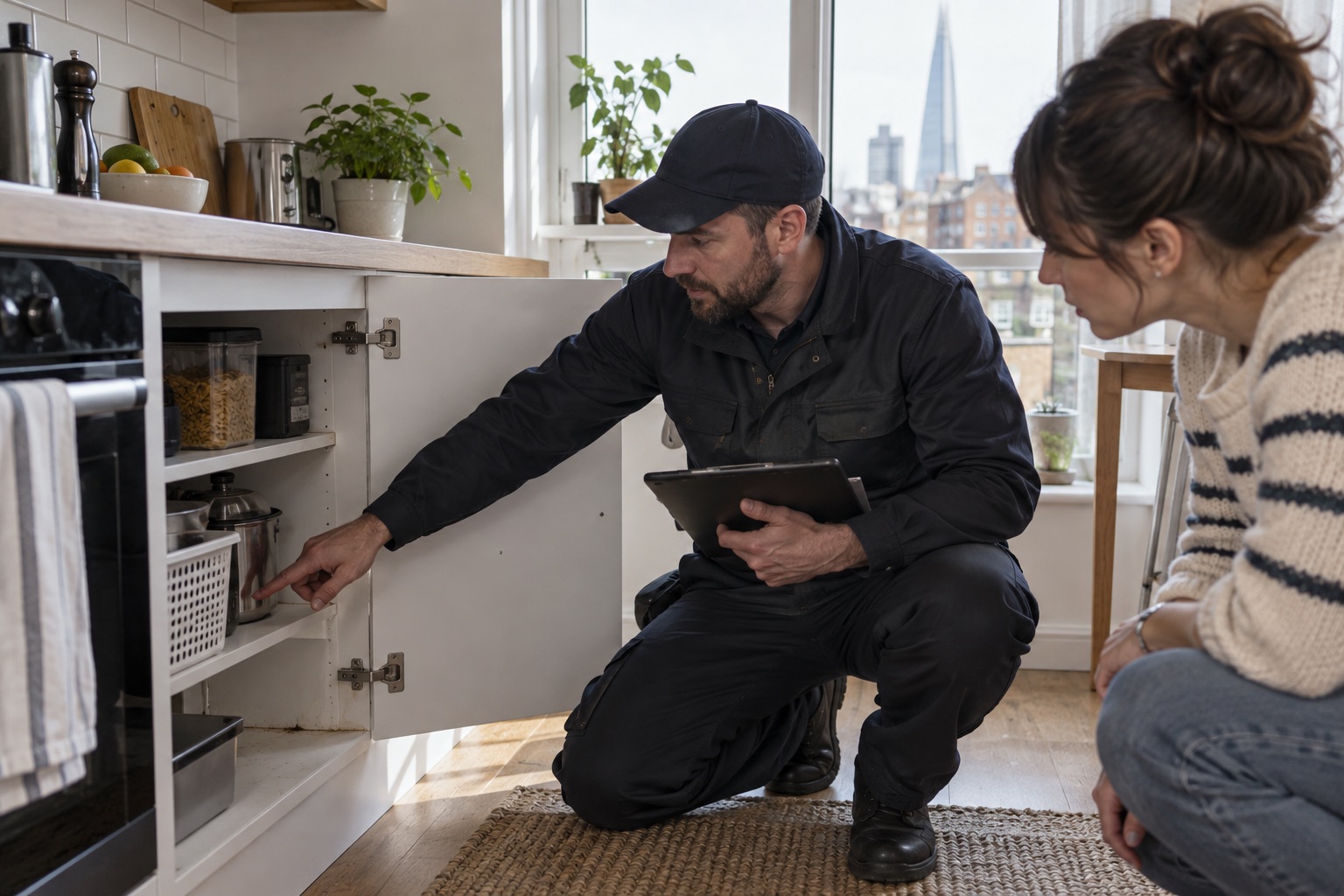
A suspected mouse in a flat raises practical questions about private rooms and shared building routes. A good first enquiry distinguishes what happened inside the flat from reports elsewhere.
What evidence helps?
Record the room, time, food damage, sounds and any visible opening. A photograph of an accessible gap helps, but avoid handling droppings or moving heavy appliances.
What can you do now?
Secure food and rubbish, and tell the building manager if shared repairs or access may be needed. Do not seal a suspected active opening before the route has been assessed.
Details worth including in your enquiry
- Evidence inside the flat, separate from building rumours
- Potential shared access requiring permission
- Who will complete and check proofing
Describe observations in your own words and tell us about any treatment already used. Photos can be useful, but there is no need to take a risky close-up, handle droppings or disturb a nest. If a landlord, tenant or manager needs to provide access, say who can coordinate that before a visit is discussed.
Agreeing a useful next step
Ask whether the first visit is an inspection, how adjoining spaces are considered and who will complete any proofing. The quote should identify follow-up and communication with other parties.
Before agreeing work, ask for the proposed area and method, any preparation or temporary exclusion, the number of visits, the full price and what would lead to a follow-up. Product-specific written instructions take priority over a general article. Sending an enquiry or naming a preferred day does not make a booking.
A common question
Can a neighbour’s report confirm mice in my flat?
No. Your own evidence and the relevant building routes should be assessed.