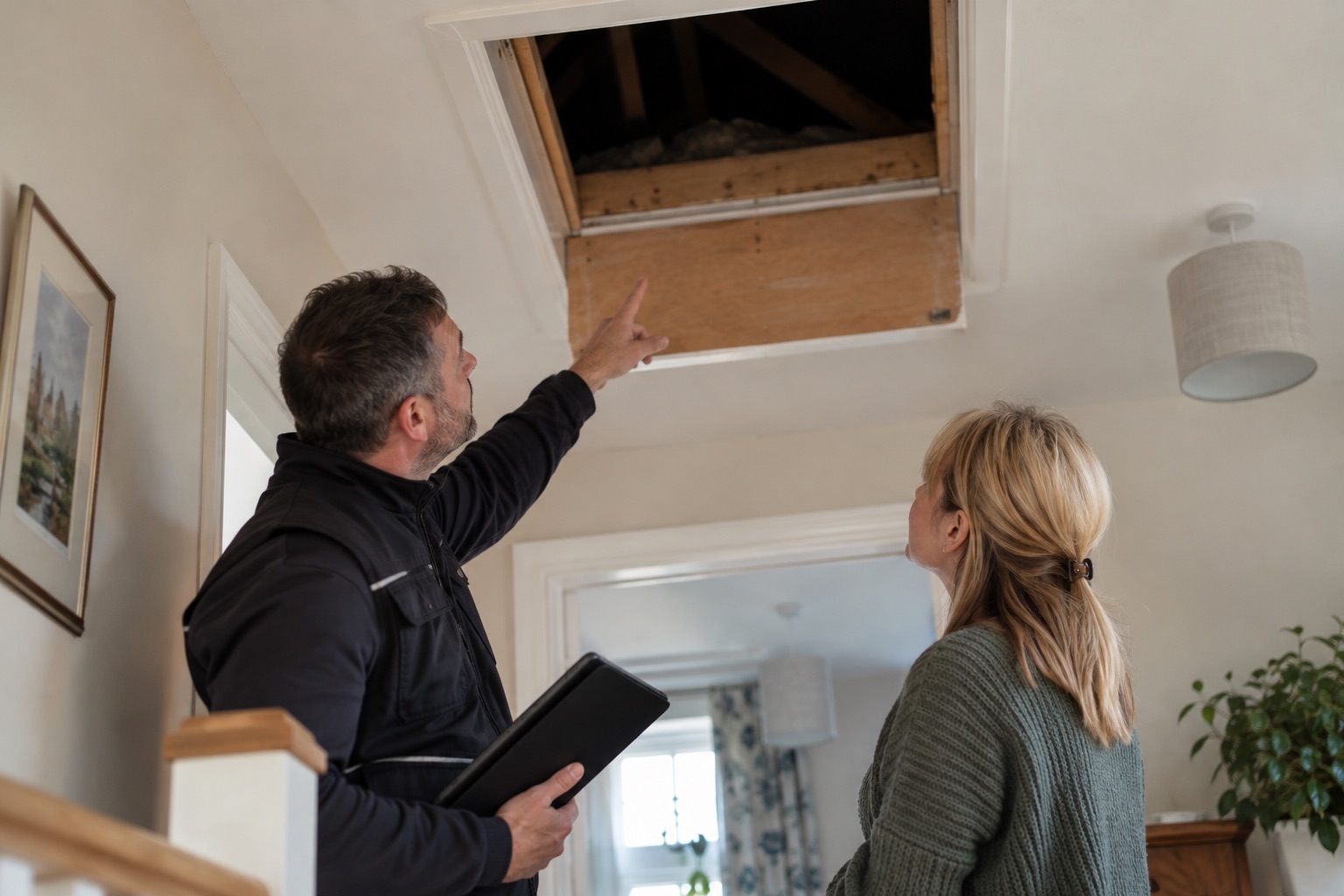
Activity over a ceiling is not automatically a squirrel. Birds, rodents and building movement can create different sounds. The safe first step is to record what happens and avoid entering an unsafe loft.
What evidence helps?
Note the time, location, visible roofline gaps and any outdoor sightings. A photo from ground level can help, but do not climb onto a roof or disturb material in the loft.
What can you do now?
Keep children and pets away from an unsafe access hatch. Do not seal a possible animal inside. Repairs and any animal-related work need to follow identification and the applicable legal and safety requirements.
Details worth including in your enquiry
- The time and place of roof-space sounds
- Any outside sighting visible from the ground
- Safe access limits for a survey
Describe observations in your own words and tell us about any treatment already used. Photos can be useful, but there is no need to take a risky close-up, handle droppings or disturb a nest. If a landlord, tenant or manager needs to provide access, say who can coordinate that before a visit is discussed.
Agreeing a useful next step
Ask whether a visual roof survey and loft assessment are needed, what can be seen safely, and what the report will and will not establish.
Before agreeing work, ask for the proposed area and method, any preparation or temporary exclusion, the number of visits, the full price and what would lead to a follow-up. Product-specific written instructions take priority over a general article. Sending an enquiry or naming a preferred day does not make a booking.
A common question
Does scratching confirm squirrels?
No. Sound alone is not a reliable identification.