
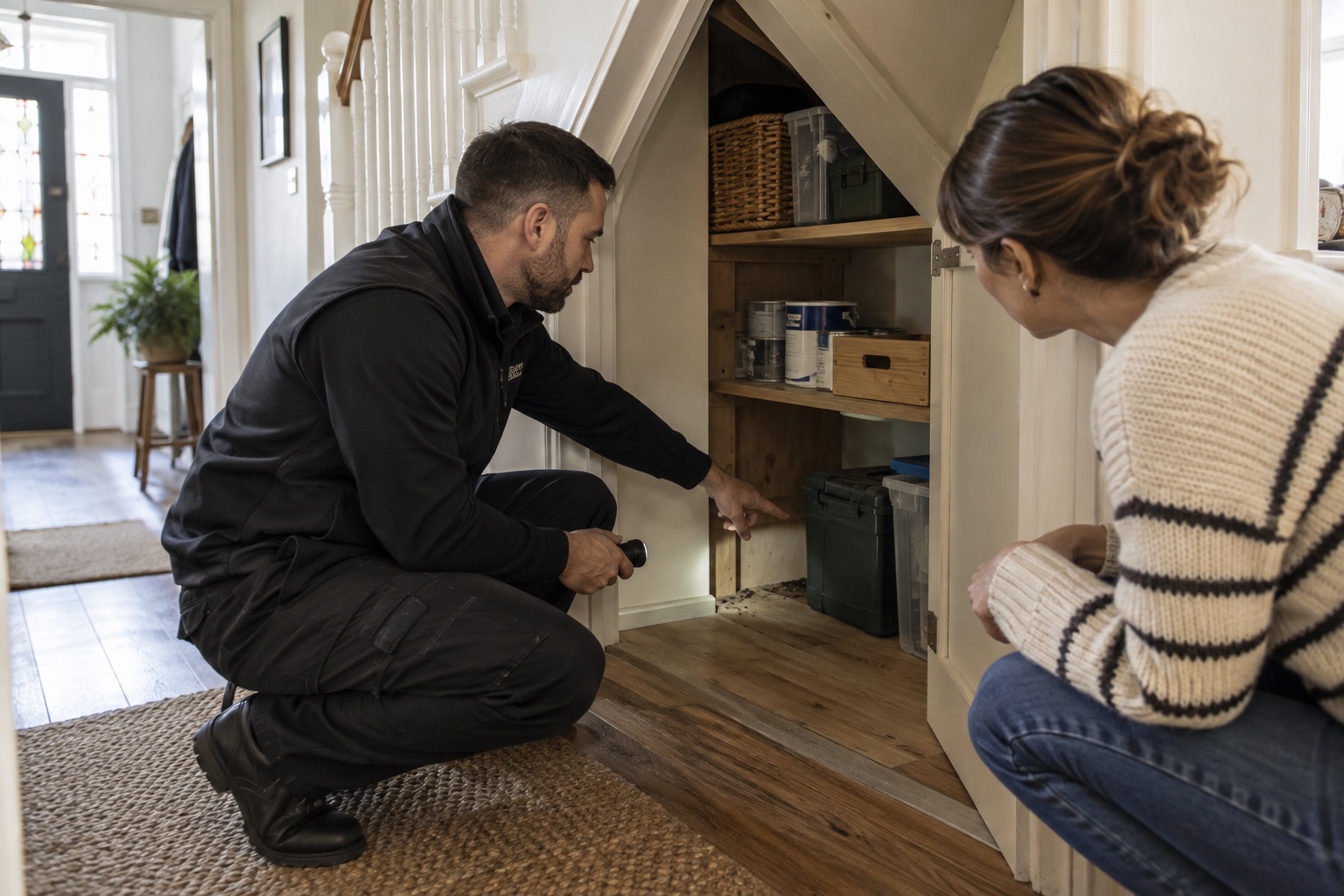
A scratching sound or damaged packet can be worrying, but neither identifies a mouse on its own. The earlier you record precise evidence, the easier it is to agree a useful inspection and repairs.
What evidence helps?
Note the room, time, accessible food damage and any visible openings. Do not handle droppings or move a stored box simply to hunt for a suspected animal. A photograph of an entry gap can help with the repair plan.
What can you do now?
Secure food and waste, and report building damage to the responsible person. Avoid sealing a suspected active route before the team has considered control and safe access.
Details worth including in your enquiry
- The room and date of each sound or sign
- Any accessible gap without disturbing it
- Who can approve proofing work
Describe observations in your own words and tell us about any treatment already used. Photos can be useful, but there is no need to take a risky close-up, handle droppings or disturb a nest. If a landlord, tenant or manager needs to provide access, say who can coordinate that before a visit is discussed.
Agreeing a useful next step
Ask the company to separate inspection, control, proofing and follow-up in its quote. The long-term plan should address the opening as well as the present signs.
Before agreeing work, ask for the proposed area and method, any preparation or temporary exclusion, the number of visits, the full price and what would lead to a follow-up. Product-specific written instructions take priority over a general article. Sending an enquiry or naming a preferred day does not make a booking.
A common question
Will waiting always make the problem more expensive?
Not necessarily, but delaying assessment can leave a route unaddressed; the actual cost depends on the property and scope.