
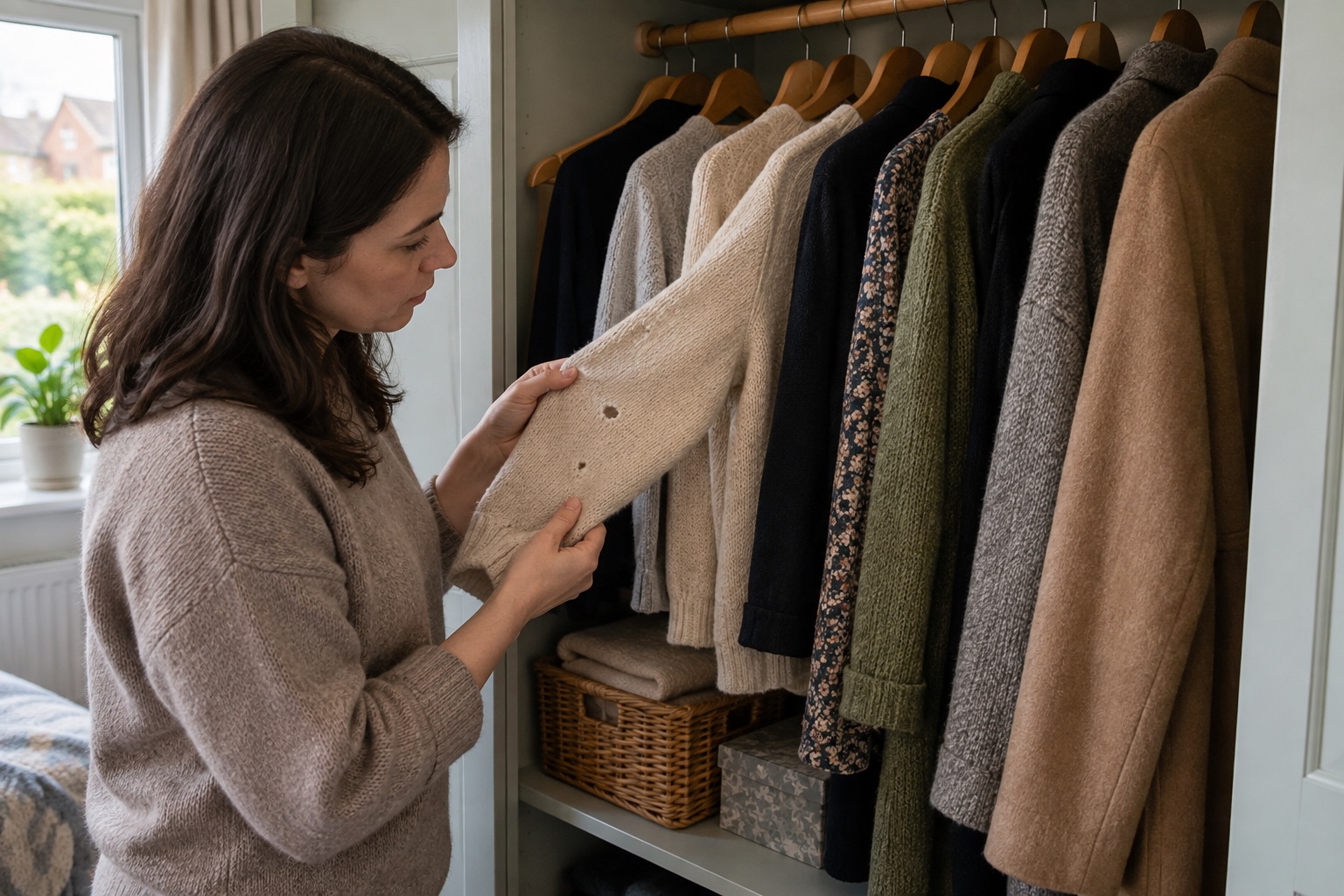
An adult moth flying near a wardrobe is a clue, not proof that every garment is affected. Textile damage is usually linked to the immature stage, so the fabric and storage conditions need attention.
What evidence helps?
Record holes, affected fibres and any larvae or cases. Photograph the evidence before cleaning. Distinguish clothing from stored blankets, carpet edges and nearby upholstery.
What can you do now?
Follow the care label for washing or specialist cleaning, and keep affected items contained without spreading them through the home. Do not apply a pesticide directly to clothing unless it is specifically labelled and advised for that use.
Details worth including in your enquiry
- The wardrobe items actually damaged
- Any larva, case or moth photo
- Material-specific cleaning and storage limits
Describe observations in your own words and tell us about any treatment already used. Photos can be useful, but there is no need to take a risky close-up, handle droppings or disturb a nest. If a landlord, tenant or manager needs to provide access, say who can coordinate that before a visit is discussed.
Agreeing a useful next step
Ask what will be inspected and what the proposed treatment can safely reach. The aftercare should cover storage and monitoring, not just a single product application.
Before agreeing work, ask for the proposed area and method, any preparation or temporary exclusion, the number of visits, the full price and what would lead to a follow-up. Product-specific written instructions take priority over a general article. Sending an enquiry or naming a preferred day does not make a booking.
A common question
Do all clothes need to be washed at one temperature?
No. The material and the agreed plan determine the appropriate handling.