
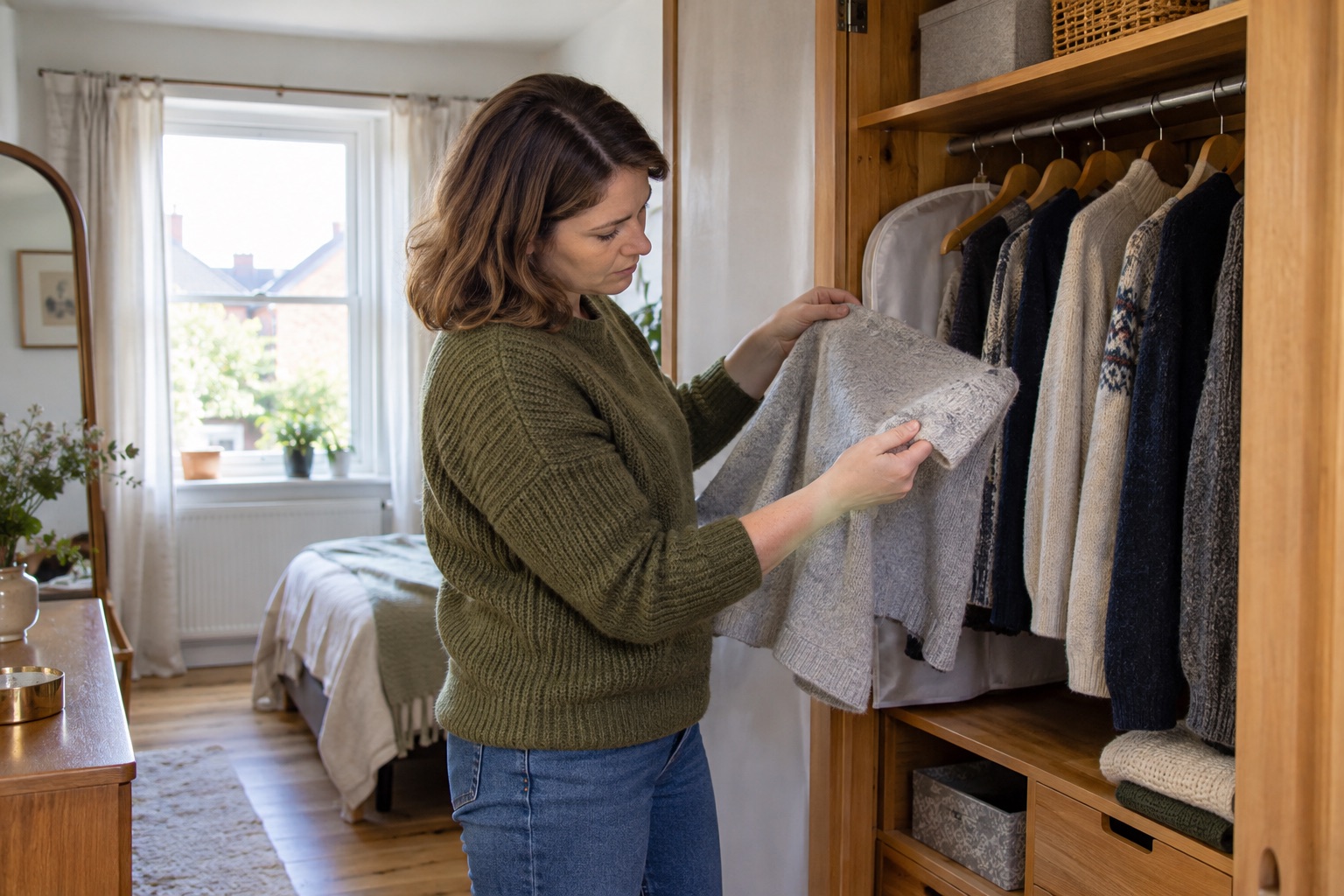
Damage to a jumper or stored blanket can be distressing, but the damage itself does not identify the insect. Clothes moth larvae, other textile pests and ordinary wear can leave different evidence.
What evidence helps?
Look at the affected material, nearby storage and any larvae, cases or adult insects. Photograph clear clues without shaking suspect textiles throughout the home.
What can you do now?
Follow garment care labels, separate affected items thoughtfully and clean accessible storage. Do not apply a general insecticide to clothing or delicate fabric without product-specific advice.
Details worth including in your enquiry
- The garment fibre and care instructions
- Where damage, larvae or cases were found
- How affected items are currently stored
Describe observations in your own words and tell us about any treatment already used. Photos can be useful, but there is no need to take a risky close-up, handle droppings or disturb a nest. If a landlord, tenant or manager needs to provide access, say who can coordinate that before a visit is discussed.
Agreeing a useful next step
Ask whether identification is possible from a specimen or photo, which storage areas should be inspected, and what laundering or treatment is appropriate for each material.
Before agreeing work, ask for the proposed area and method, any preparation or temporary exclusion, the number of visits, the full price and what would lead to a follow-up. Product-specific written instructions take priority over a general article. Sending an enquiry or naming a preferred day does not make a booking.
A common question
Does one moth in a room prove clothing is infested?
No. The species and location of actual damage need to be checked.