
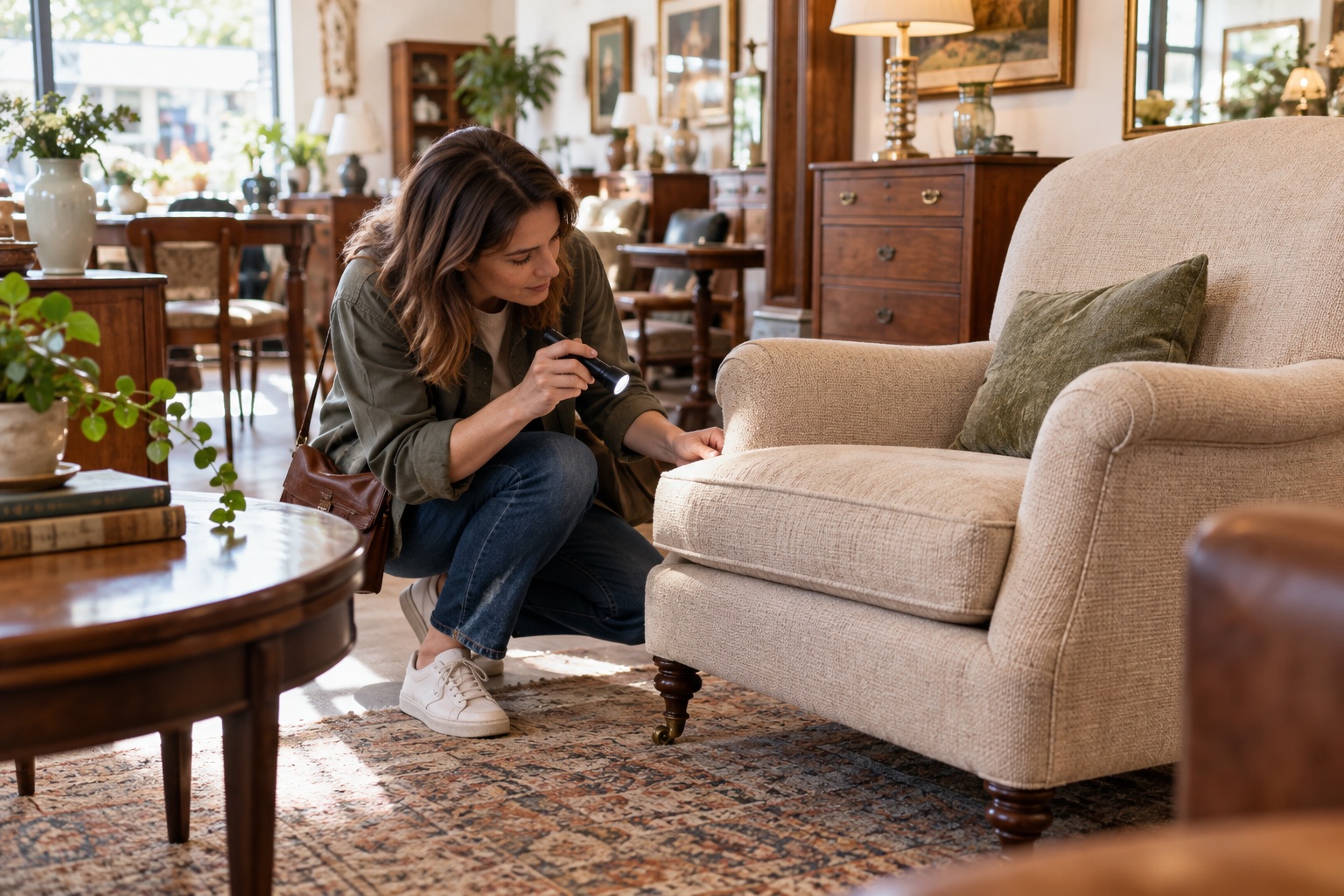
Inspect second-hand furniture before collection whenever possible. Ask where it has been stored, use good light to check accessible seams and joints, and plan transport so the item does not pass through several rooms unnecessarily. If you find a suspicious sign, pause the purchase or movement and seek advice rather than treating it with an unapproved product.
Buying second-hand does not mean an item is infested. A proportionate check protects the home without treating every pre-owned item as contaminated.
Ask about the item before arranging collection
Start with ordinary questions: How old is it? Is it from a smoke-free or pet household if those points matter to you? Has it been kept indoors, in a garage, storage unit or communal area? Why is it being sold or given away? Are there stains, damage or previous pest concerns?
An answer cannot guarantee an item is clear, but it helps you decide whether the item is worth inspecting and transporting. Be cautious with an upholstered item left anonymously in a street or shared waste area because its history and exposure are unknown.
If you are buying through a business, ask what inspection, cleaning, return and collection policies apply. Do not assume “professionally cleaned” means inspected or treated for bed bugs.
Inspect the structure and the upholstery
Use a torch or strong room light. Look at accessible seams, piping, folds, joins, screw areas, the underside and any removable cushions. For wooden furniture, check cracks, joints and the back. The NHS and BPCA describe possible bed-bug signs including insects and dark or blood spotting around affected furniture and resting areas.
You do not need to dismantle an item at the seller’s home. Do not reach into sharp, dirty or inaccessible spaces. If you cannot inspect a large part of an upholstered item, treat that as an uncertainty in the purchase decision.
A mark does not automatically mean bed bugs. Rust, ink, mould, dirt and other insects can be mistaken for relevant signs. If something concerns you, take a clear photograph from a safe distance and ask how it can be reviewed. Do not rely on an online bite or pest image alone.
Plan the route into your home
Measure the item and its route before collection. Know which entrance and room it will use, clear obstacles and avoid resting it on beds or other upholstered furniture during the move. If possible, make the final room ready so the item does not need to sit in a hallway or move between bedrooms.
Protective wrapping can keep a vehicle clean and contain loose dirt, but wrapping is not proof that an item is pest-free. Agree who will remove and dispose of packaging and where that will happen.
If you live in a block, do not leave a suspect item in a shared corridor, lift lobby or bin store. That creates access and management problems for other residents. Contact the relevant manager before using a common area for collection or disposal.
Do not improvise a treatment
Avoid routine spraying, fogging or applying powders to furniture. The Health and Safety Executive says a biocide must be suitable and used according to its approved label. A product authorised for one target, surface or user group cannot be assumed safe for upholstery, children’s furniture or a sleeping area.
Heat, steam and cold can damage finishes, glue, veneer, fillings, electrical parts and delicate textiles. Professional targeted steam is not a general instruction to steam every second-hand item. If treatment is being considered, ask whether the item can be assessed, what method is appropriate and whether treatment is economically sensible.
Never combine products or use a professional-only product yourself.
Decide when to pause
Pause collection if you see a live suspect insect, multiple relevant signs, unexplained spotting in several seams, or the seller discloses a current problem. You can decline the item without diagnosing it.
If the furniture is already at home, avoid carrying it into another room or placing it outside where someone else may take it. Keep the immediate area controlled, record what you found and seek advice. If disposal is recommended, ask how the item should be contained, labelled and removed under local arrangements.
Keep the decision proportionate
An attractive second-hand item can be good value and reduce waste. The aim is to make an informed decision: understand its history, inspect what you safely can, plan the route and stop if evidence warrants assessment. No checklist can promise zero risk.
For written signs and lookalikes, see bed-bug signs and next steps. If you have already brought an item home and found a possible sign, call 0203 393 2338 and explain where the item is and what has moved around it.
Common questions
Is wooden furniture safe while upholstered furniture is risky?
No material offers a guarantee. Accessible joints and cracks matter as well as upholstery. The history, design and signs should be considered together.
Can I spray the item before bringing it inside?
Do not apply a product simply as a precaution. It may be unsuitable for the target, surface or user. Follow approved labels and obtain professional advice where evidence exists.
Should I throw the item away if I find one mark?
Not automatically. A mark can have several causes. Pause movement, document it and ask whether identification or assessment is possible.
Sources and further reading
External references may contain pest or skin photographs.