
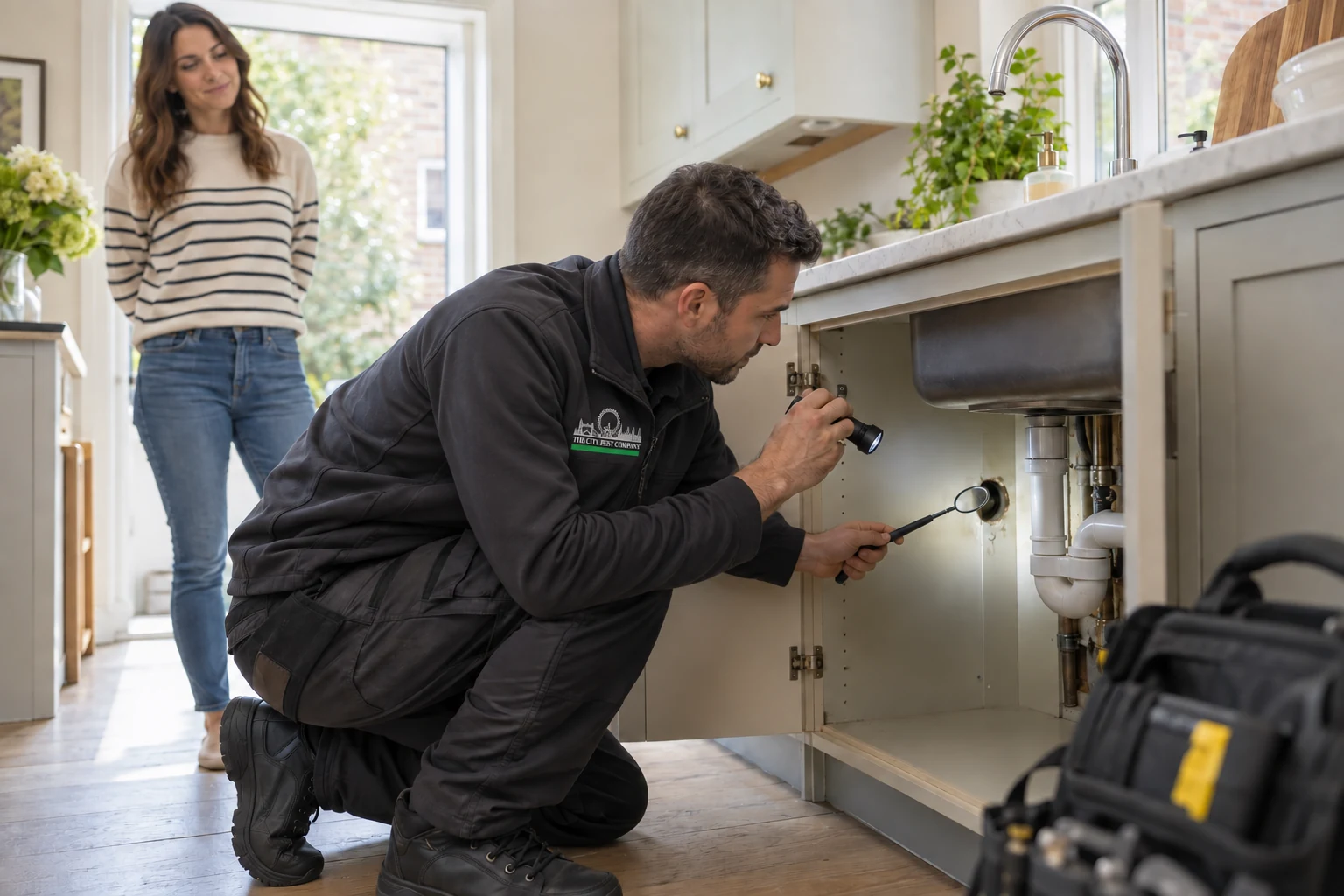
A kitchen mouse inspection starts with the routes the room already provides: gaps around pipes and cables, spaces behind fitted units, damaged vents or doors, and connections to cupboards, voids and adjoining rooms. Record signs and accessible gaps, but do not pull out fixed appliances, open electrical fittings or seal a suspected route before the situation has been assessed.
Begin with what changed
Write down the first date you heard, saw or found something unusual. Note the cupboard, wall or appliance involved and the time of day. Possible signs can include droppings, gnawing, disturbed food packaging, nesting material or sounds, but a single mark needs context.
Do not handle suspected droppings to identify them. Keep children and pets away from the immediate area and avoid sweeping or vacuuming material until you have appropriate hygiene advice. A photograph taken from a safe distance and an approximate size comparison can be more useful than moving it.
Follow services into the room
Kitchens concentrate water, waste, warmth and service penetrations. From a standing position, look where sink pipes enter a wall or floor, where cables and appliance hoses pass behind units, and where boxing meets a surface. Check door edges, vents and visible joins between fitted furniture and the building.
The purpose is to make a map for the conversation, not to dismantle the kitchen. Do not move a cooker, disconnect an appliance or remove fitted panels unless a competent person has made that safe. Tell the technician which areas are inaccessible.
Look beyond the hole
A visible gap is not automatically the active entry point. It may lead only into a cupboard, or it may connect to a larger service void. The inspection should consider whether there are related signs, where food and water are available, and how the route connects to the rest of the property.
In a flat, pipes and boxed services can continue between homes or common areas. That does not prove activity elsewhere, but it may affect access and proofing responsibility. Record the limitation and involve the landlord or manager where building fabric or shared routes are relevant.
Keep food and waste controlled
Move damaged or exposed food away from use and ask for appropriate disposal guidance. Keep ordinary food in sound containers and clear spills as part of normal hygiene. Check whether bin lids close and whether bags are left beside a full bin. The Food Standards Agency’s business guidance similarly stresses regular checks, good repair, secure food storage and clean, close-fitting waste containers.
Housekeeping helps remove food and shelter, but it is not evidence that an occupant caused the problem. Even a tidy kitchen can have a building route that needs investigation.
Why proofing waits for assessment
Before filling the first gap you see, ask whether it is an active route, where it leads and whether closure should wait until control or monitoring has taken place. A proofing plan should identify the opening, suitable material, building service that must remain functional, and the right time to close it. Ventilation, drainage, electrical safety and appliance servicing must not be compromised.
Control work and proofing should be written as separate parts of the plan. Ask what will be done immediately, which repairs need another trade, who owns them and how completion will be checked.
Prepare a concise call
Have your postcode, property type, dates, rooms, signs and access constraints ready. Mention food premises, children, pets and anything already used. Do not place bait or combine products simply to test a theory; the proposed method must be suitable for the property and followed correctly.
Read the mice service guide or call 0203 393 2338. You can call before identifying the route with certainty.
Common questions
Should I seal a gap immediately?
Not automatically. Establish whether it is active, what it connects to, whether closing it would affect a service, and whether the timing needs to be coordinated with control work.
Do droppings prove mice rather than rats?
Size and location are clues, but certainty may require inspection. Avoid handling suspected material.
Must appliances be pulled out before the visit?
Only if the appointed professional asks and it can be done safely by the right person. Describe what is inaccessible instead of taking a risk.
Sources and further reading
External references may contain pest or skin photographs.