
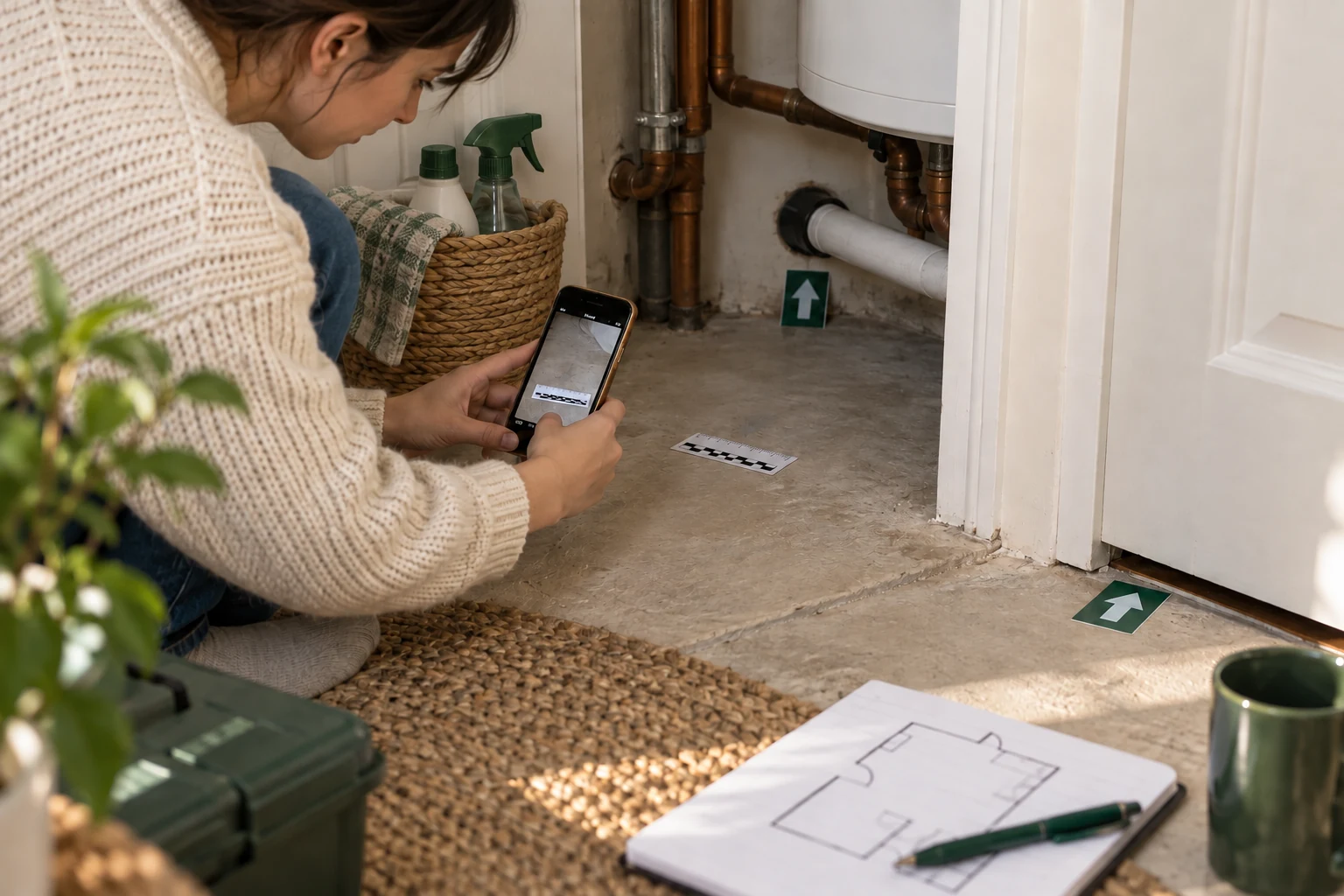
Dropping size, sound and gnawing can guide an inspection, but no single sign safely confirms mice or rats. Record the sign in place, add scale in a photograph without touching it, and map routes around doors, pipes, cupboards and waste areas.
Compare patterns, not one dropping
Note the number, spread and exact surface. Fresh-looking and old material may be mixed, and debris can resemble droppings. Do not sweep, vacuum, crush or collect it for a better photograph. Keep people and pets away while advice is arranged.
Mice and rats differ in behaviour as well as size, so the wider pattern matters: smears, gnawing, food damage, sounds, holes and sightings. BPCA describes mouse droppings as small, dark and rice-shaped, often found beneath sinks, around boilers or in roof spaces. Its rat guide describes larger, dark pellet-shaped droppings that may be clustered where the same route is used. These are comparison clues rather than a reason to handle the material.
Add a familiar object beside the sign for scale without touching it. Photograph the wider surface as well as the close view: a cluster beside a wall tells the inspector more than an isolated, tightly cropped image. A large mouse can be confused with a young rat, and debris or other animal material can look similar, so retain uncertainty until the whole pattern is assessed.
UKHSA guidance on rodent urine and droppings advises against sweeping or vacuuming because disturbing dry material can put it into the air. The published page is written for reducing infection risk from pet rodents, so use it as a hygiene precaution rather than evidence about the species or disease risk in your property. Ask for current cleaning advice for the actual setting.
Follow the building route
In a kitchen, trace service gaps beneath sinks, behind accessible plinths and at doors. In a flat, add shared risers, bin stores and neighbouring voids to the questions for the survey. Outside sightings do not prove indoor entry.
Do not close a suspected active opening or place an unverified poison simply to test the identification. Ask how present activity, monitoring and later proofing should be sequenced, and which structural or drainage work needs another trade.
Call 0203 393 2338, or read the mouse service page.
Frequently asked questions
Can dropping length identify the rodent?
It is one clue, but angle, age and lookalikes make context and inspection necessary.
Should droppings be sent to the contractor?
Do not handle them. Provide an in-place photograph and location first.
Does a garden rat mean rats are indoors?
No. Record exterior routes and check the building for independent evidence.
Are sounds enough to choose mice or rats?
No. Record the time, location and character of the sound, then compare it with physical signs. Pipes, birds, squirrels and building movement can also create noises.
Sources and further reading
External references may contain pest or skin photographs.