
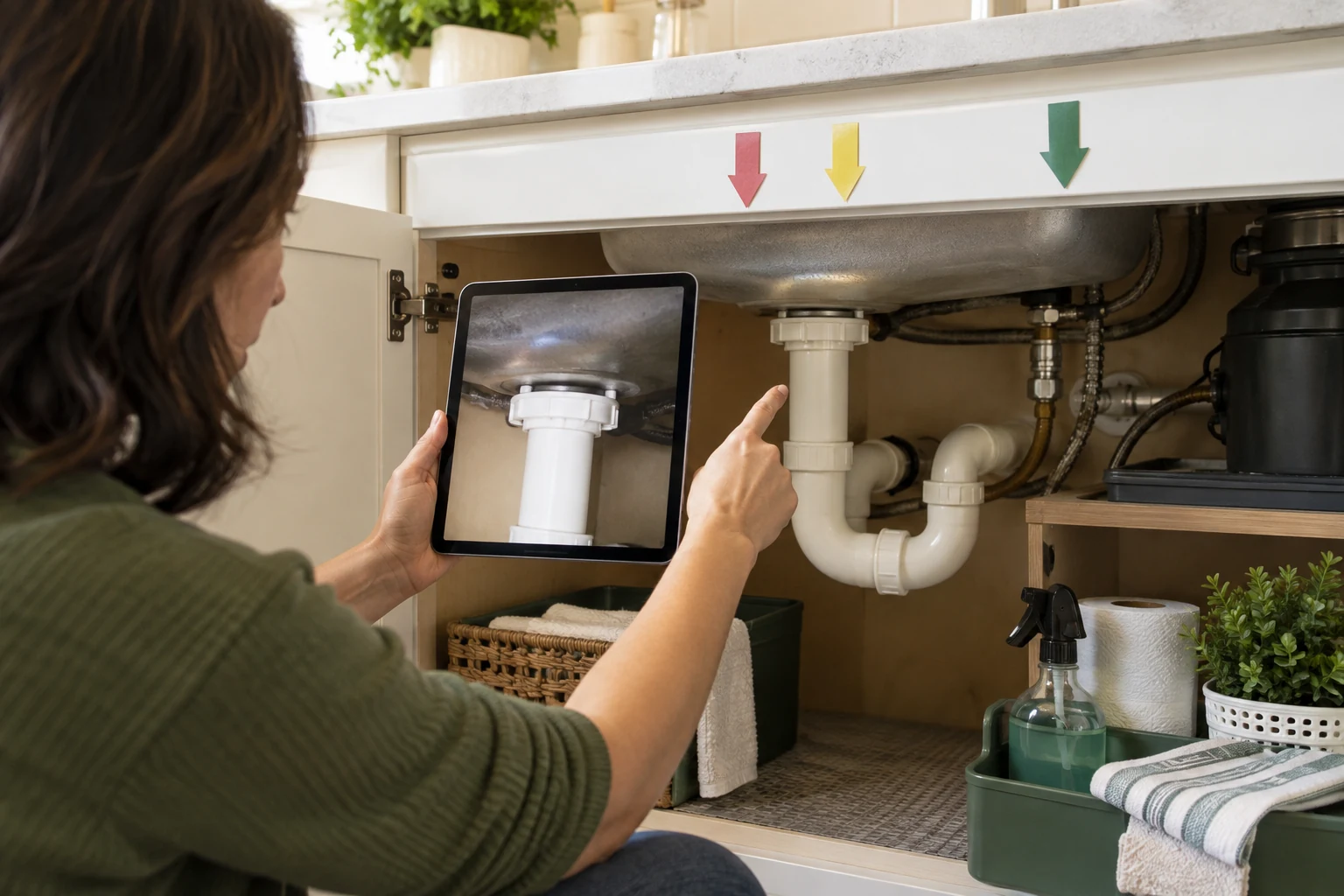
New mouse signs after a repair do not by themselves prove that the repair failed. The next assessment should compare dates and locations, inspect the repair without dismantling it, and consider a missed route, a new route or activity already inside.
Rebuild the before-and-after picture
Find the original report and photographs. What opening was repaired, which side was visible and what areas were inaccessible? Record the date and trade. Then map each new sighting, noise, dropping or gnaw mark precisely. Keep away from suspect material rather than handling it for comparison.
Look at the repair edge from a safe position. Photograph visible damage, shrinkage or disturbance, but do not remove the material. Mark adjacent pipes, cupboards, risers, doors and neighbouring spaces. Evidence beside the repaired sink pipe and separate evidence at an unsealed heating riser create a different question from damage through the repair itself.
Add changes since completion: plumbing work, deliveries, a new appliance, door damage or access to an adjoining flat. These are inspection leads, not proof of cause.
Ask the assessor to test alternatives
The report should distinguish the repair’s visible condition, current mouse evidence and other possible routes. Ask whether monitoring can clarify movement before more gaps are closed. If a building repair needs alteration, refer it to the responsible trade and coordinate timing with the pest plan.
Do not describe the first contractor as at fault unless evidence supports that conclusion. A route may have been inaccessible or another opening may become relevant later. Equally, do not mark the repair verified if no one can see it.
Record the next action by location and owner. If activity stops, keep the review period and limitation in the file rather than promising permanent exclusion.
Call The City Pest Company on 0203 393 2338 with the original repair record and new location map. See the mouse service page for context.
FAQs
Should I reopen the repair?
No. Photograph it and let the relevant professional decide whether it needs investigation.
Does noise in the same room mean the same route?
Not necessarily. Compare exact position, timing and connected services.
Can I seal another gap immediately?
Ask how the new gap fits the assessment; unplanned closure can make movement harder to interpret.
Sources and further reading
External references may contain pest or skin photographs.