Write down when the sound starts, how long it lasts and where it is loudest from the occupied room below. Timing and movement can guide an inspection, but noise alone cannot reliably distinguish squirrels, rats, mice, birds, pipe movement or loose building materials.
Do not climb across unboarded joists or pursue the sound into the eaves. A precise description from a safe position is more useful than a risky attempt to obtain certainty.
Make a short noise log
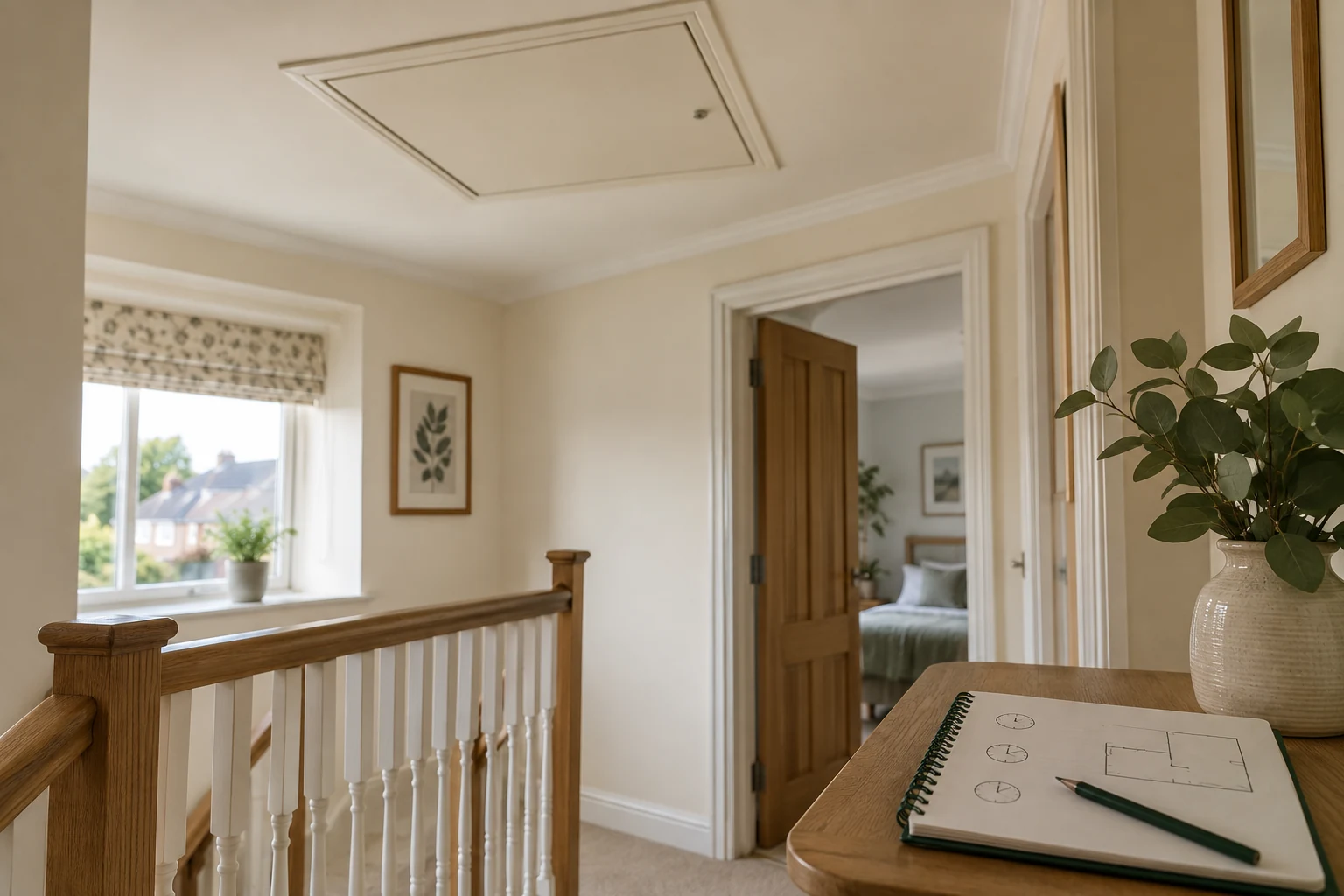
For two or three occurrences, if practical, note the date, start time, duration and weather. Describe the sound in ordinary language: light rapid movement, repeated scraping, gnawing, fluttering, a single knock or something rolling. Mark the ceiling area on a simple room sketch, including chimney breasts, water tanks and shared walls.
The pattern can suggest where to look next without proving a species. BPCA lists scratching and rustling in a loft or wall cavity among possible squirrel signs, along with damaged vents or insulation and activity near the roof. Other animals and building faults can create similar noises, so an inspector should consider the evidence together.
Check whether the sound changes when heating or water systems operate, during strong wind, or after a door closes. A branch touching the roof, a loose cable or expanding pipe may be the right explanation. Recording these alternatives prevents the call from beginning with a fixed conclusion.
Observe only from a safe, accessible position
If the loft has a proper access hatch, lighting and a boarded standing area, you can look from that position without moving deeply stored items. Note disturbed insulation, visible damage, odour or droppings without touching them. Do not sweep, vacuum or collect suspect waste for identification; describe its position and use a photograph with scale only if that can be taken safely.
Look outside from ground level for a visibly damaged vent, slipped grille or repeated animal movement near one part of the roof. Do not use ladders, lean from windows or walk on the roof. An external photo showing the whole elevation is usually more useful than a zoomed, uncertain image.
Bird activity also needs care. GOV.UK states that wild birds, their eggs and nests are protected, including nests while they are being built or used. Do not block an opening or disturb nesting material on the assumption that the occupant is a rodent.
Do not seal first and investigate later
Closing a suspected entry point while an animal may still be inside can create a welfare problem and lead to new damage elsewhere. The sequence should be assessment, a plan for the active issue, and then appropriate proofing or repair. Structural defects, electrical damage and roof access may require a suitably qualified trade as part of that plan.
For example, imagine that noise is heard above one bedroom just after dawn, with squirrels repeatedly seen using a nearby tree. That makes the roof edge worth inspecting, but it still does not prove the species is inside. Conversely, intermittent knocking only during windy weather makes a building component a credible alternative. Both reports are useful because they connect timing to place.
Prepare the first call
Give the postcode and property type, whether the loft is shared or self-contained, the safe access available and any vulnerable occupants or pets. Mention previous traps, poisons, repairs or blocked holes, even if they were used some time ago. These can change both the evidence and the safe next step.
Ask whether the proposed visit includes the occupied rooms, accessible loft area and external ground-level observations; how inaccessible sections will be reported; and which repairs sit outside pest-control work. Do not accept an identification based only on a phone recording.
Call The City Pest Company on 0203 393 2338 to discuss a survey, or review the squirrel service page. Call sooner if the noise is accompanied by an immediate electrical, fire, structural or animal-welfare hazard, using the appropriate emergency or specialist service where necessary.
Frequently asked questions
Does daytime noise mean squirrels rather than rats?
Timing is useful context, but it is not enough to identify the cause. Combine it with the location, type of sound, external activity and a safe inspection.
Can droppings identify the animal?
They may contribute to identification, but do not handle them. Position, shape and scale can be misread in a photograph, so let the inspector assess the wider evidence.
Should I block a visible hole immediately?
Not while you are unsure whether an animal or active bird nest is present. Ask for the correct sequence of investigation, control and proofing.
Will a phone recording help?
It can preserve timing and rhythm, especially when the noise is intermittent, but it cannot show the route, extent or species on its own.
Sources and further reading
External references may contain pest or skin photographs.